
New Mexico whiptail
The New Mexico whiptail (Aspidoscelis neomexicanus) is an all-female lizard species native to the southwestern United States and northern Mexico. It is known for its unique reproductive strategy, being both a hybrid and parthenogenetic, meaning it can reproduce without males. This species is characterized by its brown or black coloration with seven pale yellow stripes and a slender body with a long tail.
Key Facts
- ›The New Mexico whiptail is a female-only species.
- ›It reproduces through parthenogenesis, a form of asexual reproduction.
- ›This species is a hybrid resulting from the crossbreeding of two other whiptail species.
- ›It is the official state reptile of New Mexico.
- ›They are diurnal and primarily feed on insects and spiders.
- ›Individuals typically have brown or black bodies with seven pale yellow stripes.
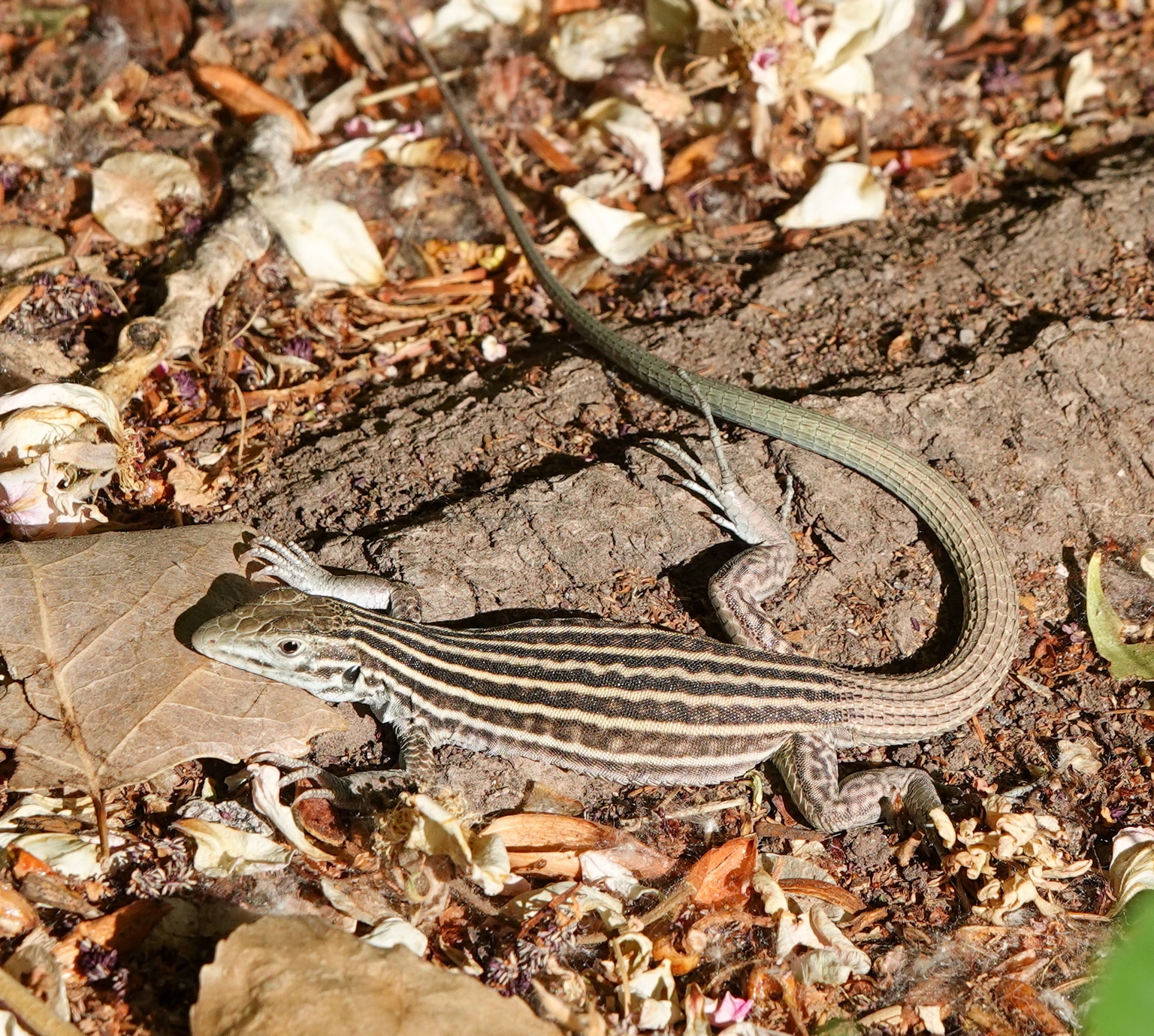
New Mexico Whiptail, Leaping Lesbian Lizard
New Mexico, Arizona, Chihuahua
- Grows From 16.5 To 23 cm In Length.
- Typically Brown Or Black In Color.
- Possesses Seven Pale Yellow Stripes From Head To Tail.
- Often Has Light-Colored Spots Between the Stripes.
- Features A White Or Pale Blue Underside.
- Has A Blue Or Blue-Green Colored Throat.
- Slender-Bodied With A Long Tail.
- Tail Is More Commonly Blue-Green In Infants, Becoming Spotted Brown and Yellow With Age.
Spiders, Insects, Termites, Beetles, Grasshoppers, Ants, Caterpillars, Moths, Butterflies
- Diurnal .
- Insectivorous.
- Wary, Energetic, and Fast Moving.
- Dart For Cover When Approached.
- Retreat From Heat During Midday In High Temperatures.
- Hibernate During Colder Months.
- Active From Mid-March Through Mid-October.
- Engages In Mating Behavior With Other Females To Stimulate Ovulation.
About New Mexico whiptail
The New Mexico Whiptail
The New Mexico whiptail (Aspidoscelis neomexicanus) is a unique reptile found in the southwestern United States, specifically in New Mexico and Arizona, and extending into northern Mexico in Chihuahua. This species holds the distinction of being the official state reptile of New Mexico. What sets the New Mexico whiptail apart is its remarkable reproductive strategy, being one of many lizard species known for parthenogenesis, a form of asexual reproduction where offspring develop from unfertilized eggs. Furthermore, it is a hybrid species, originating from the interbreeding of the little striped whiptail (Aspidoscelis inornatus) and the western whiptail (Aspidoscelis tigris). This hybridization process inherently prevents the formation of healthy males, leading to an all-female population.
Description and Habitat
Adult New Mexico whiptails typically measure between 16.5 and 23 cm (6.5 to 9.1 inches) in total length. Their coloration is generally brown or black, distinguished by seven pale yellow stripes that run the length of their body from head to tail. Light-colored spots are often observed between these stripes. They possess a slender build, a long tail that may be blue-green in younger individuals and becomes more spotted brown and yellow with age, and a pale blue or white underside, often with a blue or blue-green throat. These lizards are found in a range of semi-arid environments, including grasslands, rocky terrains, shrublands, and mountainous woodlands.
Behavior and Reproduction
Like other whiptail lizards, the New Mexico whiptail is diurnal, meaning it is active during daylight hours. They are known for their wary, energetic, and rapid movements, quickly seeking refuge when approached. Their diet is primarily insectivorous, consisting of spiders and various insects such as termites, beetles, grasshoppers, ants, caterpillars, moths, and butterflies. During periods of high temperatures, they often retreat from the midday heat. The active season for this species typically runs from mid-March through mid-October, followed by a period of hibernation. Reproduction occurs through parthenogenesis, with females laying up to four unfertilized eggs in mid-summer, which hatch approximately eight weeks later. Interestingly, the species engages in mating behaviors with other females, a phenomenon that is thought to stimulate ovulation, as females that do not engage in this behavior may not lay eggs. This characteristic has led to nicknames such as 'lesbian lizards' and has seen the species embraced as a gay icon in online LGBTQ+ communities.
Source: Wikipedia ↗
Frequently Asked Questions
How does the New Mexico whiptail reproduce?
The New Mexico whiptail reproduces through parthenogenesis, a process where an embryo develops from an unfertilized egg. It is also a hybrid species, meaning its existence stems from the interbreeding of two other whiptail species, which results in the absence of males in the population.
What does the New Mexico whiptail eat?
The New Mexico whiptail is insectivorous, meaning its diet consists mainly of insects and spiders. Their prey includes termites, beetles, grasshoppers, ants, caterpillars, moths, and butterflies.
What does a New Mexico whiptail look like?
These lizards are typically brown or black with seven pale yellow stripes running from head to tail, often with light-colored spots between the stripes. They have a slender body, a long tail that can be blue-green in younger individuals, and a white or pale blue underside.
Where can I find the New Mexico whiptail?
The New Mexico whiptail is found in the southwestern United States, specifically in New Mexico and Arizona, as well as in the northern Mexican state of Chihuahua.
What are the habitat preferences of the New Mexico whiptail?
They inhabit a variety of semi-arid environments. This includes grasslands, rocky areas, shrublands, and mountainside woodlands.
Is the New Mexico whiptail considered a gay icon?
Yes, the New Mexico whiptail has gained recognition as a gay icon in online LGBTQ+ communities, sometimes referred to as the 'leaping lesbian lizard'.
Related Lizards
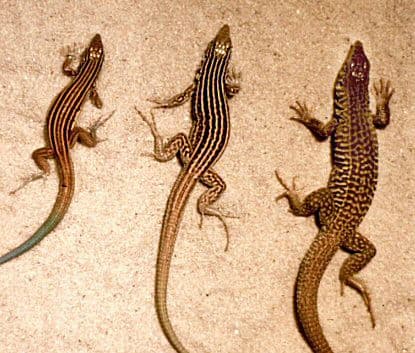
Aspidoscelis neomexicana
The New Mexico whiptail (Aspidoscelis neomexicana) is a unique, all-female lizard species native to the southwestern United States and northern Mexico, notable for its parthenogenetic reproduction. Characterized by its slender body, seven pale yellow stripes, and a blue or blue-green throat, this diurnal lizard inhabits a variety of semi-arid environments.

Cyprus rock agama
The Cyprus rock agama is a species of agamid lizard endemic to the island of Cyprus. It inhabits a variety of rocky environments, from arid to Mediterranean habitats, and has adapted well to human presence in towns and agricultural areas. This diurnal lizard is primarily insectivorous but also consumes small vertebrates and fruits.
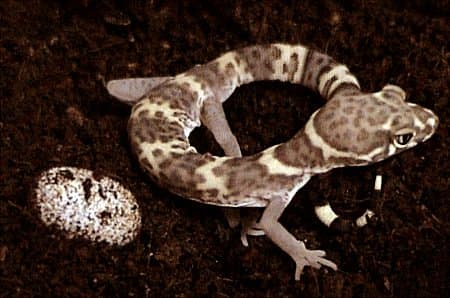
Coleonyx brevis
The Texas banded gecko (Coleonyx brevis) is a small, terrestrial lizard native to the southwestern United States and northern Mexico. It is characterized by distinct alternating bands of yellow and brown or pink, often with black accents. These geckos are primarily nocturnal and carnivorous, inhabiting semi-arid regions, frequently found near rock piles or canyon crevices.