
Northern alligator lizard
The northern alligator lizard (Elgaria coerulea) is a medium-sized, slender lizard found along the North American west coast. It is characterized by a distinct skin fold along its sides, separating keeled dorsal scales from smooth ventral scales. This lizard inhabits a variety of forested areas and montane chaparral, and its diet consists of insects, slugs, and small vertebrates.
Key Facts
- ›Native to the North American west coast, from British Columbia to California.
- ›Adults reach a snout-to-vent length of about 10 cm and a total length of around 27.5 cm.
- ›Possesses a distinctive lateral skin fold separating its keeled back scales from smooth belly scales.
- ›Diet includes insects like crickets and beetles, as well as slugs, spiders, moths, small lizards, and even baby mice.
- ›Reproduction is viviparous, with females giving birth to live young.
- ›Undergoes brumation during winter, typically seeking shelter under rocks, logs, or in burrows.

San Francisco Alligator Lizard, Sierra Alligator Lizard, Northwestern Alligator Lizard, Shasta Alligator Lizard
Southern British Columbia, Washington, Northern Idaho, Western Montana, Oregon, Central California
- Medium-Sized, Slender Lizard.
- Adults Reach A Snout-To-Vent Length of About 10 cm .
- Total Length Is Roughly 27.5 cm .
- Has A Distinct Skin Fold On Each Side, Separating Keeled Dorsal Scales From Smooth Ventral Scales.
- Coloration Varies But Can Be Brown and White, Or Greenish Yellow and Brown.
- Dorsally Brownish With Dark Blotches That May Form Bands.
- Throat and Mouth Area of Some Young Individuals Can Be Yellow.
- Belly Is Light Gray.
- Eyes Are Dark.
Crickets, Slugs, Beetles, Spiders, Moths, Small Lizards, Small Baby Mice
- Undergo Brumation In Winter, Hiding Under Rocks, Logs, Or In Burrows.
- Males Grasp the Female's Head With Their Mouth During Mating, Sometimes For Many Hours.
About Northern alligator lizard
The northern alligator lizard, scientifically known as Elgaria coerulea, is a medium-sized, slender reptile native to the western coast of North America. Its distinctive physical characteristic is a prominent skin fold running along each side, which separates the rough, keeled scales on its back from the smooth scales on its underside. This lizard's coloration can vary, often appearing brownish with darker blotches or bands, and its belly is typically a lighter gray.
Habitat and Distribution
This species is widely distributed from southern British Columbia in Canada, south through Washington, Oregon, and into central California, extending into parts of Idaho and Montana. It inhabits a range of environments, including various forested areas and montane chaparral, and can be found from sea level up to elevations of approximately 3,350 meters (10,990 ft).
Diet and Behavior
The northern alligator lizard is an opportunistic predator with a varied diet that includes insects like crickets, beetles, spiders, and moths, as well as slugs. It is also known to consume larger prey, such as small lizards and, on occasion, small baby mice. During the spring breeding season, males exhibit a unique courtship behavior where they grasp the female's head for extended periods. As winter approaches, these lizards enter a state of brumation, seeking refuge under rocks, logs, or in burrows to conserve energy and survive the colder temperatures.
Reproduction
Unlike many reptiles, the northern alligator lizard is viviparous, meaning females give birth to live young. Litters typically range from 4 to 5 offspring, though they can sometimes be as large as 15. These births generally occur between June and September.
Source: Wikipedia ↗
Frequently Asked Questions
What is the scientific name of the northern alligator lizard?
The scientific name of the northern alligator lizard is Elgaria coerulea. It was formerly known by the scientific name Gerrhonotus coeruleus.
Where does the northern alligator lizard live?
The northern alligator lizard is found along the Pacific Coast and in the Rocky Mountains, ranging from southern British Columbia, Canada, south through Washington, Idaho, Montana, Oregon, and into central California.
What does the northern alligator lizard eat?
Its diet is varied and includes insects such as crickets, slugs, beetles, spiders, and moths. They are also known to consume larger prey like small lizards and occasionally small baby mice.
How does the northern alligator lizard reproduce?
This species is live-bearing, meaning the females give birth to live young rather than laying eggs. Litters typically consist of 4-5 offspring, but can be as large as 15.
What are the distinctive physical features of the northern alligator lizard?
Adults are medium-sized and slender, with a notable skin fold on each side that separates the keeled scales on their back from the smooth scales on their belly. Their coloration can vary, often being brownish with dark blotches, and their belly is typically light gray.
What is brumation and why do northern alligator lizards do it?
Brumation is a state of dormancy that northern alligator lizards undergo during the winter. This process helps them conserve energy and retain body heat in colder temperatures.
Related Lizards
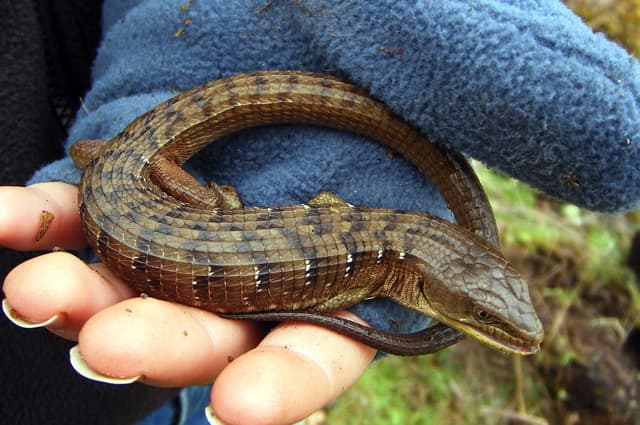
Elgaria coerulia
The northern alligator lizard (Elgaria coerulea) is a medium-sized, slender lizard found along the North American west coast. It is characterized by a distinct skin fold on each side and keeled scales dorsally, with smooth ventral scales. This species inhabits a variety of forested environments and can be found from sea level up to high elevations.
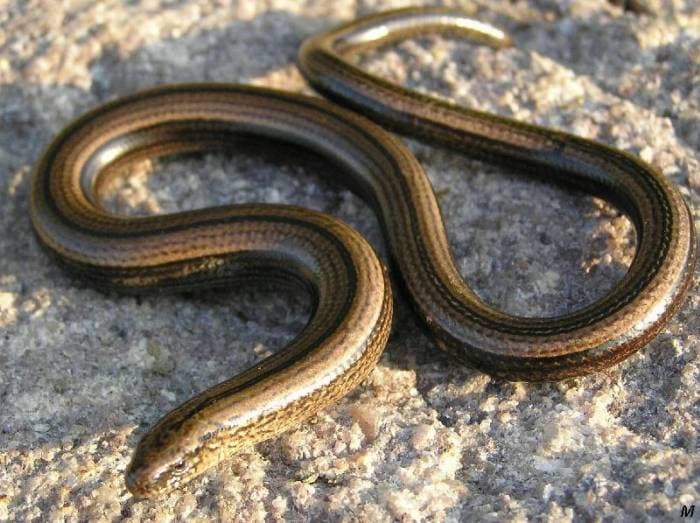
Anguis
Anguis, commonly known as slow worms, are a genus of legless lizards that are often mistaken for snakes. They are characterized by their grey-brown coloration, with females often exhibiting a coppery sheen and males displaying blue spots, especially during breeding season. These lizards inhabit a variety of warm, protected environments across Europe and parts of Asia, feeding primarily on invertebrates.

Chalcides bedriagai
Chalcides bedriagai, commonly known as Bedriaga's skink, is a small lizard endemic to the Iberian Peninsula. It typically inhabits sandy areas with sparse vegetation or open woodlands, burrowing into loose soil for shelter. This timid, diurnal species is characterized by its elongated body, short limbs, and a tail that can be regenerated if broken.