
Ophisaurus koellikeri
Koelliker's glass lizard, scientifically known as Hyalosaurus koellikeri, is a legless lizard species native to western North Africa, specifically Algeria and Morocco. It is characterized by its brownish dorsal side with a darker lateral band and a yellowish underside, lacking forelimbs but possessing rudimentary hind limbs. This oviparous species inhabits temperate forests, shrublands, grasslands, and pastures.
Key Facts
- ›Often referred to as the Moroccan glass lizard.
- ›Lacks forelimbs, but has rudimentary hind limbs.
- ›Found in Algeria and Morocco.
- ›Inhabits temperate forests, shrubland, temperate grassland, and pastureland.
- ›Reproduces by laying eggs (oviparous).
- ›Threatened primarily by habitat loss.

Koelliker's Glass Lizard, Moroccan Glass Lizard
Algeria, Morocco
No Forelimbs., Rudimentary Hind Limbs Present., Dorsally Brownish With A Darker Lateral Band., Ventrally Yellowish.
Habitat Loss
About Ophisaurus koellikeri
Koelliker's Glass Lizard
Koelliker's glass lizard, scientifically recognized as Hyalosaurus koellikeri, is a species of legless lizard belonging to the family Anguidae. This reptile is a native inhabitant of western North Africa, with its geographic range encompassing both Algeria and Morocco. Historically, H. koellikeri has been placed within the genus Ophisaurus, but genetic studies have indicated a closer relationship to the genera Anguis and Pseudopus.
Habitat and Distribution
The natural habitats favored by Koelliker's glass lizard are diverse temperate environments. These include temperate forests, shrubland, temperate grasslands, and pasturelands. The species has been documented at altitudes reaching up to 2,000 meters (6,600 feet), indicating an adaptation to varied terrain and elevations within its native regions.
Physical Characteristics
A distinctive feature of Hyalosaurus koellikeri is its limblessness, specifically the absence of forelimbs, although rudimentary hind limbs are present. The lizard's coloration consists of a brownish dorsal surface, marked by a darker lateral band. Its ventral side is typically yellowish. This morphology contributes to its common name, the glass lizard, due to its snake-like appearance.
Reproduction and Conservation
Koelliker's glass lizard is oviparous, meaning it reproduces by laying eggs. While specific details regarding its reproductive cycle are not extensively documented, this method of reproduction is characteristic of many lizard species. The species faces threats primarily from habitat loss, which impacts its natural living spaces and may affect its population numbers and long-term survival prospects.
Source: Wikipedia ↗
Frequently Asked Questions
What are the common names for Hyalosaurus koellikeri?
Hyalosaurus koellikeri is commonly known as Koelliker's glass lizard or the Moroccan glass lizard. These names reflect its physical appearance and geographic origin.
Where is Hyalosaurus koellikeri found geographically?
This species is native to western North Africa. Its natural range includes the countries of Algeria and Morocco.
What kind of habitats does Koelliker's glass lizard prefer?
Koelliker's glass lizard thrives in a variety of temperate environments. These include temperate forests, shrubland, temperate grasslands, and pastureland, often found at elevations up to 2,000 meters.
What are the distinctive physical characteristics of Hyalosaurus koellikeri?
Hyalosaurus koellikeri is notable for its lack of forelimbs, though it does possess rudimentary hind limbs. Its dorsal side is brownish with a dark lateral band, while its underside is yellowish.
How does Hyalosaurus koellikeri reproduce?
Hyalosaurus koellikeri is oviparous, meaning it reproduces by laying eggs. The specifics of its nesting and egg-laying behavior are not detailed in available records.
What are the main threats to Hyalosaurus koellikeri?
The primary threat to the survival of Hyalosaurus koellikeri is habitat loss. This loss of suitable environments directly impacts the species' ability to thrive and reproduce.
Related Lizards

Algyroides fitzingeri
Fitzinger's algyroides (Algyroides fitzingeri) is the smallest and most slender member of its genus, native to Corsica and Sardinia. This lizard is distinguished by the sharp demarcation between its side and underside scales and the absence of pale lines above its eyes. It inhabits a variety of temperate and Mediterranean environments, from sea level to high altitudes.
Chalcides viridanus
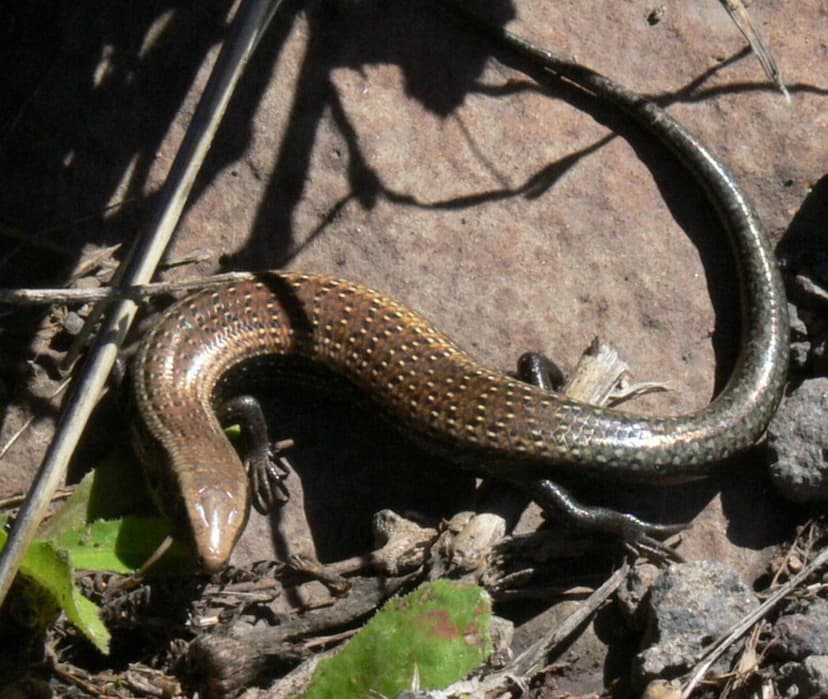
The West Canary skink, scientifically known as Chalcides viridanus, is a species of lizard endemic to the Canary Islands. This skink inhabits a diverse range of environments, from temperate forests and grasslands to urban areas, and can be found at elevations up to 2,000 meters. It is characterized by its cylindrical body and can reach a total length of approximately 18 cm.
Podarcis tiliguerta
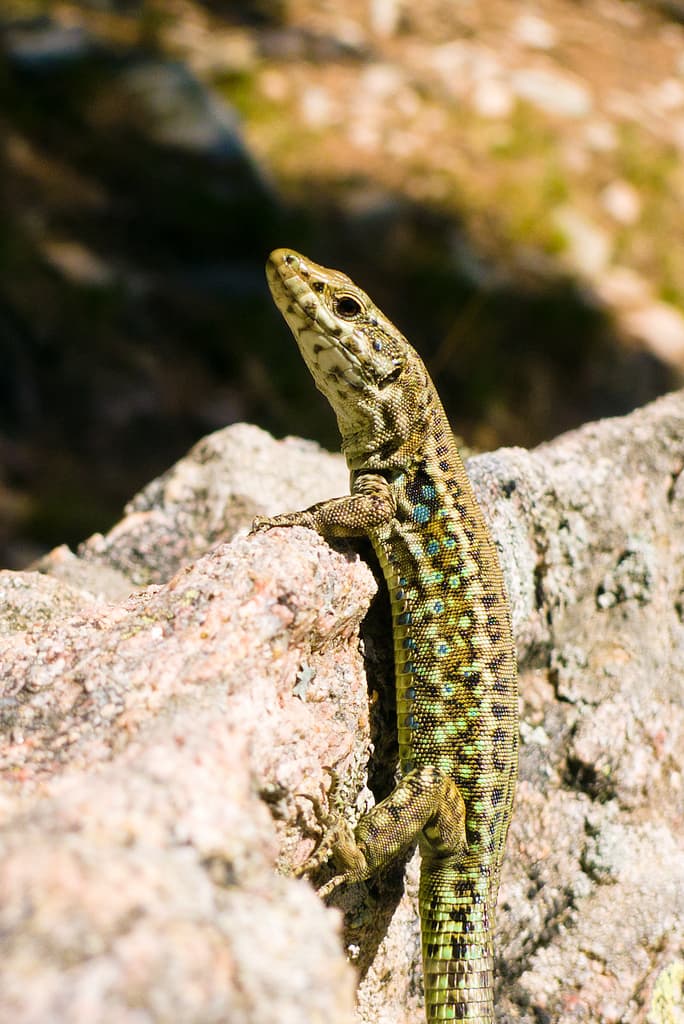
The Tyrrhenian wall lizard (Podarcis tiliguerta) is a species of lizard belonging to the Lacertidae family. It is native to the islands of Corsica and Sardinia and their surrounding islets, inhabiting a variety of temperate and Mediterranean environments. This species is distinguished by its subspecies diversity and is not currently considered threatened.