
Podarcis tiliguerta
The Tyrrhenian wall lizard (Podarcis tiliguerta) is a species of lizard belonging to the Lacertidae family. It is native to the islands of Corsica and Sardinia and their surrounding islets, inhabiting a variety of temperate and Mediterranean environments. This species is distinguished by its subspecies diversity and is not currently considered threatened.
Key Facts
- ›Native to Corsica, Sardinia, and associated islets.
- ›Inhabits diverse natural habitats including forests, shrublands, grasslands, and rocky areas.
- ›There are ten recognized subspecies.
- ›Not considered a threatened species by the IUCN.
- ›Belongs to the Lacertidae family.
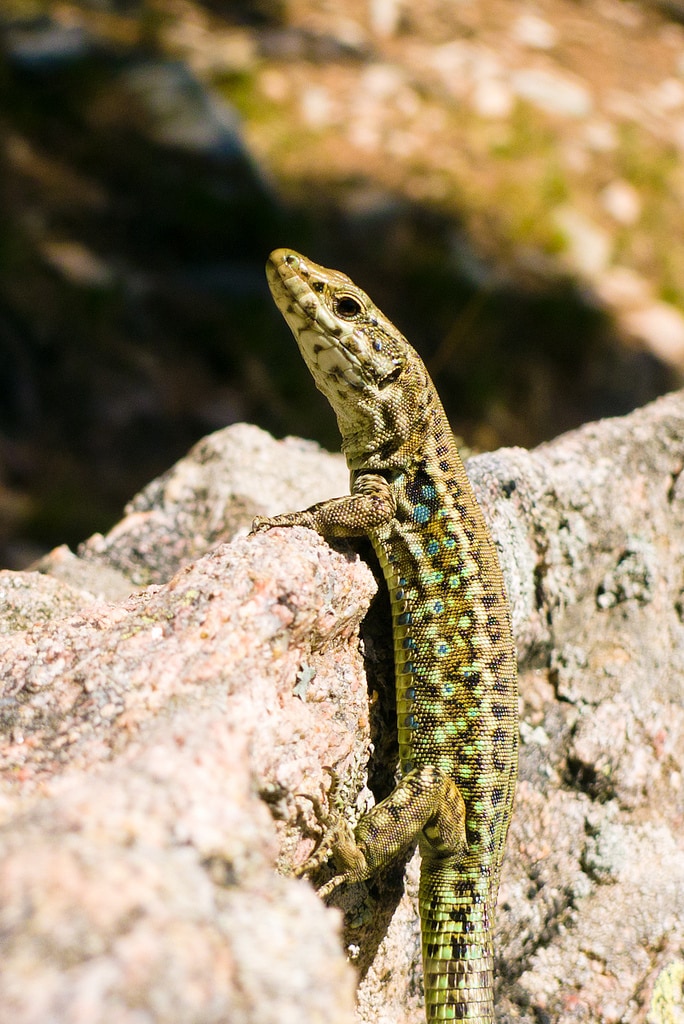
Tyrrhenian Wall Lizard
Corsica, Sardinia, Associated Islets
About Podarcis tiliguerta
Tyrrhenian Wall Lizard (Podarcis tiliguerta)
The Tyrrhenian wall lizard, scientifically known as Podarcis tiliguerta, is a species of lizard belonging to the Lacertidae family. Its natural range is confined to the islands of Corsica and Sardinia, along with their numerous associated islets in the Tyrrhenian Sea. This species is notable for its adaptability to a wide array of habitats, reflecting its successful colonization of various island microclimates.
Habitat and Distribution
The natural habitats of P. tiliguerta are diverse, encompassing a spectrum of temperate and Mediterranean environments. This includes temperate forests, shrublands, and grasslands, as well as more rugged terrains like rocky areas and sandy shores. The lizard also thrives in landscapes influenced by human activity, such as arable land, pastureland, and rural gardens, demonstrating its capacity to coexist with human presence. Its distribution is primarily limited to the islands of Corsica and Sardinia and their smaller surrounding islands.
Subspecies and Taxonomy
Podarcis tiliguerta is characterized by significant subspecies diversity, with ten recognized subspecies. These variations underscore the evolutionary trajectories of the species across different islands and islets. Some of these subspecies include P. t. contii, P. t. eiselti, P. t. granchii, P. t. grandisonae, P. t. maresi, P. t. pardii, P. t. ranzii, P. t. rudolphisimonii, P. t. tiliguerta, and P. t. toro. The naming of some subspecies honors individuals significant in herpetological research, such as Edoardo Granchi.
Conservation Status
The Tyrrhenian wall lizard is not considered a threatened species by the International Union for Conservation of Nature (IUCN). This classification suggests that current population levels and ecological conditions are sufficient to maintain the species' long-term survival. However, ongoing monitoring of island ecosystems is crucial for any species, particularly those with restricted geographic ranges.
Source: Wikipedia ↗
Frequently Asked Questions
What are the natural habitats of the Tyrrhenian wall lizard?
The Tyrrhenian wall lizard thrives in a variety of natural habitats. These include temperate forests, temperate shrubland, Mediterranean-type shrubby vegetation, and temperate grasslands. They are also found in rocky areas, sandy shores, and even agricultural or garden environments like arable land, pastureland, and rural gardens.
How many subspecies of Podarcis tiliguerta are recognized?
Ten subspecies of Podarcis tiliguerta are currently recognized as valid. These subspecies demonstrate the species' adaptation to various islands and islets within its native range. The nominotypical subspecies is also included among these.
What is the conservation status of the Tyrrhenian wall lizard?
The Tyrrhenian wall lizard is not considered a threatened species by the International Union for Conservation of Nature (IUCN). This indicates that its populations are currently stable and not facing immediate risks of extinction.
Where is Podarcis tiliguerta found geographically?
Podarcis tiliguerta is naturally found on the islands of Corsica and Sardinia. It also inhabits the smaller islets associated with these larger islands, suggesting a distribution across the Tyrrhenian Sea region.
Related Lizards
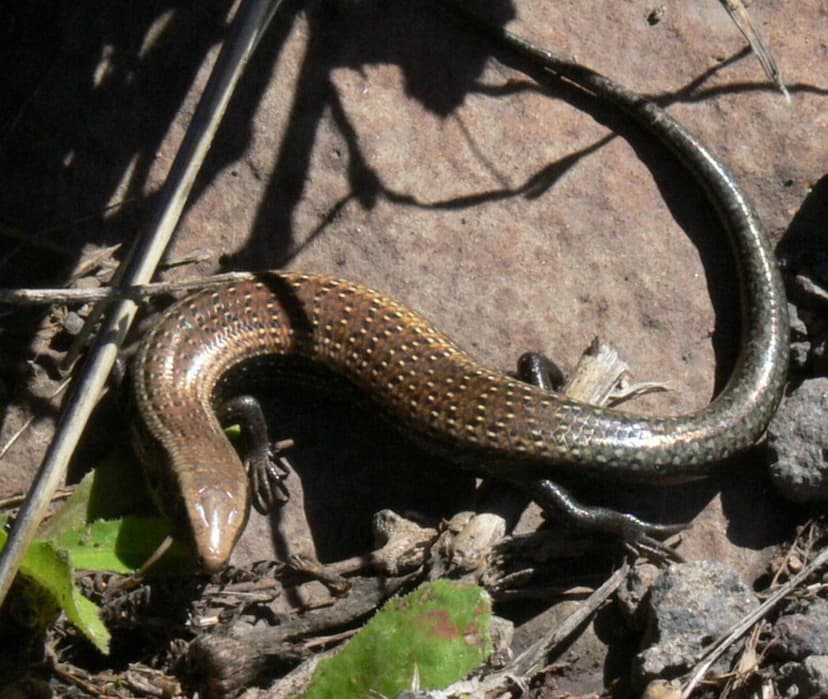
Chalcides viridanus
The West Canary skink, scientifically known as Chalcides viridanus, is a species of lizard endemic to the Canary Islands. This skink inhabits a diverse range of environments, from temperate forests and grasslands to urban areas, and can be found at elevations up to 2,000 meters. It is characterized by its cylindrical body and can reach a total length of approximately 18 cm.

West Canary skink
The West Canary skink, also known as the Canaryan cylindrical skink, is a species of lizard endemic to the Canary Islands. It inhabits a variety of environments, from temperate forests to urban areas, and can be found at altitudes up to 2,000 meters. This viviparous lizard is active during the day and at dusk, reaching a total length of about 18 cm.

Podarcis vaucheri
Podarcis vaucheri, commonly known as the Andalusian wall lizard, is a reptile species native to northern Africa and southern Spain. It inhabits a wide range of environments, from temperate forests and shrublands to urban areas, and is characterized by its oviparous reproductive method.