
Ophisops beddomei
Ophisops beddomei, also known as Beddome's snake-eye, is a diurnal and fast-moving terrestrial lizard endemic to the Western Ghats of India. This species inhabits grasslands, shrublands, and forests and primarily feeds on insects. It is characterized by specific scale arrangements and coloration that can be similar to related species, though often lacking a prominent upper lateral light streak.
Key Facts
- ›Endemic to the Western Ghats of India.
- ›Diurnal and terrestrial lizard.
- ›Preys primarily on insects.
- ›Oviparous (egg-laying) reproduction.
- ›Found in grasslands, shrublands, and forests.
- ›Named in honor of Richard Henry Beddome.

Beddome's Snake-Eye, Beddome's Lacerta
India
- Similar To Ophisops Jerdonii.
- Two Or Three Frontonasals On A Transverse Line.
- One Or Two Azygos Prefrontals Nearly Always Present.
- First and Fourth Supraoculars Usually Broken Into Several Very Small Shields Or Granules.
- Lateral Scales Distinctly Smaller Than Dorsal Scales.
- 28 To 32 Scales Around the Body.
- Femoral Pores Number Eight To 13.
- Upper Lateral Light Streak Is Frequently Absent .
Insects
Diurnal, Fast-Moving, Terrestrial
About Ophisops beddomei
Ophisops beddomei: Beddome's Snake-Eye
Ophisops beddomei, commonly referred to as Beddome's snake-eye or Beddome's lacerta, is a species of lizard belonging to the family Lacertidae. This species is characterized by its diurnal nature and swift, terrestrial movements. It is exclusively found in the Western Ghats region of India.
Geographic Range and Habitat
The geographic distribution of Ophisops beddomei encompasses several Indian states in the western part of the country, including Goa, Gujarat, Karnataka, Kerala, Maharashtra, and Tamil Nadu. The species' preferred natural habitats are grasslands, shrublands, and forests, typically situated at elevations ranging from 200 to 1,000 meters (660 to 3,280 feet). The type locality for this species is noted as the Brahmagiri Hills in Wayanad.
Description and Diet
Ophisops beddomei exhibits physical characteristics that bear a strong resemblance to Ophisops jerdonii. Key distinguishing features include the presence of two or three frontonasal scales arranged in a transverse line, and the almost constant occurrence of one or two azygos prefrontal scales. The supraocular scales, specifically the first and fourth, are usually fragmented into numerous small shields or granules. Its lateral scales are distinctly smaller than the dorsal scales, with approximately 28 to 32 scales encircling the body and eight to 13 femoral pores. While its coloration is similar to O. jerdonii, the upper lateral light streak is frequently absent in O. beddomei. The diet of this lizard species primarily consists of insects.
Reproduction and Naming
Reproductively, Ophisops beddomei is oviparous, meaning it reproduces by laying eggs. The specific name, "beddomei," was chosen to honor Richard Henry Beddome, a British army officer and botanist who lived from 1830 to 1911. Details regarding its lifespan, predators, threats, and specific reproductive periods are not extensively documented in historical records.
Source: Wikipedia ↗
Frequently Asked Questions
What are the common names for Ophisops beddomei?
Ophisops beddomei is commonly known as Beddome's snake-eye or Beddome's lacerta. These names refer to its appearance and are in honor of Richard Henry Beddome.
Where is Ophisops beddomei found?
This lizard species is found in Western India, specifically in the states of Goa, Gujarat, Karnataka, Kerala, Maharashtra, and Tamil Nadu. Its natural habitat is primarily within the Western Ghats mountain range.
What kind of habitat does Ophisops beddomei prefer?
Ophisops beddomei prefers natural habitats such as grassland, shrubland, and forest environments. It is typically found at altitudes ranging from 200 to 1,000 meters.
What does Ophisops beddomei eat?
The diet of Ophisops beddomei consists primarily of insects. As a terrestrial lizard, it actively hunts for its prey within its habitat.
How does Ophisops beddomei reproduce?
Ophisops beddomei reproduces by laying eggs, making it an oviparous species. The specifics of its breeding behavior and clutch size are not detailed in the available information.
What are the distinguishing physical characteristics of Ophisops beddomei?
Ophisops beddomei has specific scutellation, including two or three frontonasals in a transverse line and the frequent presence of azygos prefrontals. Its first and fourth supraoculars are often broken into small shields. Lateral scales are notably smaller than dorsal scales, with 28 to 32 scales around the body, and it possesses eight to 13 femoral pores.
Related Lizards

Rose-bellied lizard
The rose-bellied lizard is a small reptile found from southern Texas to northern Costa Rica, inhabiting diverse environments including beaches, grasslands, and forests. Its distinctive feature is the large pink blotch on the belly of males, bordered by dark blue. This oviparous species primarily feeds on invertebrates.
Chernov's skink
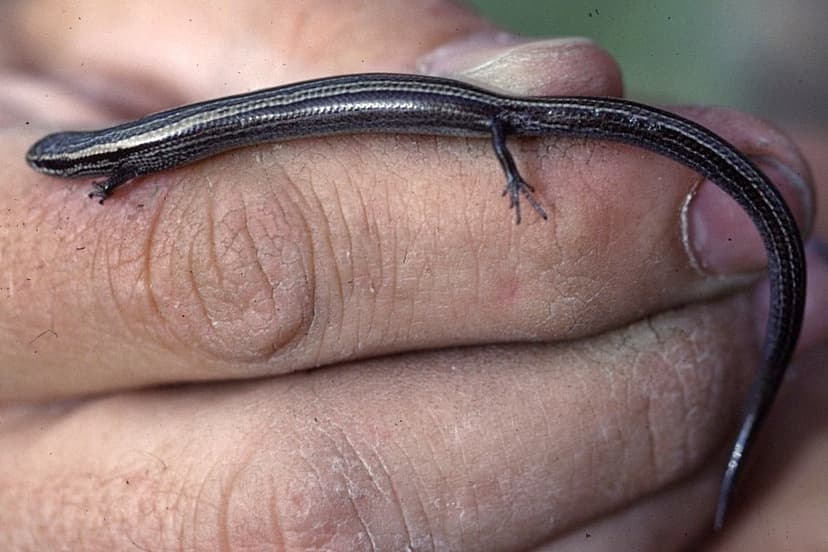
Chernov's skink, scientifically known as *Ablepharus chernovi*, is a species of skink found in northern Eurasia. This lizard inhabits grasslands, shrublands, and forests at moderate to high altitudes. It is characterized by being oviparous, with females laying clutches of up to four eggs.

Ctenotus helenae
Ctenotus helenae, commonly known as the clay-soil ctenotus, is a species of skink found across various Australian habitats including forests, shrublands, grasslands, and deserts. This terrestrial and diurnal lizard is oviparous, meaning it reproduces by laying eggs. The species' scientific name honors Helen Louise Pianka.