
Ctenotus helenae
Ctenotus helenae, commonly known as the clay-soil ctenotus, is a species of skink found across various Australian habitats including forests, shrublands, grasslands, and deserts. This terrestrial and diurnal lizard is oviparous, meaning it reproduces by laying eggs. The species' scientific name honors Helen Louise Pianka.
Key Facts
- ›Endemic to Australia.
- ›Found in the Northern Territory, Queensland, South Australia, and Western Australia.
- ›Inhabits a range of environments from forests to deserts.
- ›It is a terrestrial and diurnal species.
- ›Reproduces by laying eggs (oviparous).

Clay-Soil Ctenotus
Australia, Northern Territory, Queensland, South Australia, Western Australia
Terrestrial, Diurnal
About Ctenotus helenae
Ctenotus helenae, commonly referred to as the clay-soil ctenotus, is a species of skink native to Australia. This lizard is known for its presence across a diverse range of Australian landscapes, demonstrating a capacity to thrive in varied environmental conditions.
Geographic Range and Habitat
The clay-soil ctenotus is distributed throughout several Australian states, including the Northern Territory, Queensland, South Australia, and Western Australia. Its habitat preferences are broad, encompassing areas such as forests, shrublands, grasslands, and even desert regions. This adaptability allows it to occupy a significant portion of the Australian continent.
Behavior and Reproduction
This species is characterized by its terrestrial nature, meaning it primarily lives and moves on the ground. Furthermore, Ctenotus helenae is diurnal, indicating that it is most active during the daytime. In terms of reproduction, the clay-soil ctenotus is oviparous, a characteristic shared by many reptile species, which signifies that it reproduces by laying eggs.
Etymology
The scientific name, Ctenotus helenae, carries a specific etymological origin. The species epithet, 'helenae,' was chosen in honor of Helen Louise Pianka. She was the wife of the notable American herpetologist Eric R. Pianka, recognizing her connection to the field of herpetology.
Source: Wikipedia ↗
Frequently Asked Questions
What is Ctenotus helenae commonly called?
Ctenotus helenae is commonly known as the clay-soil ctenotus. This name reflects its habitat association.
Where is the clay-soil ctenotus found?
The clay-soil ctenotus is found across Australia, specifically in the Northern Territory, Queensland, South Australia, and Western Australia. It is endemic to the continent.
What kind of environments does Ctenotus helenae live in?
This species is adaptable and can be found in a wide variety of habitats. These include forests, shrublands, grasslands, and desert environments.
How does Ctenotus helenae reproduce?
Ctenotus helenae is oviparous, which means it reproduces by laying eggs. The specifics of its nesting and egg-laying behavior are not detailed in available records.
What does 'helenae' in the scientific name refer to?
The specific name, helenae, was given in honor of Helen Louise Pianka. She was the wife of the American herpetologist Eric R. Pianka, who is recognized for his work on reptiles.
Is the clay-soil ctenotus active during the day or night?
Ctenotus helenae is a diurnal species, meaning it is active during daylight hours. It is also described as terrestrial, spending its time on the ground.
Related Lizards

Madrean alligator lizard
The Madrean alligator lizard (Elgaria kingii) is a species of lizard native to the southwestern United States and northwestern Mexico. It inhabits diverse environments including deserts, grasslands, shrublands, and forests. The species is known for its oviparous reproduction and is recognized by three subspecies.

Agama anchietae
Agama anchietae, commonly known as Anchieta's agama or the western rock agama, is a species of lizard native to southern Africa. It is characterized by its cryptic coloration, a wider head and longer tail in males due to sexual dimorphism, and a diet primarily consisting of insects, particularly ants. This species inhabits diverse environments including deserts, shrublands, and grasslands, and it reproduces by laying eggs.
Crossobamon eversmanni
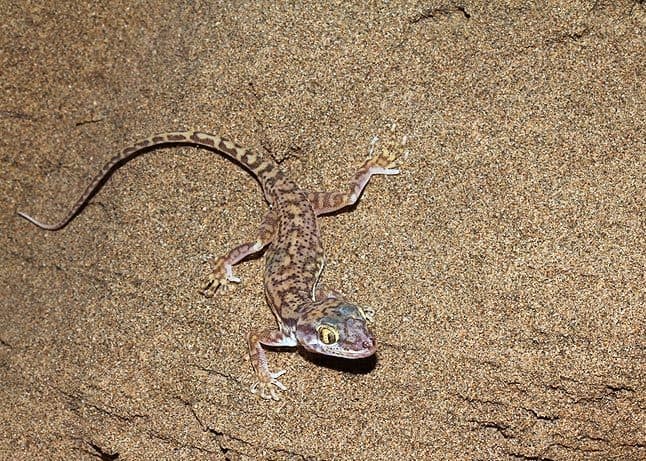
Crossobamon eversmanni, commonly known as the comb-toed gecko, is a species of Asian gecko found in desert, grassland, and shrubland habitats across Iran, Pakistan, and Central Asia. This terrestrial and nocturnal lizard is characterized by its burrowing behavior and oviparous reproduction, with females laying one to two eggs per clutch.