
Ophisops leschenaultii
Ophisops leschenaultii, commonly known as Leschenault's snake-eye, is a species of lizard native to India and eastern Sri Lanka. This terrestrial and diurnal lizard is characterized by its keeled scales, distinctive pale bands along its body, and a tail that is nearly twice the length of its head and body. It inhabits rocky areas within forests and shrublands.
Key Facts
- ›Native to India and eastern Sri Lanka.
- ›Terrestrial and diurnal lizard.
- ›Possesses keeled scales on its body.
- ›Features pale bands along its sides, edged with black.
- ›Tail is approximately twice the length of its head and body.
- ›Found in rocky forest and shrubland habitats.
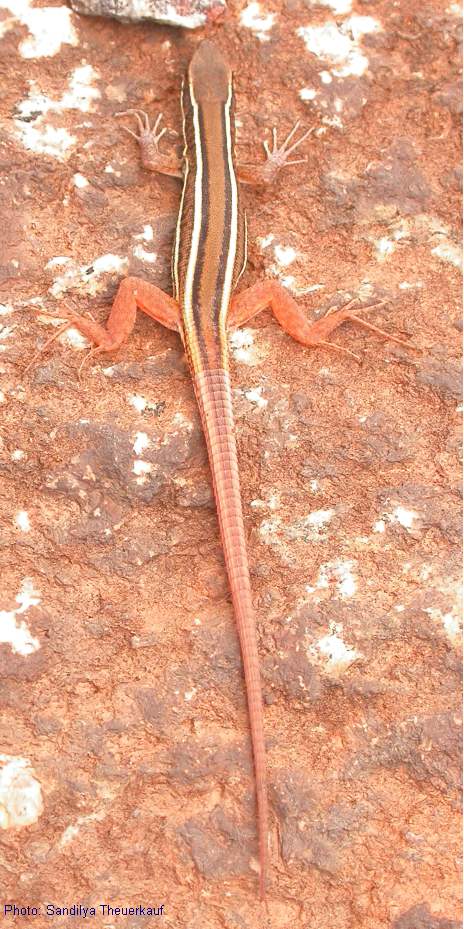
Leschenault's Snake-Eye, Leschenault’S Lacerta, Leschenault's Cabrita, Pandura Katussa, Heeraluwa, Sikanala
India, Sri Lanka
- Upper Head Shields Strongly Keeled and Striated.
- Anterior Labials Keeled, Forming A Projecting Margin.
- Canthus Rostralis Very Strong.
- Nostril In the Horizontal Suture Between Two Large Nasals.
- Frontal Long and Narrow.
- Occipital Small.
- Four Supraoculars, First and Fourth Small.
- Subocular Bordering the Lip.
- Temporal Scales Small and Keeled.
- Two Large Shields Border Parietals Exteriorly.
- Curved Large Shield On the Supero-Anterior Border of the Ear-Opening.
- Six Large Chin-Shields On Each Side.
- Dorsal Scales Moderately Large, Scarcely Larger On the Back Than On the Sides.
- Ventrals Broader Than Long, In 6 Longitudinal and 25 To 29 Transverse Series.
- 42 To 48 Scales Round the Middle of the Body, Ventrals Included.
- A Large Postero-Median Preanal Plate.
- Hind Limb Reaches the Ante-Humeral Fold Or A Little Beyond the Ear.
- Length of the Foot Equals the Distance Between the Antehumeral Fold and the Nostril Or the Tip of the Snout.
- 12 To 16 Femoral Pores On Each Side.
- Tail Nearly Twice As Long As Head and Body.
- Caudal Scales Much Larger Than Dorsals.
- Brownish Or Golden Above.
- A Pale Band, Edged Above With A Black One, Along Each Side of the Body and Tail, Commencing From the Supraciliary Edge.
- Another Pale, Black-Edged Band Along the Upper Lip and Side of the Body.
- Space Between the Two Light Bands On Each Side Usually Black, Or Spotted With Black.
- Lower Surfaces Yellowish-White.
- Tail and Hind Limbs Often Reddish.
Terrestrial, Diurnal
About Ophisops leschenaultii
Ophisops leschenaultii: Leschenault's Snake-Eye
Ophisops leschenaultii, commonly known as Leschenault's snake-eye, is a species of lizard belonging to the family Lacertidae. This species is native to India and eastern Sri Lanka, where it inhabits rocky areas within forests and shrublands. Its common names include Leschenault’s lacerta, Leschenault's cabrita, and in Sri Lanka, pandura katussa in Sinhala, with regional variations like heeraluwa or sikanala for its skink-like appearance.
Description
The physical characteristics of Ophisops leschenaultii are detailed, noting strongly keeled and striated upper head shields and anterior labials. It possesses a very strong canthus rostralis, with the nostril situated between large nasals. The frontal shield is long and narrow, and it has a small occipital shield. The dorsal scales are moderately large and keeled, while ventral scales are broader than long, arranged in longitudinal and transverse series. A notable feature is the tail, which is nearly twice the length of the head and body, with caudal scales larger than dorsal ones.
Coloration typically involves a brownish or golden upper surface, marked by pale bands edged with black along the sides of the body and tail, originating from the supraciliary edge. A second pale, black-edged band runs along the upper lip and the side of the body. The space between these light bands is often black or spotted with black. The lower surfaces are yellowish-white, and the tail and hind limbs may exhibit reddish hues. Historical measurements place the snout-to-vent length at approximately 2 inches (5 cm) and the total length around 5.5 inches (14 cm), with the tail being about 4 inches (10 cm).
Habitat and Behavior
Ophisops leschenaultii is found in rocky environments, preferring either forest or shrubland habitats. These locations can be at altitudes ranging from sea level up to 1,500 meters (4,900 ft). The lizard is terrestrial, spending its life on the ground, and is diurnal, meaning it is active during the day.
Reproduction
This species reproduces by laying eggs (oviparous). A clutch typically consists of up to six eggs.
Etymology
The specific name, leschenaultii, honors the French naturalist Jean Baptiste Leschenault de la Tour.
Source: Wikipedia ↗
Frequently Asked Questions
What are the common names for Ophisops leschenaultii?
Ophisops leschenaultii is commonly known as Leschenault's snake-eye, Leschenault’s lacerta, and Leschenault's cabrita. In Sri Lanka, it is called pandura katussa in Sinhala, and in some areas, heeraluwa or sikanala.
Where is Ophisops leschenaultii found?
This lizard species is native to India and eastern Sri Lanka. Its preferred natural habitat includes rocky areas within forests or shrublands.
What does Ophisops leschenaultii look like?
It has keeled upper head shields and scales. Its coloration is typically brownish or golden above, with pale bands along each side of the body and tail, often edged with black. The lower surfaces are yellowish-white, and the tail and hind limbs can be reddish.
How large does Ophisops leschenaultii get?
Historical descriptions indicate a snout-to-vent length of about 2 inches (5 cm) and a tail length of approximately 4 inches (10 cm), leading to a total length of around 5.5 inches (14 cm).
What is the behavior of Ophisops leschenaultii?
Ophisops leschenaultii is a terrestrial species, meaning it lives on the ground. It is also diurnal, indicating it is active during daylight hours.
How does Ophisops leschenaultii reproduce?
This species is oviparous, meaning it reproduces by laying eggs. A clutch can contain up to six eggs.
What is the habitat of Ophisops leschenaultii?
Ophisops leschenaultii prefers rocky areas within forests or shrublands. These habitats can range in altitude from sea level up to 1,500 meters (4,900 ft).
Related Lizards
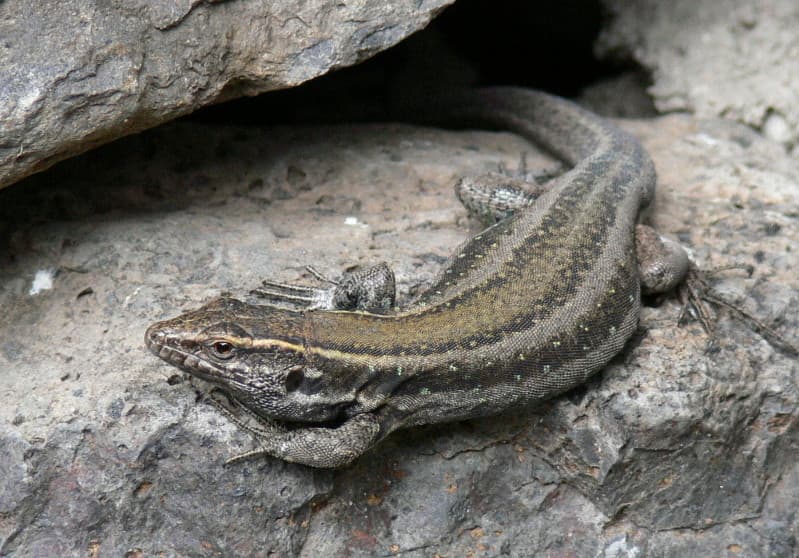
Boettger's lizard
Boettger's lizard (Gallotia caesaris) is a species of wall lizard endemic to the western Canary Islands, specifically El Hierro and La Gomera. This oviparous reptile inhabits rocky areas, shrubland, and forests, and is known for its capacity to lay multiple clutches of eggs per year. It is closely related to the Gallotia galloti species found on neighboring islands.
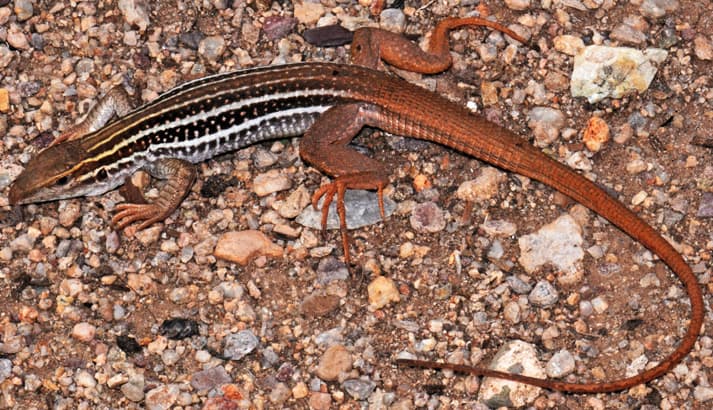
Canyon Spotted Whiptail
The Canyon Spotted Whiptail, also known as el huico manchado de cañón, is a lizard species found in northwestern Mexico and the southwestern United States. It inhabits forests, shrublands, and rocky areas, and is oviparous, laying eggs as its primary method of reproduction.

Danford's lizard
Danford's lizard (Anatololacerta danfordi) is a species of lizard belonging to the Lacertidae family, found in rocky areas within forests and shrublands across Greece and Turkey. This oviparous species is known to lay clutches of 3 to 8 eggs. It was named in honor of the zoologist Charles G. Danford.