
Oplurus fierinensis
Oplurus fierinensis, commonly known as the Anzamala Madagascar swift or Madagascar blue iguana, is a rock-dwelling iguana native to Madagascar. Its most striking feature is its blue coloration, which can vary in shade depending on lighting conditions and provides excellent camouflage against its rocky habitat. This species can grow up to 28 cm in total length.
Key Facts
- ›Endemic to Madagascar.
- ›Also known as the Anzamala Madagascar swift or Madagascar blue iguana.
- ›Exhibits blue or grey coloration for camouflage amongst rocks.
- ›Can reach a total length of 28 cm.
- ›Inhabits rocky environments (saxicolous).
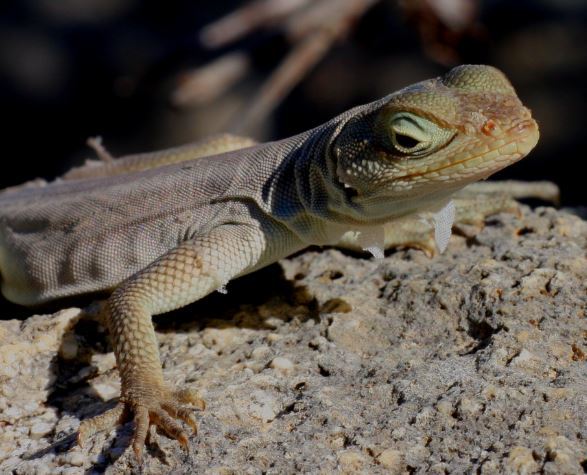
Anzamala Madagascar Swift, Madagascar Blue Iguana
Madagascar
- Blue Or Grey Coloration, Varying With Lighting.
- Plain Gray Ventral Side.
- Total Length Up To 28 cm.
- Coloration Provides Camouflage Among Blue-Grey Rocks.
About Oplurus fierinensis
Oplurus fierinensis, also known by its common names the Anzamala Madagascar swift or Madagascar blue iguana, is a species of iguana endemic to the island of Madagascar. This lizard is characterized by its saxicolous nature, meaning it dwells among rocks, a habitat that is complemented by its distinctive coloration.
Description and Distribution
The most notable physical characteristic of Oplurus fierinensis is its blue hue, though the precise shade can vary and is influenced by lighting conditions. This coloration, along with a plain gray underside, provides effective camouflage against the blue-grey rocks it inhabits. The species can achieve a total length of up to 28 centimeters. Its known distribution is primarily within Madagascar, specifically documented in the Toliara region of the southwestern part of the island.
Source: Wikipedia ↗
Frequently Asked Questions
What is the common name for Oplurus fierinensis?
Oplurus fierinensis is commonly known as the Anzamala Madagascar swift or the Madagascar blue iguana. These names reflect its origin and distinctive coloration.
Where is Oplurus fierinensis found?
This species is endemic to Madagascar. It has been specifically documented in the Toliara region of southwestern Madagascar.
What does Oplurus fierinensis look like?
The Madagascar blue iguana is characterized by its blue coloration, which can vary in shade depending on the light. It has a plain gray ventral side and can reach a total length of 28 cm. This coloring serves as camouflage against its rocky surroundings.
What kind of habitat does Oplurus fierinensis prefer?
Oplurus fierinensis is a saxicolous species, meaning it is rock-dwelling. Its habitat consists of rocky environments where its coloration provides effective camouflage.
Related Lizards

Stellion
The Stellion, also known as the starred agama or roughtail rock agama, is a species of agamid lizard found in Greece and Turkey. It can reach up to 35 cm in length and is characterized by its ability to change color to express mood. This shy lizard typically inhabits rocky areas, where it basks on stone walls, rocks, and trees, and quickly hides in crevices when startled.

Agama
Agama are a genus of small to moderate-sized, long-tailed lizards native to Africa, particularly sub-Saharan regions. Known for their insectivorous diet and ability to adapt to various habitats, including human settlements, they display striking color changes based on mood and gender. These diurnal reptiles are characterized by powerful hind legs for swift movement and are recognized by their common names, some referencing their head-bobbing displays.

Lacertilia
Lizards are a diverse group of reptiles, encompassing over 7,000 species found on every continent except Antarctica. They exhibit a wide range of sizes, from tiny chameleons to the massive Komodo dragon, and possess characteristics like scales, four limbs (though some are legless), and long tails. Lizards inhabit nearly every environment, from deserts to rainforests, and play crucial roles as both predators and prey within their ecosystems.