
Painted leopard gecko
The painted leopard gecko, scientifically known as Eublepharis pictus, is a species of gecko found in the Indian states of Andhra Pradesh and Odisha. It inhabits dry evergreen forests interspersed with scrublands and meadows and is characterized by its nocturnal behavior and unique scale patterns. This gecko was discovered in 2022 and is noted for its distinctive pale band.
Key Facts
- ›Scientific name: Eublepharis pictus
- ›Found in Andhra Pradesh and Odisha, India.
- ›Nocturnal, foraging with its tongue as a sensory organ.
- ›Possesses 23 to 26 rows of large, flat, keeled scales on its dorsum.
- ›Discovered in 2022.
- ›May be threatened by wildlife trade and illegal smuggling.

Painted Leopard Gecko
India
Dry Evergreen Forest, Scrub, Meadow
- Can Grow To 117 mm In Snout-Vent Length.
- Dorsum Has 23 To 26 Rows of Large Flat Tubercle-Like Keeled Scales Intermixed With Smaller Scales.
- Features A Single Pale Band Between the Nuchal Loop and the Caudal Constriction.
- Possesses Smooth Subdigital Lamellae On Digital Iv of Pes .
- Has 17–18 Precloacal Pores In An Angulate Series Lacking A Diastema.
- Nocturnal.
- Observed Foraging Along Trails After Dusk.
- Uses Its Tongue As A Sensory Organ By Licking Surfaces.
Wildlife Trade, Illegal Smuggling
About Painted leopard gecko
The Painted Leopard Gecko (Eublepharis pictus)
The painted leopard gecko, scientifically classified as Eublepharis pictus, is a species of gecko native to India. It inhabits the Indian states of Andhra Pradesh and Odisha, where it can be found in dry evergreen forests interspersed with scrublands and meadows.
Morphology and Discovery
This gecko species can reach a snout-vent length of up to 117 mm (4.6 inches). Distinctive physical characteristics include 23 to 26 rows of large, flat, keeled scales across its dorsum, interspersed with smaller scales. A notable feature is a single pale band situated between the nuchal loop and the caudal constriction. The species was formally discovered in 2022, with the initial specimen, a deceased female, found in a water tank in Vishakhapatnam, Andhra Pradesh. This specimen was preserved and deposited in the collection of the National Centre for Biological Sciences in Bangalore.
Behavior and Ecology
Eublepharis pictus is a nocturnal species, meaning it is primarily active during the night. Observations have documented it foraging along trails after dusk. It utilizes its tongue as a sensory organ, actively licking surfaces to gather information about its surroundings.
Conservation
While the painted leopard gecko is reported to be widespread within its forest habitat, there are concerns regarding its conservation status. The species may be considered near threatened due to pressures from the wildlife trade and illegal smuggling activities, which pose a significant risk to its populations.
Source: Wikipedia ↗
Frequently Asked Questions
What is the scientific name of the painted leopard gecko?
The scientific name of the painted leopard gecko is Eublepharis pictus. This binomial nomenclature classifies it within the Eublepharis genus.
Where can the painted leopard gecko be found?
The painted leopard gecko is native to the Indian states of Andhra Pradesh and Odisha. It typically resides in dry evergreen forests that are mixed with scrublands and meadows.
What are the physical characteristics of the painted leopard gecko?
Eublepharis pictus can reach up to 117 mm in snout-vent length. Its dorsum features 23 to 26 rows of large, flat, keeled scales intermixed with smaller scales, and it has a single pale band between its nuchal loop and caudal constriction.
When was the painted leopard gecko discovered?
The painted leopard gecko was discovered in 2022. The initial specimen, a dead female, was found in a water tank in Vishakhapatnam, Andhra Pradesh.
What are the potential threats to the painted leopard gecko?
Despite being widespread in its forest habitat, the painted leopard gecko may face threats from the wildlife trade and illegal smuggling. These activities could potentially lead to its classification as near threatened.
Related Lizards

Cyrtopodion kotschyi
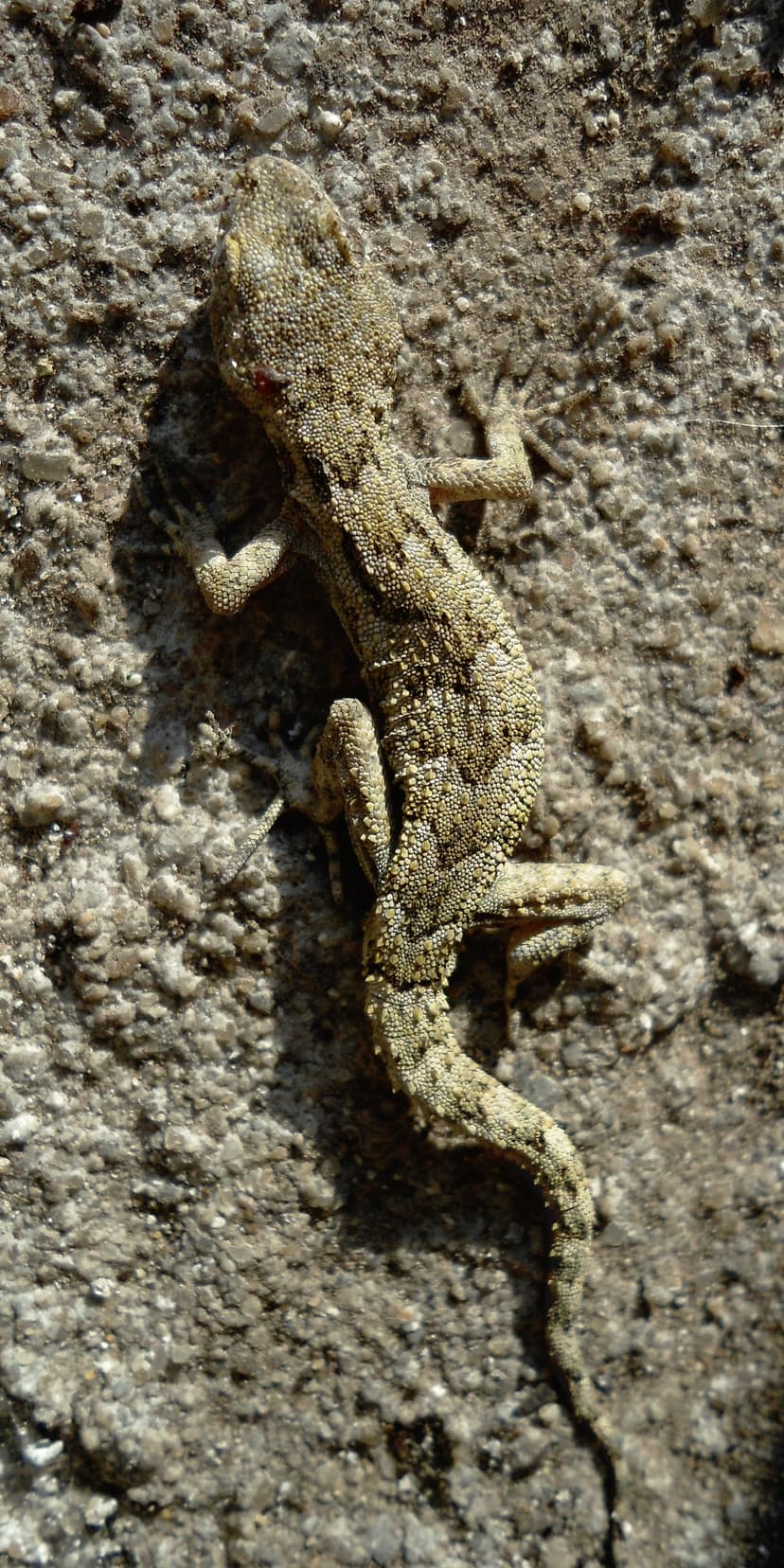
Kotschy's gecko is a slender lizard native to southeastern Europe and the Middle East, distinguished by its variable coloration and distinct W-shaped dorsal bands. It typically inhabits rocky areas, scrub, and the walls of buildings, often being nocturnal. This species lays two eggs which take a considerable time to hatch, with individuals reaching maturity in about two years and a lifespan of up to nine years in captivity.
Kotschy's gecko
Kotschy's gecko is a slender lizard native to southeastern Europe and the Middle East, characterized by its variable coloration and W-shaped dorsal bands. It inhabits a range of environments from coastal cliffs to building walls, displaying primarily nocturnal behavior. This species is known for its distinctive high-pitched "chick" call and lays two eggs that hatch into juveniles approximately 2 cm long.
Eublepharis fuscus
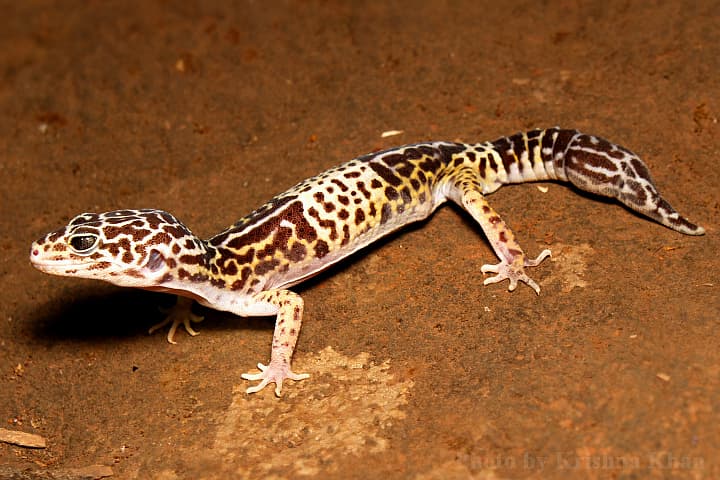
The West Indian leopard gecko (Eublepharis fuscus) is a robust gecko species found in western India and potentially extending into southeastern Pakistan. Known for its dusky coloration, it inhabits forested hill tracts, scrub, and rocky areas. This nocturnal, terrestrial lizard primarily preys on scorpions and other arthropods.