
Phelsuma abbotti
Phelsuma abbotti, commonly known as Abbott's day gecko, is a species of lizard belonging to the Gekkonidae family. This gecko is found across Madagascar and the Seychelles, inhabiting a variety of forest types, shrublands, and even urban and rural gardens. It is an oviparous species, meaning it reproduces by laying eggs.
Key Facts
- ›Native to Madagascar and the Seychelles.
- ›Inhabits diverse environments including dry and moist forests, mangrove forests, shrublands, gardens, and urban areas.
- ›Reproduces by laying eggs (oviparous).
- ›Named after American naturalist William Louis Abbott.
- ›Has three recognized subspecies: P. abbotti abbotti, P. abbotti chekei, and P. abbotti sumptio.

Abbott's Day Gecko, Aldabra Day Gecko, Assumption Day Gecko
Madagascar, Seychelles
Subtropical Or Tropical Dry Forest, Subtropical Or Tropical Moist Lowland Forest, Subtropical Or Tropical Mangrove Forest, Subtropical Or Tropical Dry Shrubland, Rural Gardens, Urban Areas, Introduced Vegetation
About Phelsuma abbotti
Phelsuma abbotti: Abbott's Day Gecko
Phelsuma abbotti, widely known as Abbott's day gecko, is a species of lizard that belongs to the Gekkonidae family. This gecko is recognized by several common names, including the Aldabra day gecko and the Assumption day gecko, often reflecting its geographical distribution.
Geographic Range and Habitat
The natural range of Phelsuma abbotti extends across Madagascar and the Seychelles. The species demonstrates considerable adaptability, inhabiting a diverse array of environments. Its natural habitats include subtropical and tropical dry forests, moist lowland forests, and mangrove forests. Beyond these natural settings, Phelsuma abbotti is also found in subtropical and tropical dry shrublands, rural gardens, urban areas, and environments with introduced vegetation.
Taxonomy and Subspecies
Three distinct subspecies of Phelsuma abbotti are recognized, each with its own specific range within the broader distribution:
- Phelsuma abbotti abbotti Stejneger, 1893: This subspecies is known as the Aldabra Island day gecko and is found on Aldabra Atoll in the Seychelles.
- Phelsuma abbotti chekei Börner & Minuth, 1984: Referred to as Cheke's day gecko, this subspecies is found in Madagascar.
- Phelsuma abbotti sumptio Cheke, 1982: This subspecies is named the Assumption Island day gecko and is native to Assumption Island in the Seychelles.
Reproduction
Phelsuma abbotti is an oviparous species, meaning it reproduces by laying eggs. This reproductive strategy is common among many reptile species.
Etymology
The scientific name, Phelsuma abbotti, honors the American naturalist William Louis Abbott, recognizing his contributions to the study of fauna in the regions where this gecko is found.
Source: Wikipedia ↗
Frequently Asked Questions
What are the common names for Phelsuma abbotti?
Phelsuma abbotti is commonly referred to as Abbott's day gecko, the Aldabra day gecko, and the Assumption day gecko. These names often reflect its geographic distribution or specific subspecies.
Where can Phelsuma abbotti be found?
This species is naturally found in Madagascar and the Seychelles archipelago. Specific subspecies inhabit different islands within these regions.
What kind of habitats does Phelsuma abbotti prefer?
Phelsuma abbotti thrives in a wide range of natural and human-modified habitats. These include subtropical and tropical dry and moist lowland forests, mangrove forests, dry shrublands, rural gardens, urban areas, and areas with introduced vegetation.
How does Phelsuma abbotti reproduce?
Phelsuma abbotti is oviparous, which means that females lay eggs. This is the primary method of reproduction for the species.
What is the origin of the name Phelsuma abbotti?
The species is named in honor of the American naturalist William Louis Abbott. His work contributed to the understanding and documentation of various species.
Related Lizards
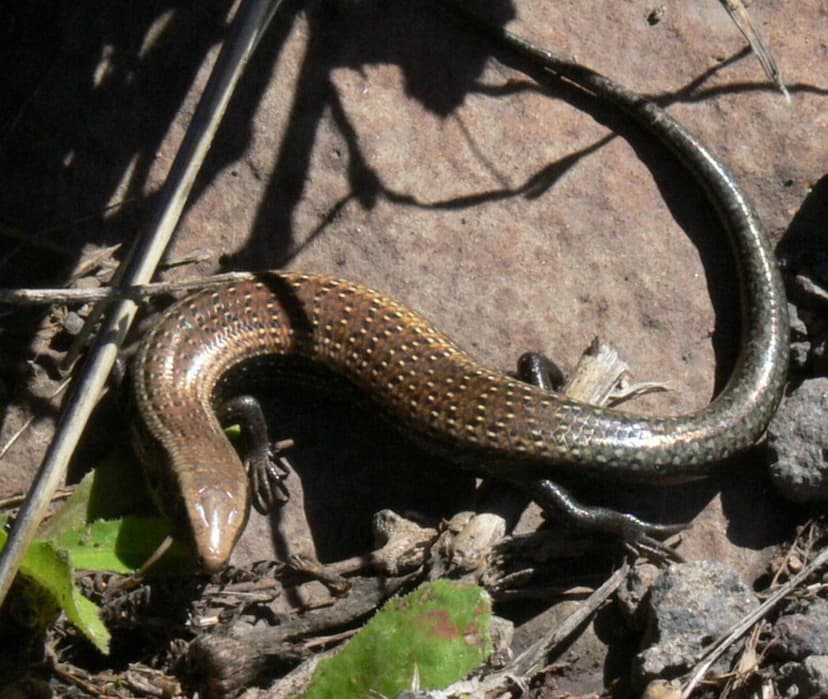
Chalcides viridanus
The West Canary skink, scientifically known as Chalcides viridanus, is a species of lizard endemic to the Canary Islands. This skink inhabits a diverse range of environments, from temperate forests and grasslands to urban areas, and can be found at elevations up to 2,000 meters. It is characterized by its cylindrical body and can reach a total length of approximately 18 cm.

West Canary skink
The West Canary skink, also known as the Canaryan cylindrical skink, is a species of lizard endemic to the Canary Islands. It inhabits a variety of environments, from temperate forests to urban areas, and can be found at altitudes up to 2,000 meters. This viviparous lizard is active during the day and at dusk, reaching a total length of about 18 cm.

Acanthodactylus pardalis
The leopard fringe-fingered lizard (Acanthodactylus pardalis) is a species of lizard found in North Africa. It inhabits dry shrubland, grassland, and intertidal flats. This oviparous species is known for its pattern, which gives it its common name.