
West Canary skink
The West Canary skink, also known as the Canaryan cylindrical skink, is a species of lizard endemic to the Canary Islands. It inhabits a variety of environments, from temperate forests to urban areas, and can be found at altitudes up to 2,000 meters. This viviparous lizard is active during the day and at dusk, reaching a total length of about 18 cm.
Key Facts
- ›Endemic to the Canary Islands, specifically Tenerife, El Hierro, Roque de Garachico, and Roques de Anaga.
- ›Inhabits a wide range of habitats including forests, shrublands, grasslands, rocky areas, and urban environments.
- ›Active during both daylight and twilight hours.
- ›Reaches a maximum total length of approximately 18 cm.
- ›Reproduces via viviparity, meaning it gives birth to live young.
- ›Found at elevations up to 2,000 meters.

Canaryan Cylindrical Skink, East Canary Islands Skink, Tenerife Skink
Tenerife, El Hierro, Roque De Garachico, Roques De Anaga, Canary Islands
- May Reach A Total Length of About 18 cm , Including the Tail.
- Active During the Day and At Dusk.
- Life Requirements In Nature Are Similar To Those of the Gran Canaria Skink.
About West Canary skink
The West Canary skink, scientifically known as Chalcides viridanus, is a species of lizard that is native to the Canary Islands. It is also recognized by common names such as the Canaryan cylindrical skink, East Canary Islands skink, and the Tenerife skink. This reptile belongs to the family Scincidae, a group commonly known as skinks.
Habitat and Distribution
This species is endemic to the Canary Islands archipelago, with confirmed populations on Tenerife, El Hierro, Roque de Garachico, and Roques de Anaga. The West Canary skink demonstrates a remarkable adaptability to a wide array of environments. Its natural habitats include temperate forests, shrublands, and grasslands, as well as Mediterranean-type vegetation. It also thrives in rocky areas, along shores, and in human-modified landscapes such as arable land, pastures, rural gardens, and urban environments. The species has been observed at elevations extending up to 2,000 meters (6,600 feet).
Physical Characteristics and Behavior
Adult West Canary skinks can reach a total length of approximately 18 centimeters (7.1 inches), including their tail. Behavioral observations indicate that Chalcides viridanus is active during both daylight hours and at dusk. Its ecological requirements and behavior in captivity are noted to be very similar to those of the Gran Canaria skink, suggesting shared adaptations within the island group.
Reproduction
A key characteristic of the West Canary skink's reproductive biology is that it is viviparous. This means that females give birth to live young, rather than laying eggs.
Source: Wikipedia ↗
Frequently Asked Questions
What are the common names for Chalcides viridanus?
Chalcides viridanus is commonly known as the West Canary skink. It is also referred to as the Canaryan cylindrical skink, East Canary Islands skink, and the Tenerife skink.
Where can the West Canary skink be found?
The West Canary skink is endemic to the Canary Islands. Its natural range includes the islands of Tenerife, El Hierro, and specific islets like Roque de Garachico and Roques de Anaga.
What kind of habitats does the West Canary skink prefer?
This lizard is highly adaptable and can be found in diverse habitats. These include temperate forests, shrublands, grasslands, rocky and sandy shores, as well as cultivated and urban areas.
How large does the West Canary skink get?
The West Canary skink typically reaches a total length, including its tail, of about 18 centimeters (7.1 inches).
When is the West Canary skink most active?
The West Canary skink is diurnal and crepuscular, meaning it is active during the day and also at dusk.
How does the West Canary skink reproduce?
The West Canary skink is viviparous, which signifies that the females give birth to live young rather than laying eggs.
Related Lizards
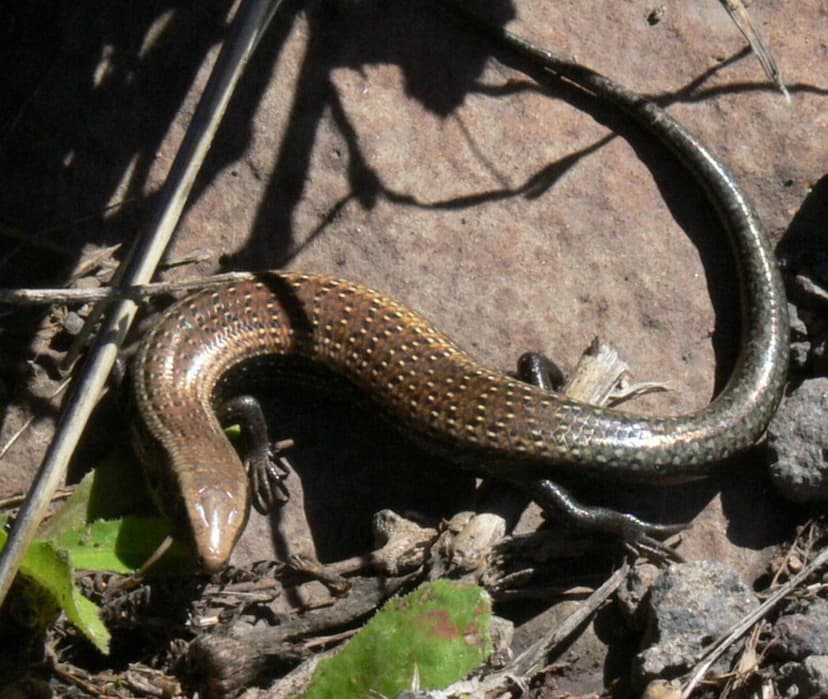
Chalcides viridanus
The West Canary skink, scientifically known as Chalcides viridanus, is a species of lizard endemic to the Canary Islands. This skink inhabits a diverse range of environments, from temperate forests and grasslands to urban areas, and can be found at elevations up to 2,000 meters. It is characterized by its cylindrical body and can reach a total length of approximately 18 cm.
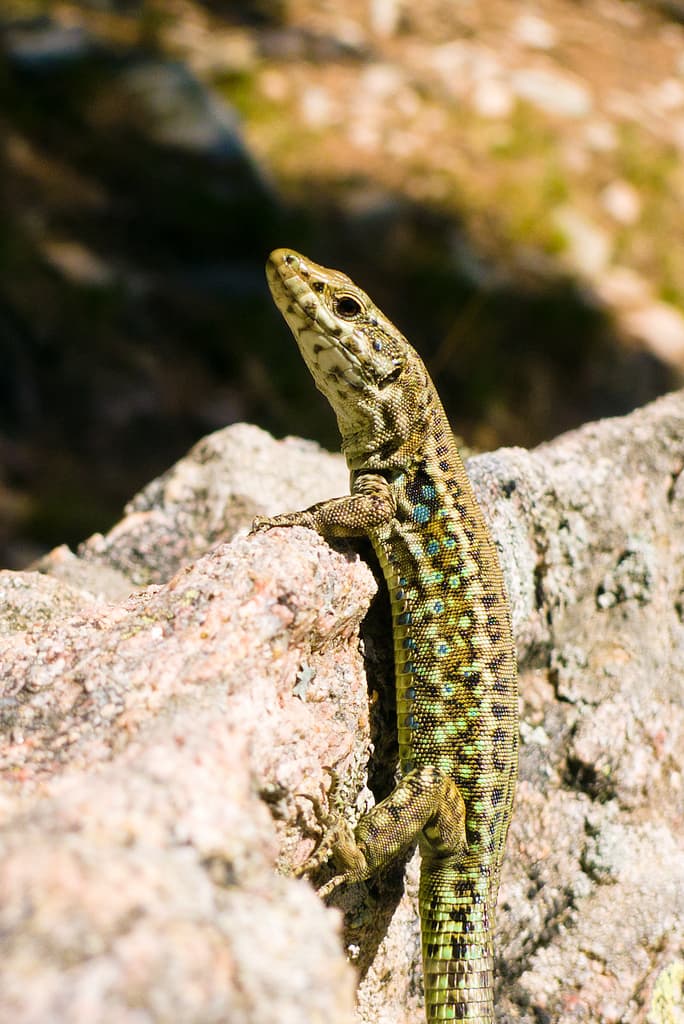
Podarcis tiliguerta
The Tyrrhenian wall lizard (Podarcis tiliguerta) is a species of lizard belonging to the Lacertidae family. It is native to the islands of Corsica and Sardinia and their surrounding islets, inhabiting a variety of temperate and Mediterranean environments. This species is distinguished by its subspecies diversity and is not currently considered threatened.

Teira dugesii
The Madeiran wall lizard (Teira dugesii) is a common species endemic to the Madeira Archipelago, Portugal, notable for its variable coloration that often camouflages it with its surroundings. It inhabits a wide range of environments, from coastal areas to altitudes of 1,850 meters, and has also become naturalized in the Azores. This lizard is characterized by its small size, easily shed tail, and insectivorous-herbivorous diet.