
Phelsuma barbouri
Barbour's day gecko (Phelsuma barbouri) is a middle-sized lizard endemic to central Madagascar. This diurnal species is characterized by its brownish-green to dark green body with distinct dark brown stripes and typically dwells on rocks in harsh highland environments. It feeds on insects and nectar and is known to live in small groups.
Key Facts
- ›Endemic to the highlands of central Madagascar.
- ›Diurnal and terrestrial, preferring rocky habitats.
- ›Can reach a total length of approximately 13.5 cm.
- ›Feeds on insects, other invertebrates, and nectar.
- ›Females lay eggs under stones, sometimes in large aggregations.
- ›Known to flatten its body to absorb sunlight for thermoregulation.
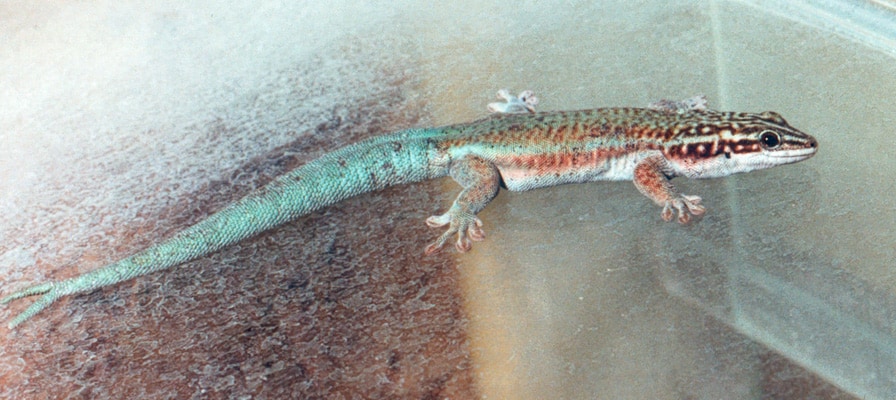
Barbour's Day Gecko
Madagascar
- Middle-Sized Day Gecko.
- Total Length Up To About 13.5 cm .
- Body Coloration Is Brownish Green Or Dark Green.
- Features A Dark Brown Dorso-Lateral Stripe From Head To Tail.
- Features A Dark Brown Lateral Stripe From Head To Tail.
- Extremities Are Normally Brown.
- Tail Is Unicoloured Green and Slightly Flattened.
Insects, Other Invertebrates, Nectar
Diurnal, Terrestrial, Often Lives In Small Groups, Flattens Body To Absorb Sun, Body Color Becomes Brighter When Basking, Dark Color During Night and Early Morning
About Phelsuma barbouri
Barbour's Day Gecko (Phelsuma barbouri)
Barbour's day gecko, scientifically recognized as Phelsuma barbouri, is a distinctive lizard species native to the central highlands of Madagascar. This middle-sized gecko is diurnal, meaning it is active during the day, and prefers a terrestrial lifestyle, typically found dwelling on rocks within its savanna habitat.
Physical Characteristics and Habitat
Reaching a total length of approximately 13.5 cm (5.3 inches), P. barbouri exhibits a brownish-green to dark green body coloration. Distinctive markings include a dark brown dorso-lateral stripe and a dark brown lateral stripe that extend from the head to the tail. The extremities are generally brown, and its tail is a uniform green and slightly flattened. The species inhabits the Ankaratra Mountains in central Madagascar, at altitudes ranging from 1,600 to 2,640 meters. Its habitat is characterized by harsh conditions, with significant temperature variations between day and night, and across seasons. Maximum daytime temperatures can reach 30°C, while nights are often cool and foggy.
Diet and Behavior
Barbour's day gecko is an omnivore, feeding on a diet of various insects, other invertebrates, and nectar. Behaviorally, P. barbouri often forms small groups. A notable adaptation is its habit of flattening its body to maximize sun exposure, enabling it to reach its preferred body temperature. During cooler periods, such as at night or in the early morning, its coloration darkens, becoming brighter when it is actively basking.
Reproduction
Reproduction in P. barbouri involves the female gluing her eggs under stones. It is not uncommon for multiple females to deposit their eggs in the same location, leading to aggregations of up to 50 eggs. At a temperature of 28°C (82°F), the young geckos hatch after approximately 55 days, with neonates measuring about 32 mm (1.3 inches) in length.
Source: Wikipedia ↗
Frequently Asked Questions
What is Barbour's day gecko?
Barbour's day gecko, scientifically known as Phelsuma barbouri, is a species of lizard belonging to the Gekkonidae family. It is a middle-sized, diurnal lizard found exclusively in central Madagascar.
Where does Phelsuma barbouri live?
This species is endemic to the highlands of central Madagascar, specifically inhabiting the Ankaratra Mountains. They are typically found at altitudes ranging from 1,600 to 2,640 meters.
What does Barbour's day gecko eat?
Barbour's day gecko has a varied diet that includes various insects and other invertebrates. They are also known to consume nectar.
How does Phelsuma barbouri behave?
P. barbouri is a diurnal species that often lives in small groups. They have a unique behavior of flattening their bodies to maximize sun exposure for thermoregulation and can change their body color from dark to brighter when basking.
How do Barbour's day geckos reproduce?
Adult females of P. barbouri adhere their eggs to the undersides of stones. It's common for multiple females to deposit eggs in the same location, leading to clutches of up to 50 eggs. Hatching occurs after approximately 55 days at 28°C.
What is the habitat like for Phelsuma barbouri?
P. barbouri inhabits rocky areas within savanna environments in the highlands of central Madagascar. Its habitat experiences harsh conditions with significant temperature fluctuations between day and night, and across seasons.
Related Lizards

Trioceros
Trioceros is a genus of chameleons native to various African regions, from Ethiopia to Mozambique and Ghana. These lizards exhibit significant diversity in appearance and size, with many species featuring unique cranial or dorsal ornaments like horns, crests, or spines, primarily in males. They are known for both oviparous and viviparous reproductive strategies, the latter likely an adaptation to cooler highland climates.

Madagascan giant day gecko
The Madagascan giant day gecko (Phelsuma grandis) is a large, diurnal lizard native to the tropical and subtropical forests of northern Madagascar. Characterized by its bright green coloration, often adorned with red markings, and a distinctive red stripe from nostril to eye, this species is known for its arboreal lifestyle and territorial nature. It is also recognized for its ability to change color when stressed and its unique method of cleaning its eyes.

Orange-spotted day gecko
The Mauritius lowland forest day gecko, also known as Guimbeau's day gecko or the orange-spotted day gecko, is a diurnal lizard native to the western coast of Mauritius. It is characterized by its brilliant green dorsal coloration with orange-red markings and a blue neck area, and it inhabits large trees in drier, warmer regions. This species is an insectivore that also consumes nectar and fruit.