
Phelsuma malamakibo
Phelsuma malamakibo is a gecko species found exclusively in the Anosy Region of Madagascar. Little is documented about its specific characteristics or behaviors beyond its geographic origin.
Key Facts
- ›Endemic to the Anosy Region of Madagascar.
- ›Belongs to the Phelsuma genus.
- ›Specific ecological details are not widely documented.
- ›Its exact conservation status is not specified in available records.

Madagascar
Anosy Region
About Phelsuma malamakibo
Phelsuma malamakibo is a species of gecko that is endemic to the Anosy Region of Madagascar. This means that its natural habitat is restricted to this particular area, making it unique to this part of the island.
What is known
Information regarding the specific ecological niche, detailed physical characteristics, diet, and reproductive behaviors of Phelsuma malamakibo remains limited in available records. Its classification places it within the Gekkonidae family and the Phelsuma genus, commonly referred to as day geckos. Further research would be beneficial to fully understand this endemic species and its role within the Malagasy ecosystem.
Source: Wikipedia ↗
Frequently Asked Questions
Where is Phelsuma malamakibo found?
Phelsuma malamakibo is found exclusively in the Anosy Region of Madagascar. This means it is endemic to this specific area.
What type of lizard is Phelsuma malamakibo?
Phelsuma malamakibo is a species of gecko. It belongs to the Phelsuma genus, commonly known as day geckos.
What are the physical characteristics of Phelsuma malamakibo?
Detailed physical characteristics, such as size, coloration, or scale patterns, are not extensively documented in available information.
What does Phelsuma malamakibo eat?
Specific dietary information for Phelsuma malamakibo is not readily available. As with many Phelsuma geckos, their diet likely includes insects and nectar, but this is not confirmed for this species.
Related Lizards
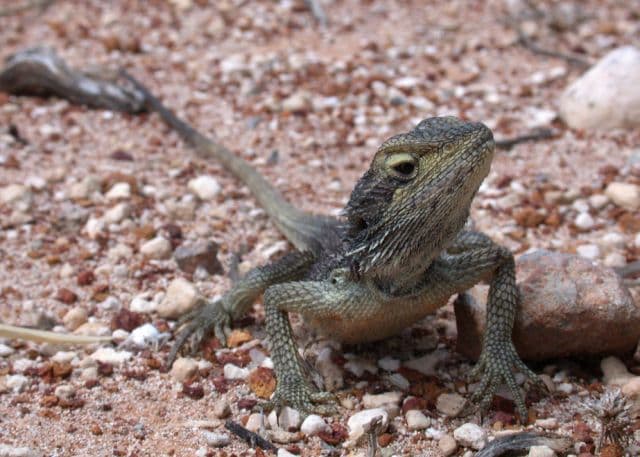
Abrolhos bearded dragon
The Abrolhos bearded dragon (Pogona minor minima) is a small agamid lizard endemic to the islands of the Houtman Abrolhos archipelago off the coast of Western Australia. It is characterized by its smaller size compared to related bearded dragons and inhabits sandy or limestone outcrop environments.

Algerian sand racer
The Algerian sand racer, scientifically known as Psammodromus algirus, is a lizard species found in southwestern Europe and northwestern Africa. It typically inhabits dense bushy vegetation and can be found at high elevations, though it is more common at lower altitudes. This species is characterized by its metallic brownish dorsal coloration with conspicuous white or yellowish stripes.

Amphiglossus decaryi
The rock skink, scientifically known as Flexiseps decaryi, is a species of skink found exclusively on the island of Madagascar. As a member of the skink family, it is characterized by its smooth, overlapping scales and typically elongated body. Its specific ecological niche and behavioral patterns are not extensively detailed in available records.