
Phelsuma pronki
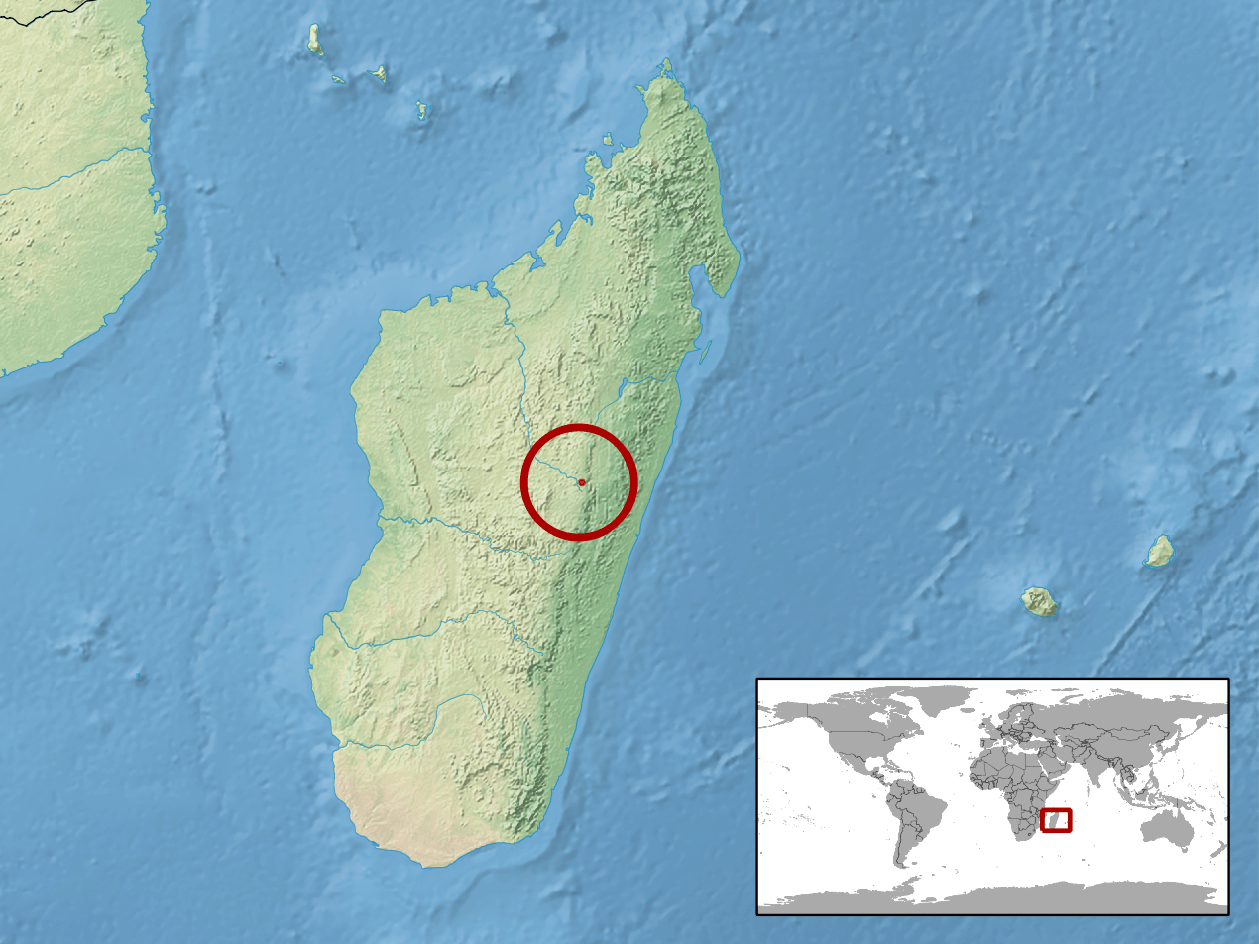
Phelsuma pronki, also known as Pronk's day gecko, is a critically endangered species endemic to central Madagascar. This diurnal gecko is characterized by its small size, greyish body, yellow head with black stripes, and a yellow eye ring. It inhabits rainforests, dwelling on trees and feeding on insects and nectar, but faces significant threats from habitat loss and the pet trade.
Key Facts
- ›Critically endangered diurnal gecko species.
- ›Endemic to the rainforests of central Madagascar.
- ›Reaches a maximum total length of approximately 11 cm.
- ›Feeds on insects, other invertebrates, and nectar.
- ›Females lay eggs under loose bark.
- ›Threatened by habitat loss and collection for the pet trade.
Pronk's Day Gecko
Central Madagascar
Rainforest, Highland Rainforest
- Smallest Day Geckos.
- Total Length Up To About 11 cm .
- Greyish Body Color.
- Yellow Head.
- Four Serrated Black Stripes Extending From Snout To Tail.
- Extremities Are Blackish With Grey Speckles.
- Yellow Eye Ring Present.
Various Insects, Other Invertebrates, Nectar
Diurnal ., Dwells On Trees., Females Glue Eggs Under Loose Bark.
Habitat Loss, Collection For the International Pet Trade
About Phelsuma pronki
Phelsuma pronki, commonly known as Pronk's day gecko, is a small, critically endangered species of gecko found exclusively in the highland rainforests of central Madagascar. This diurnal lizard is recognized for its diminutive size, typically reaching a total length of about 11 cm, and distinctive coloration including a greyish body, a yellow head marked by four black stripes, and a prominent yellow eye ring.
Habitat and Diet
Pronk's day gecko inhabits the rainy and highly moist rainforests of central Madagascar, dwelling on trees. The species experiences significant temperature fluctuations between day and night, and across seasons. Its diet is varied, consisting of insects, other invertebrates, and nectar, reflecting an omnivorous tendency within its ecological niche.
Reproduction and Conservation
Reproductively, female Phelsuma pronki exhibit the behavior of gluing their eggs under loose bark. The species faces severe threats from habitat loss due to environmental changes and ongoing collection for the international pet trade, leading to its critically endangered status. While wild-caught individuals are still traded, experts are capable of captive breeding this unique gecko. Proper captive care involves well-planted terrariums with ample hiding places and specific temperature and humidity requirements.
Source: Wikipedia ↗
Frequently Asked Questions
What is Phelsuma pronki?
Phelsuma pronki, commonly called Pronk's day gecko, is a critically endangered species of gecko belonging to the Gekkonidae family. It is a diurnal lizard, meaning it is active during the day.
Where can Phelsuma pronki be found?
This species is endemic to the highland rainforests of central Madagascar, specifically in areas near Andramasina. It is found in rainy and very moist environments.
What does Phelsuma pronki eat?
The diet of Phelsuma pronki consists of various insects and other invertebrates. They also consume nectar, indicating a mixed diet.
What are the physical characteristics of Pronk's day gecko?
Phelsuma pronki is one of the smallest day geckos, reaching about 11 cm in total length. It has a greyish body, a yellow head with four serrated black stripes extending to the tail, blackish extremities with grey speckles, and a yellow eye ring.
How does Phelsuma pronki reproduce?
Female Phelsuma pronki glue their eggs under loose bark. This method of egg-laying is a distinctive reproductive behavior for the species.
What are the main threats to Phelsuma pronki?
The primary threats to Phelsuma pronki are severe habitat loss within its native range and collection for the international pet trade. These factors have contributed to its critically endangered status.
Can Phelsuma pronki be kept in captivity?
Yes, Phelsuma pronki can be captive-bred by experts. They require specific terrarium conditions, including proper temperature gradients, humidity, and hiding places, and are often housed in pairs.
Related Lizards
Phelsuma flavigularis
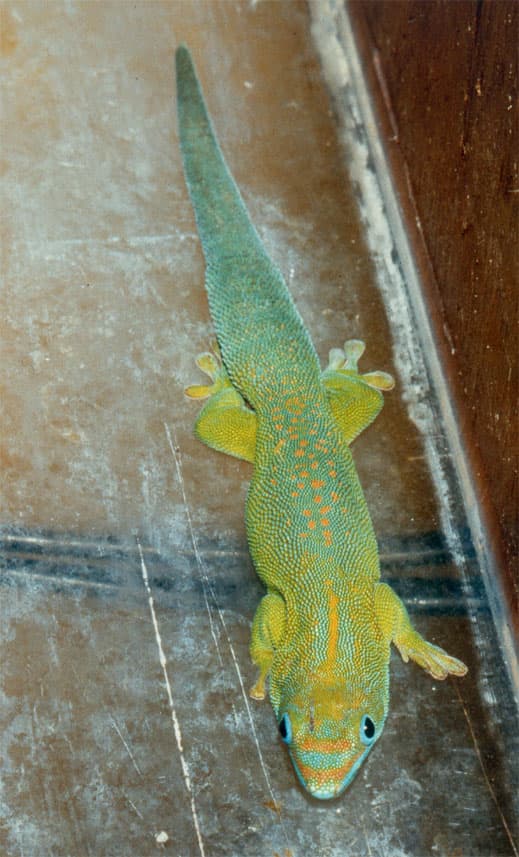
The yellow-throated day gecko (Phelsuma flavigularis) is an endangered, diurnal gecko native to eastern Madagascar's rainforests. This medium-sized species is characterized by its bluish-green body, red snout bars, and a distinctive yellow throat. It primarily inhabits trees and feeds on insects and nectar.
Phelsuma guttata
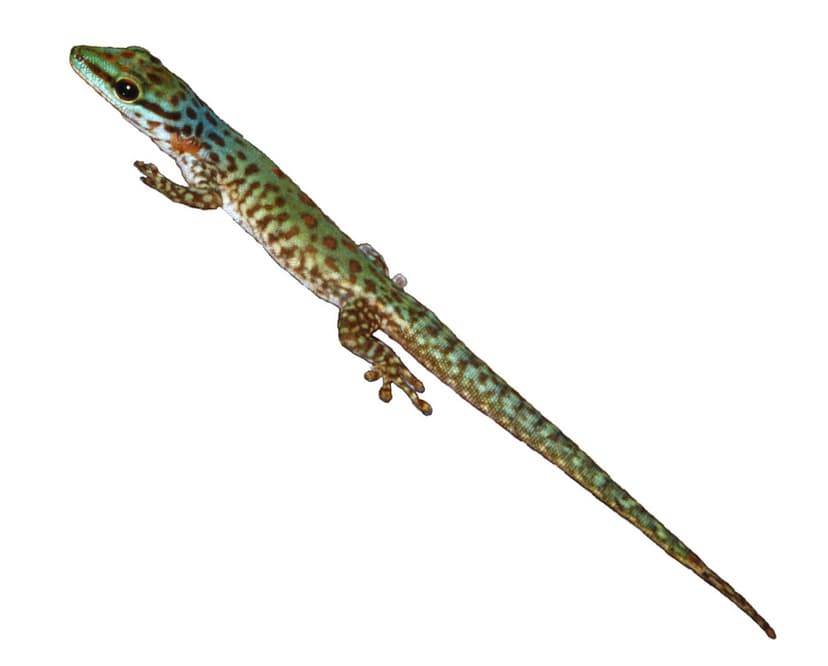
The speckled day gecko (Phelsuma guttata) is a medium-sized, diurnal lizard found in eastern Madagascar's rainforests. Characterized by its dark green body with orange spots and a distinctive black eye stripe, it inhabits trees and bushes. This species feeds on insects, nectar, and soft fruits, and is often observed in pairs.

Phelsuma seippi
Phelsuma seippi, also known as Seipp's day gecko, is a medium-sized, diurnal lizard native to the rainforests of northern Madagascar. Characterized by its slender, long-snouted body, it exhibits green or yellowish-green coloration with distinctive red or rust-colored spots and markings, including a rust-colored eye stripe and potential v-shaped stripes on the throat. This arboreal species primarily feeds on insects and nectar, and is considered endangered.