
Pseudomoia entrecasteauxii
Pseudomoia entrecasteauxii, commonly known as Entrecasteaux's skink or the southern grass skink, is a small lizard species endemic to southeastern Australia, Tasmania, and the Bass Strait islands. It is most frequently found in open grassy woodlands and is notable for giving birth to live young with a complex placenta that provides significant nutrients to the developing embryo.
Key Facts
- ›Endemic to southeastern Australia, Tasmania, and Bass Strait islands.
- ›Primarily inhabits open grassy woodlands.
- ›Gives birth to live young, featuring a complex epitheliochorial placenta.
- ›Males change coloration during the breeding season.
- ›Can cannibalize offspring if food is scarce during pregnancy.
- ›Lifespan is approximately 5 to 6 years.
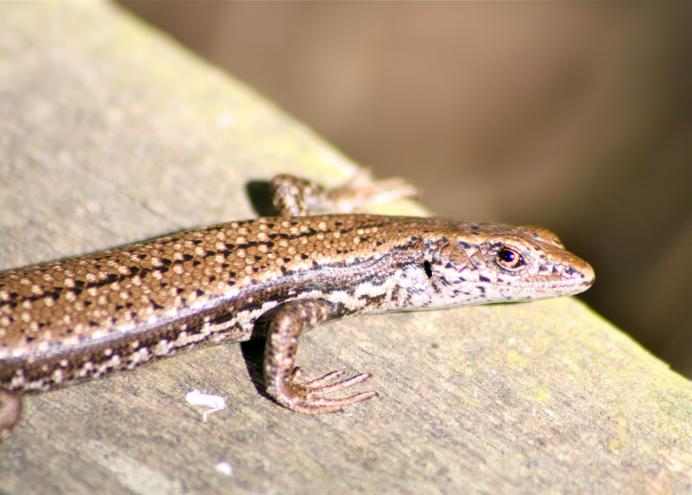
Entrecasteaux's Skink, Southern Grass Skink, Tussock Cool-Skink, Tussock Skink
Southeastern Australia, Tasmania, Islands of Bass Strait
Open Grassy Woodlands
- Grows Up To 7.5 cm In Length .
- Male Skinks Change Coloration During the Breeding Season.
- Nutrients Provided To Embryo Via Placenta.
- Females May Cannibalize Offspring When Food Is Limiting.
- Males Change Color During Breeding Season.
- Females May Cannibalize Offspring If Food Is Scarce During Pregnancy.
About Pseudomoia entrecasteauxii
Pseudomoia entrecasteauxii, also commonly referred to as Entrecasteaux's skink, the southern grass skink, the tussock cool-skink, or the tussock skink, is a species of lizard belonging to the family Scincidae. This species is native to Australia.
Geographic Range and Habitat
The geographic distribution of Pseudomoia entrecasteauxii encompasses the southeastern regions of the Australian continent, as well as the island of Tasmania and the islands situated within the Bass Strait. While it can adapt to a variety of environments, this skink is most frequently encountered in open grassy woodlands.
Physical Characteristics and Reproduction
Adult Pseudomoia entrecasteauxii lizards typically reach a body length of up to 7.5 cm (3.0 inches), excluding their tail. A notable characteristic is that male skinks undergo a change in their coloration during the breeding season. This species is of particular interest in reproductive biology due to its ovoviviparous nature, meaning it gives birth to live young. It exhibits a sophisticated, non-invasive epitheliochorial placentation, where a complex placenta facilitates the transfer of a substantial amount of nutrients from the mother to the developing embryo. The quantity of nutrients supplied is directly influenced by the female's food intake during pregnancy, and a scarcity of food can lead to developmental failure in the embryo. In such limiting conditions, females may resort to cannibalizing their own offspring, highlighting the crucial dependence of their reproductive strategy on abundant food resources throughout gestation.
Lifespan
The southern grass skink has a relatively short lifespan, typically living for approximately 5 to 6 years.
Source: Wikipedia ↗
Frequently Asked Questions
What is Pseudomoia entrecasteauxii commonly called?
Pseudomoia entrecasteauxii is known by several common names, including Entrecasteaux's skink, the southern grass skink, the tussock cool-skink, and the tussock skink.
Where can Pseudomoia entrecasteauxii be found?
This species is endemic to Australia, specifically found in the southeastern part of the continent, as well as Tasmania and the islands within the Bass Strait.
What kind of habitat does Pseudomoia entrecasteauxii prefer?
While it can be found in various environments, Pseudomoia entrecasteauxii is most frequently observed in open grassy woodlands.
How long does Pseudomoia entrecasteauxii live?
The typical lifespan for the southern grass skink is around 5 to 6 years.
What is unique about the reproduction of Pseudomoia entrecasteauxii?
This species is a model for reptile reproductive biology because it gives birth to live young and possesses a complex placenta that transfers substantial nutrients to the embryo. This placental nutrient transport is highly dependent on the mother's food intake during pregnancy.
What happens if food is scarce for pregnant Pseudomoia entrecasteauxii females?
If food is limited during pregnancy, females may cannibalize their own offspring. This suggests that their placental reproduction strategy is most successful when food is abundant throughout gestation.
What is the physical size of Pseudomoia entrecasteauxii?
Pseudomoia entrecasteauxii grows to a length of up to 7.5 cm (3.0 inches), not including its tail.
Related Lizards

Carinascinus metallicus
The Metallic Skink (Carinascincus metallicus) is a viviparous lizard endemic to Australia, primarily found in Tasmania and southern Victoria. It is characterized by its metallic-scaled dorsal surface, which exhibits a range of colorations and patterns, and it gives birth to live young. This adaptable species inhabits diverse environments from coastal dunes to sclerophyll forests and woodlands, relying on basking to regulate its body temperature.

Chalcides chalcides
The Italian three-toed skink (Chalcides chalcides), also known as the cylindrical skink, is a lizard species characterized by its long, snake-like body, reduced limbs with three-toed feet, and a length of up to 48 cm. It inhabits sunny areas with dense, low vegetation across Italy and North Africa. This diurnal species primarily feeds on insects and gives birth to live young.

Chalcides striatus
The western three-toed skink (Chalcides striatus) is a lizard found in the Iberian Peninsula, southern France, and northwestern Italy. It superficially resembles a snake due to its tiny limbs, but possesses smooth, glossy skin with a silvery or bronze coloration marked by longitudinal dark lines. This secretive species inhabits damp, sunny areas with dense low vegetation and feeds on invertebrates.