
Ptyodactylus guttatus
Ptyodactylus guttatus·Gekkonidae
The Sinai fan-fingered gecko (Ptyodactylus guttatus) is a species of gecko native to Egypt, Israel, and the Middle East. It is commonly found in the Sinai and Negev deserts, distinguished by its fan-shaped toes that aid in climbing and locomotion on sandy surfaces. This adaptation is reflected in its Hebrew name, "manifanit," derived from the word for fan.
Key Facts
- ›Native to Egypt, Israel, and the Middle East.
- ›Commonly inhabits the Sinai and Negev deserts.
- ›Features distinctive fan-shaped fingers, aiding in climbing and sand movement.
- ›Its Hebrew name, "manifanit," translates to 'fan-fingered'.
- ›A species of gecko.

Sinai Fan-Fingered Gecko
Egypt, Israel, Middle East
Possesses Fan-Shaped Fingers and Toes.
About Ptyodactylus guttatus
Ptyodactylus guttatus is a species of gecko recognized for its distinctive adaptations to desert life. This reptile is primarily found across Egypt, Israel, and other parts of the Middle East, thriving in arid environments. It is particularly prevalent in the extensive sandy landscapes of the Sinai desert and the Negev desert.
Key Characteristics
A defining feature of Ptyodactylus guttatus is its specialized fan-shaped fingers and toes. These anatomical structures are crucial for efficient locomotion across loose sand, providing increased surface area and grip. This unique characteristic is so notable that it has inspired its common name in Hebrew, "manifanit," which directly translates to 'fan-fingered,' derived from the Hebrew word "manifa" meaning 'fan.'
Source: Wikipedia ↗
Frequently Asked Questions
What is Ptyodactylus guttatus?
Ptyodactylus guttatus is a species of gecko. It is commonly found in desert regions of the Middle East, including Egypt and Israel.
Where is the Sinai fan-fingered gecko found?
The Sinai fan-fingered gecko is found in Egypt, Israel, and the broader Middle East region. It is particularly common in the Sinai desert and the Negev desert.
Why is it called the Sinai fan-fingered gecko?
The gecko is named for its distinctive fan-shaped fingers, which are an adaptation for moving on sandy terrain. In Hebrew, its name "manifanit" literally means 'fan-fingered', derived from the word for fan.
What kind of habitat does Ptyodactylus guttatus prefer?
Ptyodactylus guttatus prefers arid desert environments. It is commonly found in sandy areas like the Sinai desert and the Negev desert.
Related Lizards
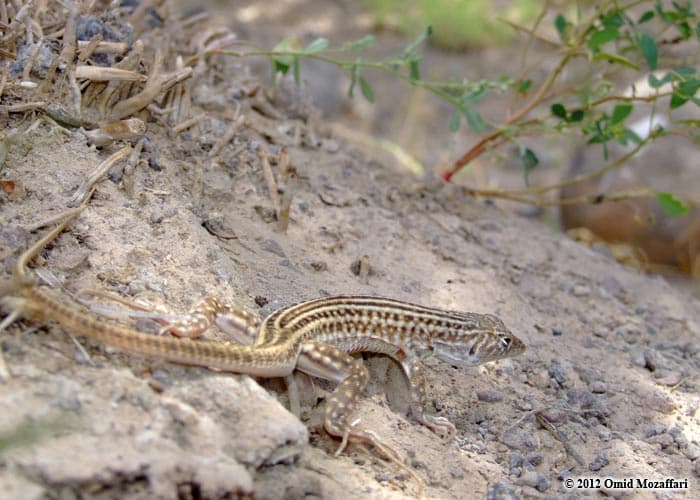
Acanthodactylus cantoris
The Indian fringe-fingered lizard (Acanthodactylus cantoris) is a terrestrial species endemic to Asia, primarily found in sandy desert and shrubland habitats. It is characterized by its acutely pointed snout, keeled dorsal scales, and strong digital denticulations. This oviparous lizard burrows in the sand for protection and its young have distinctive white longitudinal lines on a blackish background.
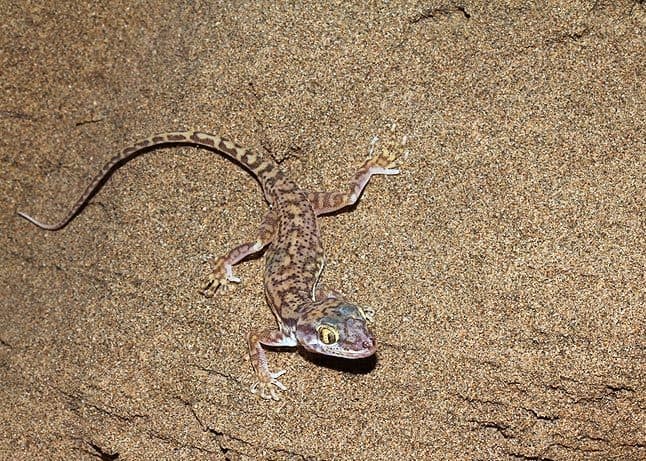
Crossobamon eversmanni
Crossobamon eversmanni, commonly known as the comb-toed gecko, is a species of Asian gecko found in desert, grassland, and shrubland habitats across Iran, Pakistan, and Central Asia. This terrestrial and nocturnal lizard is characterized by its burrowing behavior and oviparous reproduction, with females laying one to two eggs per clutch.

Eremias scripta
Eremias scripta, commonly known as the sand racerunner, is a species of lizard found across Central Asia. This species inhabits arid and semi-arid regions, including deserts and steppes, where it is well-adapted to sandy environments. Its specific characteristics and behaviors are typical of ground-dwelling lizards in these harsh climates.