
Ptyodactylus hasselquistii
Ptyodactylus hasselquistii, commonly known as the fan-footed gecko, is a species of gecko native to northern Africa and western Asia. This lizard is characterized by its fan-shaped toes, which aid in its arboreal lifestyle. It is oviparous, laying clutches of two eggs.
Key Facts
- ›Native to northern Africa and western Asia.
- ›Commonly known as the fan-footed gecko.
- ›Grows up to 96 mm snout-to-vent length.
- ›Found in countries including Egypt, Sudan, Saudi Arabia, and Syria.
- ›Reproduces by laying eggs (oviparous).
- ›Typically lays clutches of two eggs.
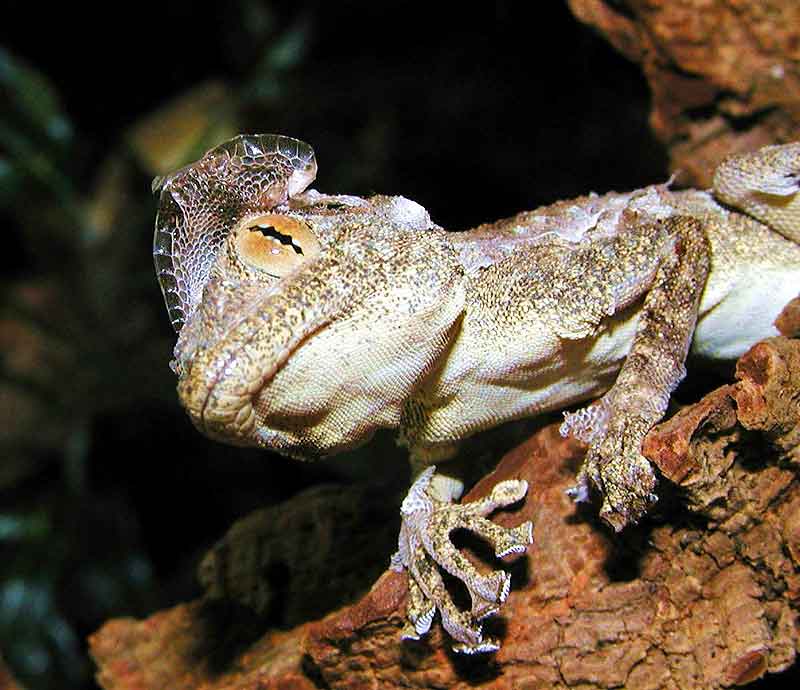
Fan-Footed Gecko, Hasselquist's Fan-Footed Gecko, Yellow Fan-Fingered Gecko
Algeria, Cameroon, Egypt, Eritrea, Ethiopia, Iraq, Israel, Jordan, Lebanon, Saudi Arabia, Somalia, Sudan, Syria
Grows To A Snout-To-Vent Length of 96 mm ., Characterized By Fan-Shaped Toes.
About Ptyodactylus hasselquistii
Ptyodactylus hasselquistii, commonly referred to as the fan-footed gecko, is a species of gecko belonging to the Phyllodactylidae family. This lizard is native to the northern regions of Africa and western parts of Asia.
Description and Characteristics
The fan-footed gecko is distinguished by its unique fan-shaped toes, which are adapted for its arboreal lifestyle. Adult specimens can reach a snout-to-vent length of up to 96 millimeters (approximately 3.8 inches).
Geographic Distribution
The natural range of Ptyodactylus hasselquistii is extensive, encompassing countries such as Algeria, Cameroon, Egypt, Eritrea, eastern Ethiopia, Iraq, Israel, Jordan, Lebanon, Saudi Arabia (including the Farasan Islands), northern Somalia, Sudan, and Syria. The type locality, the original site where the species was described, is Cairo, Egypt.
Reproduction
Ptyodactylus hasselquistii is oviparous, meaning it reproduces by laying eggs. Females typically lay clutches of two eggs, ensuring the continuation of the species.
Source: Wikipedia ↗
Frequently Asked Questions
What is Ptyodactylus hasselquistii commonly called?
Ptyodactylus hasselquistii is commonly known by several names, including the fan-footed gecko, Hasselquist's fan-footed gecko, and the yellow fan-fingered gecko.
Where is the fan-footed gecko found?
The fan-footed gecko is native to a wide geographic range spanning northern Africa and western Asia. Its distribution includes countries such as Algeria, Egypt, Iraq, Israel, Jordan, Lebanon, Saudi Arabia, Somalia, Sudan, and Syria.
What is the size of Ptyodactylus hasselquistii?
Ptyodactylus hasselquistii can grow to a snout-to-vent length of up to 96 mm (approximately 3.8 inches).
How does the fan-footed gecko reproduce?
This species is oviparous, meaning it reproduces by laying eggs. Typically, a clutch consists of two eggs.
Are there different subspecies of Ptyodactylus hasselquistii?
Yes, two subspecies of Ptyodactylus hasselquistii are recognized as valid. These are the nominotypical subspecies, Ptyodactylus hasselquistii hasselquistii, and Ptyodactylus hasselquistii krameri, also known as Kramer's yellow fan-fingered gecko.
Related Lizards

Acanthocercus atricollis
The black-necked agama, Acanthocercus atricollis, is a species of tree agama found across East, Central, and southern Africa. These lizards are known for forming structured colonies and are often found in high densities near human settlements due to reduced predator presence. They are primarily insectivorous ambush predators.

Adolfus jacksoni
Adolfus jacksoni, also known as Jackson's forest lizard, is a species of lizard belonging to the Lacertidae family, native to East Africa. It prefers forest habitats at significant altitudes and exhibits diurnal and semi-arboreal behaviors. This oviparous species lays clutches of three to five eggs, and communal nesting sites have been observed.

Agama bibronii
Agama bibronii, commonly known as Bibron's agama or the North African rock agama, is a medium-sized lizard native to northwestern Africa. This species inhabits rocky areas and is characterized by its greyish-green coloration with brown spots, and distinct blue heads in males. They are diurnal, omnivorous, and play dead when threatened.