
Ptyodactylus ragazzii
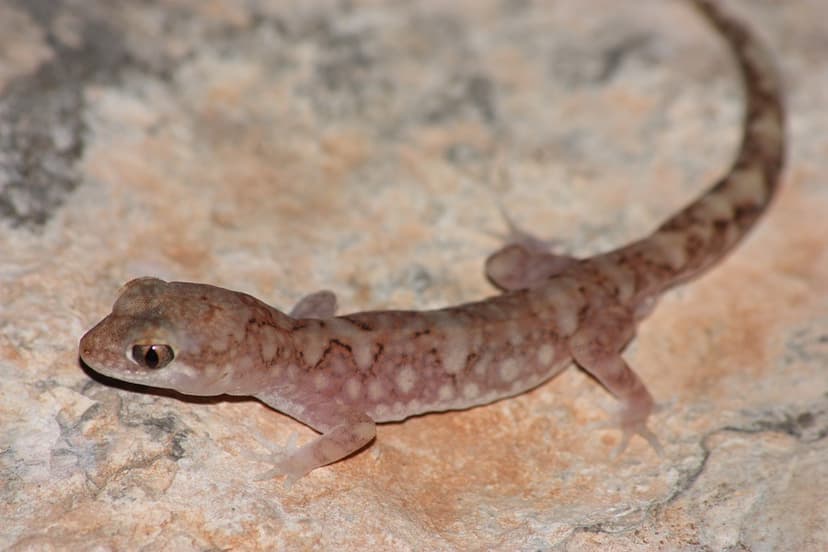
Ragazzi's fan-footed gecko, scientifically known as Ptyodactylus ragazzii, is a species of lizard found across a wide range of northern Africa. It inhabits rocky desert, shrubland, and savanna environments, and is characterized by its nocturnal and crepuscular activity patterns. This oviparous lizard is notable for laying multiple clutches of two eggs per year.
Key Facts
- ›Endemic to northern Africa, with a broad geographic distribution.
- ›Inhabits rocky areas within desert, shrubland, and savanna ecosystems.
- ›Primarily nocturnal and crepuscular, also described as rupicolous (rock-dwelling).
- ›Reproduction is oviparous, with females laying clutches of two eggs.
- ›An adult female can lay up to six clutches annually.
- ›Named in honor of Italian physician Vincenzo Ragazzi.

Ragazzi's Fan-Footed Gecko, Sahelian Fan-Toed Gecko
Algeria, Benin, Burkina Faso, Cameroon, Chad, Djibouti, Egypt, Ethiopia, Ghana, Libya, Mali, Mauritania, Niger, Nigeria, Somalia, Sudan, Togo
Nocturnal, Crepuscular, Rupicolous
About Ptyodactylus ragazzii
Ragazzi's Fan-Footed Gecko
Ptyodactylus ragazzii, commonly known as Ragazzi's fan-footed gecko or the Sahelian fan-toed gecko, is a species of lizard belonging to the family Phyllodactylidae. This gecko is endemic to the northern regions of Africa, with its range extending across a number of countries including Algeria, Egypt, Ethiopia, Libya, Mali, Niger, Nigeria, Somalia, and Sudan.
Habitat and Behavior
The preferred natural habitat of Ptyodactylus ragazzii consists of rocky areas within desert, shrubland, and savanna environments. These geckos can be found at elevations ranging from sea level up to approximately 2,500 meters (8,200 feet). Behaviorally, Ptyodactylus ragazzii is characterized by its nocturnal and crepuscular activity patterns, meaning it is most active during the night and at dawn and dusk. It is also described as rupicolous, indicating a preference for living among rocks.
Reproduction
Reproduction in Ptyodactylus ragazzii is oviparous, with females laying eggs. Each clutch typically contains two eggs. A notable aspect of their reproductive strategy is the potential for adult females to lay as many as six clutches within a single year, allowing for relatively frequent reproduction.
Etymology
The specific name, ragazzii, was bestowed upon this species in honor of Vincenzo Ragazzi, an Italian physician who was active in the late 19th and early 20th centuries and was associated with the Modena Natural History Society.
Source: Wikipedia ↗
Frequently Asked Questions
What is Ptyodactylus ragazzii commonly called?
Ptyodactylus ragazzii is commonly known as Ragazzi's fan-footed gecko. It is also referred to as the Sahelian fan-toed gecko.
Where is Ragazzi's fan-footed gecko found?
This species is widely distributed across northern Africa. Countries where it is found include Algeria, Benin, Burkina Faso, Cameroon, Chad, Djibouti, Egypt, Ethiopia, Ghana, Libya, Mali, Mauritania, Niger, Nigeria, Somalia, Sudan, and Togo.
What kind of habitat does Ptyodactylus ragazzii prefer?
Ptyodactylus ragazzii thrives in rocky environments. Its preferred natural habitats include deserts, shrublands, and savannas, often found at altitudes ranging from sea level up to 2,500 meters.
When is Ptyodactylus ragazzii most active?
Ragazzi's fan-footed gecko is primarily active during the night (nocturnal) and during twilight hours (crepuscular). It is also described as rupicolous, meaning it lives among rocks.
How does Ptyodactylus ragazzii reproduce?
This species reproduces by laying eggs, making it oviparous. A female typically lays a clutch of two eggs, and can lay as many as six clutches in a single year.
Who is Ptyodactylus ragazzii named after?
The species name, ragazzii, honors Vincenzo Ragazzi, an Italian physician and member of the Modena Natural History Society. He lived from 1856 to 1929.
Related Lizards
Diplodactylus maini
Main's ground gecko, also known as Diplodactylus maini, is a gecko species native to the southern part of Western Australia. It inhabits savanna and shrubland environments within arid and semi-arid regions. This species is distinguished by its scientific name, honoring Australian ecologist Albert "Bert" Russell Main.

Lophognathus gilberti
Lophognathus gilberti, commonly known as Gilbert's dragon or Gilbert's lashtail, is a species of agamid lizard native to Australia. This terrestrial and semi-arboreal species inhabits a range of environments from coastal dunes to savannas and has adapted to agricultural and urban settings. Reproduction in Lophognathus gilberti is oviparous, with sex determination influenced by temperature.

Pedioplanis burchelli
Pedioplanis burchelli, commonly known as Burchell's sand lizard, is a species of lizard found in Southern Africa, specifically in Lesotho and the Republic of South Africa. This oviparous lizard inhabits savanna, shrubland, and grassland environments and is characterized by its variable coloration and an opaque lower eyelid without transparent scales.