
Pedioplanis burchelli
Pedioplanis burchelli, commonly known as Burchell's sand lizard, is a species of lizard found in Southern Africa, specifically in Lesotho and the Republic of South Africa. This oviparous lizard inhabits savanna, shrubland, and grassland environments and is characterized by its variable coloration and an opaque lower eyelid without transparent scales.
Key Facts
- ›Native to Southern Africa, including Lesotho and the Republic of South Africa.
- ›Inhabits savanna, shrubland, and grassland environments.
- ›Adults have a snout-to-vent length of 4.5–5.5 cm.
- ›Features an opaque lower eyelid without transparent scales.
- ›Reproduces oviparously, laying clutches of 4-6 eggs.
- ›Named in honor of the English explorer and naturalist William John Burchell.

Burchell's Sand Lizard
Lesotho, Republic of South Africa
- Adults Have A Snout-To-Vent Length of 4.5–5.5 cm.
- Coloration Is Very Variable.
- the Lower Eyelid Is Opaque, Without Any Transparent 'Window' Scales.
- There Are No Enlarged Temporal Or Tympanic Shields.
About Pedioplanis burchelli
Pedioplanis burchelli, known commonly as Burchell's sand lizard, is a species of lizard belonging to the family Lacertidae. This species is native to the Southern Africa region, with documented occurrences in Lesotho and the Republic of South Africa. Its preferred natural habitats include savanna, shrubland, and grassland environments, where it likely finds suitable foraging and shelter conditions.
Physical Characteristics
Adult specimens of Pedioplanis burchelli typically exhibit a snout-to-vent length ranging from 4.5 to 5.5 centimeters. The coloration of these lizards is noted to be highly variable, suggesting adaptation or individual differences within the population. A key diagnostic feature is the structure of the lower eyelid, which is opaque and lacks any transparent "window" scales. Furthermore, there are no enlarged temporal or tympanic shields observed on this species.
Reproduction and Development
Pedioplanis burchelli reproduces oviparously, meaning it lays eggs. A typical clutch consists of 4 to 6 eggs, each being oval-shaped and measuring approximately 9 mm in width by 11 mm in length. Upon hatching, the young lizards, or hatchlings, have a total length, inclusive of their tail, of about 7.2 centimeters, indicating a relatively small size at birth.
Etymology
The specific name, "burchelli," was chosen in honor of William John Burchell, a notable English explorer and naturalist whose work contributed to the understanding of the region's fauna.
Source: Wikipedia ↗
Frequently Asked Questions
What is Pedioplanis burchelli commonly called?
Pedioplanis burchelli is commonly known as Burchell's sand lizard. This name honors William John Burchell, an English explorer and naturalist.
Where is Burchell's sand lizard found?
Burchell's sand lizard is native to Southern Africa. Its range includes Lesotho and the Republic of South Africa.
What kind of habitat does Pedioplanis burchelli prefer?
The preferred natural habitats for Pedioplanis burchelli are savanna, shrubland, and grassland. These environments provide suitable conditions for the species.
What are the physical characteristics of adult Pedioplanis burchelli?
Adult Pedioplanis burchelli typically have a snout-to-vent length measuring between 4.5 and 5.5 centimeters. A distinctive feature is their opaque lower eyelid, which lacks any transparent 'window' scales.
How does Pedioplanis burchelli reproduce?
Pedioplanis burchelli is oviparous, meaning it reproduces by laying eggs. Females typically lay clutches of 4 to 6 eggs, each measuring approximately 9 mm by 11 mm.
What is the size of a hatchling Pedioplanis burchelli?
Hatchlings of Pedioplanis burchelli have a total length, including their tail, of about 7.2 centimeters. This indicates they are relatively small upon hatching.
Related Lizards
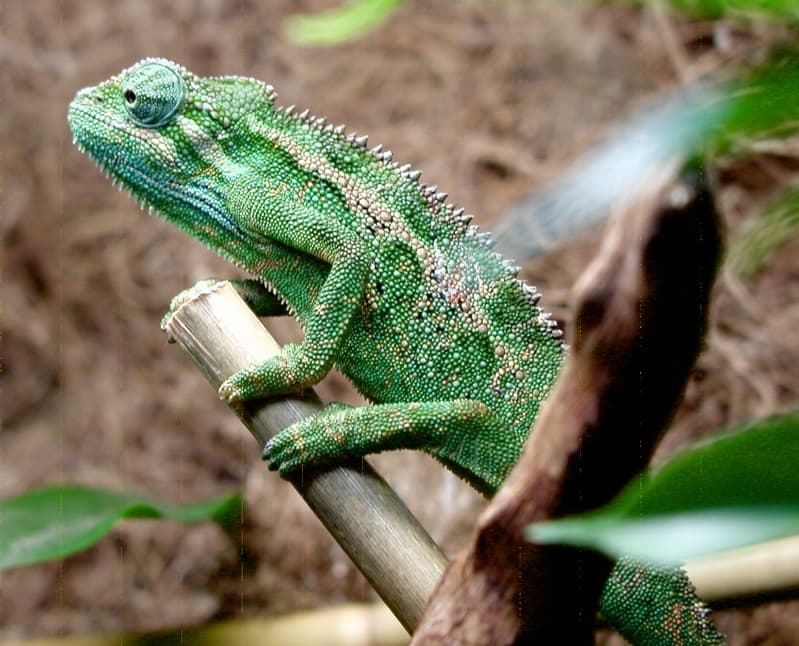
Trioceros ellioti
Trioceros ellioti, commonly known as Elliot's chameleon, is a species of lizard native to Africa. It inhabits diverse environments from forests to grasslands at moderate altitudes. This chameleon is characterized by its viviparous or ovoviviparous reproductive strategy.

Amphisbaena kingii
King's worm lizard (Amphisbaena kingii) is a species of amphisbaenian native to South America, specifically found in Argentina, Bolivia, Brazil, and Uruguay. It prefers savanna and grassland habitats and is characterized by its purplish-brown dorsal coloration and whitish underside, reaching an average snout-to-vent length of 21 cm.
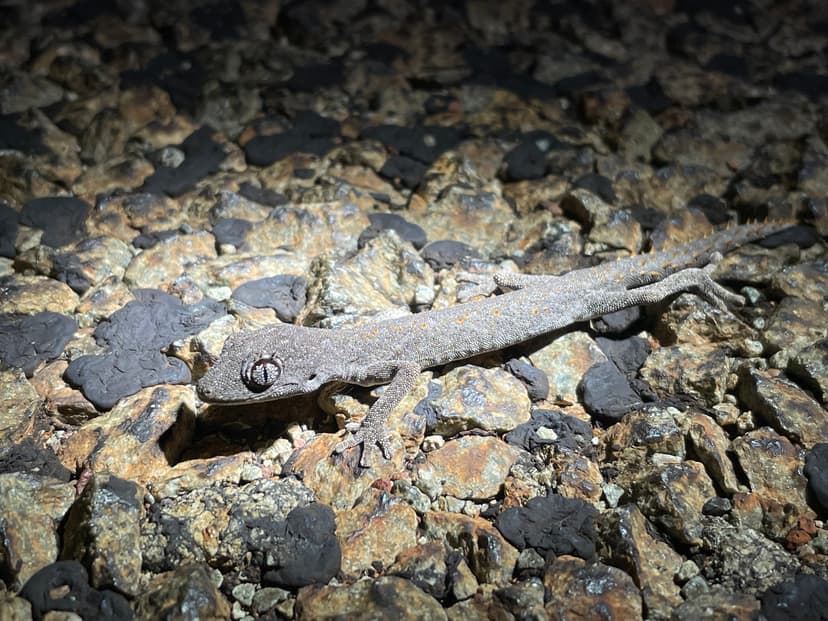
Diplodactylus wellingtonae
The Western Shield spiny-tailed gecko, scientifically known as Strophurus wellingtonae, is a species of lizard endemic to Australia. It is characterized by its large size within its genus and inhabits grasslands and savannas in western Western Australia. This gecko is oviparous, laying eggs as its primary method of reproduction.