
Ristella beddomii
Beddome's cat skink, scientifically known as Ristella beddomii, is a small lizard species found in southwestern India. Characterized by its reddish-brown coloration and retractile claws, it inhabits forest leaf litter at various elevations.
Key Facts
- ›Native to southwestern India, primarily in the Western Ghats.
- ›Small skink with a maximum snout-to-vent length of 4 cm.
- ›Features sharply bicarinate dorsal scales and completely retractile claws.
- ›Inhabits forest leaf litter in both lowlands and MID-high elevations.
- ›Oviparous, laying eggs that coincide with the southwestern monsoons.
- ›Can lay clutches of up to 3 eggs, each measuring approximately 9 mm X 6 mm.

Beddome's Cat Skink, Beddome's Ristella
Southwestern India, Kerala, Karnataka
Forest, Leaf Litter, Lowlands, Mid-High Elevation
- Small Skink Species.
- Maximum Snout-To-Vent Length of 4 cm .
- Ear-Opening Larger Than the Nostril.
- Single Azygos Prefrontal, Nearly As Large As the Frontonasal.
- Fourth To Sixth Upper Labials Located Below the Eye.
- Body Is Much Shorter Than In Other Species of the Genus.
- Adpressed Limbs Meet Or Slightly Overlap.
- Dorsal Scales Are Sharply Bicarinate.
- 26 Scales Around the Middle of the Body.
- Reddish Brown Coloration Above, With Or Without 2 Or 3 Lighter Dorsal Streaks.
- Sides Have Scattered Minute Whitish Dots.
- Usually A Black Blotch With A Few White Dots Above the Axilla.
- Lower Surfaces Are Uniform Whitish.
- All Claws Are Completely Retractile, Each Into A Scale Sheath.
Not Specified In the Text.
Not Specified In the Text.
About Ristella beddomii
Ristella beddomii: Beddome's Cat Skink
Ristella beddomii, more commonly recognized as Beddome's cat skink or Beddome's ristella, is a species of skink belonging to the family Scincidae. This small lizard is indigenous to the southwestern regions of India, with a particular presence in the Western Ghats hill ranges of Kerala and Karnataka.
Description and Characteristics
Beddome's cat skink is characterized by its small stature, reaching a maximum snout-to-vent length of approximately 4 centimeters. Its dorsal scales are distinctly bicarinate, and a notable anatomical feature is that all of its claws are completely retractile, each fitting snugly into a scale sheath. The coloration of Ristella beddomii is typically reddish-brown on its upper surfaces, sometimes adorned with two or three lighter dorsal streaks. The sides of the body may display scattered minute whitish dots, and there is often a black blotch, speckled with white dots, situated above the axilla. The ventral side of the skink is usually a uniform whitish hue.
Habitat and Distribution
The preferred habitat of Ristella beddomii lies within forest environments, where it is found among the leaf litter. These skinks inhabit a range of elevations, from lowlands to mid-high altitudes, typically between 50 and 1,300 meters above sea level. Its geographic range encompasses key areas in southwestern India, including the Sirsi ghats, Coorg, Wayanad, Tenmalai, Travancore, along the Sharavati River, and in the N Kanara district, Kozhikode, Kannur, Cochin, and Parambikulam.
Reproduction
Ristella beddomii is an oviparous species, meaning it reproduces by laying eggs. The act of egg-laying is synchronized with the southwestern monsoons. An adult female is capable of laying a clutch containing up to three eggs, with each egg measuring roughly 9 mm by 6 mm.
Source: Wikipedia ↗
Frequently Asked Questions
What is Ristella beddomii commonly known as?
Ristella beddomii is commonly known as Beddome's cat skink or Beddome's ristella. These names honor Richard Henry Beddome, a British army officer and botanist.
Where is Ristella beddomii found?
This species is native to southwestern India, specifically in the Western Ghats hill ranges and surrounding areas of Kerala and Karnataka. Recorded locations include the Sirsi ghats, Coorg, Wayanad, Tenmalai, Travancore, Sharavati River, N Kanara district, Kozhikode, Kannur, Cochin, and Parambikulam.
What is the typical size of Ristella beddomii?
Ristella beddomii is a small skink, with a maximum snout-to-vent length of approximately 4 cm (1.6 inches). Its body is notably shorter compared to other species within its genus.
What are the distinctive physical features of Ristella beddomii?
Key features include sharply bicarinate dorsal scales and entirely retractile claws, each fitting into a scale sheath. The skink is reddish brown above, sometimes with lighter streaks, and its sides may have small whitish dots.
What kind of habitat does Ristella beddomii prefer?
The preferred habitat for Ristella beddomii is forest environments, specifically within leaf litter. They are found in both lowlands and mid-high elevations, ranging from 50 to 1,300 meters above sea level.
How does Ristella beddomii reproduce?
Ristella beddomii is an oviparous species, meaning it lays eggs. Egg-laying typically occurs during the southwestern monsoons, and females may lay clutches of up to three eggs.
Related Lizards
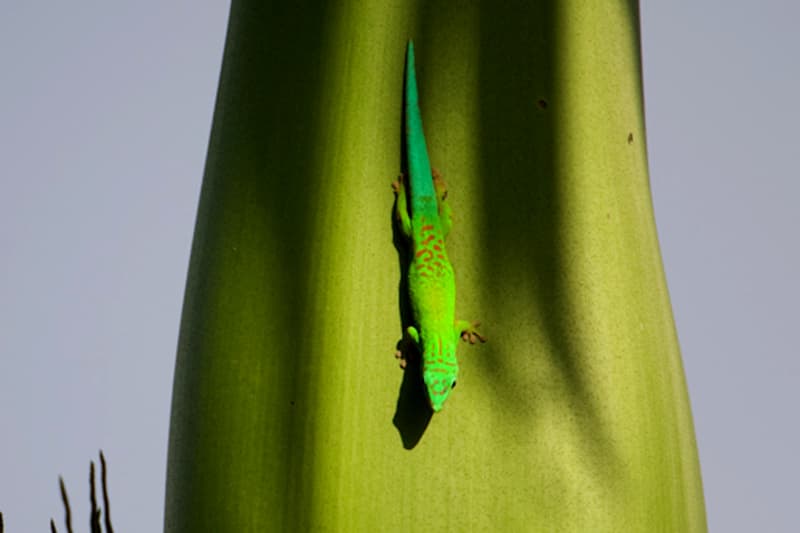
Andaman day gecko
The Andaman day gecko is a small, slender lizard endemic to the Andaman Islands of India, recently introduced to the Nicobar Islands. It is characterized by its bright green coloration, red dots and stripes on its back, and a reddish-brown stripe from its nostrils to its ears. This generalist species thrives in domestic gardens and on various plants, demonstrating a rare benefit from human-induced environmental changes.
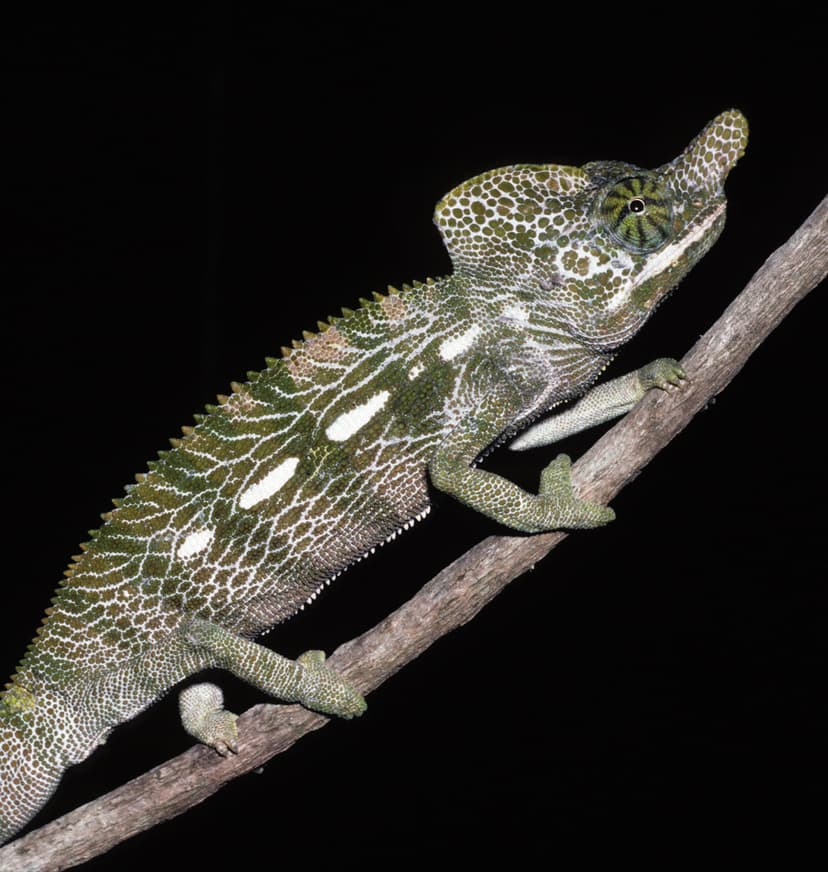
Furcifer labordi
Labord's chameleon (Furcifer labordi) is a chameleon species endemic to the dry and deciduous forests of western Madagascar. This species is notable for its exceptionally short, often one-year life cycle, with adults typically dying after breeding, making it one of the shortest-lived tetrapod vertebrates.
Phelsuma andamanense
The Andaman day gecko (Phelsuma andamanensis) is a small, slender lizard endemic to the Andaman Islands of India, with a recent introduction to the Nicobar Islands. It is characterized by its bright green coloration, often adorned with red dots and stripes, and its generalist habitat preference, thriving in domestic gardens and on various plants. This species is known for its shy yet aggressive behavior towards its own kind.