
Round-tailed horned lizard
The roundtail horned lizard (Phrynosoma modestum) is a small, flat-bodied lizard native to arid regions of the southwestern United States and northcentral Mexico. It is distinguished by its short limbs, small head, and a unique crest of nearly equal-length horns, lacking the prominent lateral fringe of other horned lizards. This species typically inhabits rocky and sandy areas with sparse vegetation, often found near ant colonies which form the bulk of its diet.
Key Facts
- ›One of the smaller species within the horned lizard genus (Phrynosoma).
- ›Possesses a distinctive crest of nearly equal-length horns on its head.
- ›Prefers rocky and sandy semiarid habitats with sparse vegetation.
- ›Its coloration typically matches the soil of its native habitat for camouflage.
- ›Primarily feeds on harvester ants and honeypot ants.
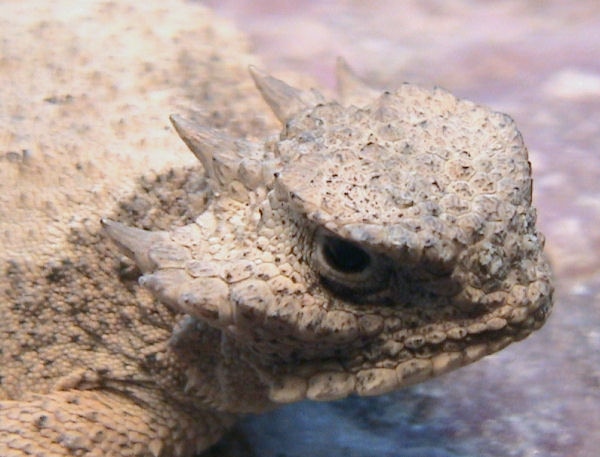
Tapayaxtin
United States, Northcentral Mexico
Semi-Arid, Rocky, Sandy, Sparse Vegetation
- Short, Flat, Round-Bodied Lizard.
- Short Limbs.
- Small Head With A Distinctive Crest of Nearly Equal-Length Horns.
- Lacks A Fringe of Lateral Scales.
- Coloration Usually Reflects the Soil of Its Habitat, Typically Gray, Light Brown, Or Pale Yellow.
- May Have Darker Regions Around the Neck and Groin.
- Sometimes Exhibits Striping On the Tail.
Harvester Ants, Honeypot Ants
- Hunches Body Into the Shape of A Rock For Camouflage.
- Boldly Casts A Shadow, Unlike Other Horned Lizards That Flatten Themselves.
Insectivore, Ants
About Round-tailed horned lizard
Roundtail Horned Lizard
The roundtail horned lizard, scientifically known as Phrynosoma modestum, is a diminutive species belonging to the Phrynosomatidae family. It is recognized as one of the smaller members of the horned lizard genus, Phrynosoma. The species name, 'modestum,' is Latin for 'modest' or 'calm,' reflecting a characteristic of the lizard.
Habitat and Distribution
This lizard is native to arid regions of the southwestern United States, with documented populations in western Texas, New Mexico, eastern Arizona, and southeastern Colorado. Its range extends into eight states in northcentral Mexico, where it is locally referred to as tapayaxtin. The roundtail horned lizard thrives in rocky and sandy semiarid environments characterized by sparse vegetation. Crucially, it is often found in proximity to colonies of harvester ants and especially honeypot ants, which form the primary component of its diet.
Physical Characteristics
The roundtail horned lizard is characterized by its short, flat, and round body, complemented by short limbs and a small head. A distinctive feature is its cranial crest, composed of horns of nearly equal length. Unlike some of its relatives, it lacks a prominent fringe of lateral scales. Its coloration typically harmonizes with the soil of its surroundings, commonly appearing in shades of gray, light brown, or pale yellow. Darker markings may be present around the neck and groin, and occasionally, stripes adorn the tail.
Behavior and Reproduction
When seeking camouflage, the roundtail horned lizard employs a unique strategy. Instead of flattening itself to reduce its shadow, it hunches its body into a shape resembling a rock, boldly casting a shadow that further aids in its concealment. This species is oviparous, reproducing by laying eggs. The breeding and egg-laying season typically occurs in early summer.
Source: Wikipedia ↗
Frequently Asked Questions
What is the scientific name for the roundtail horned lizard?
The scientific name for the roundtail horned lizard is Phrynosoma modestum. The specific epithet 'modestum' is Latin and translates to 'modest' or 'calm'.
Where does the roundtail horned lizard live?
The roundtail horned lizard is native to the United States, found in western Texas, New Mexico, eastern Arizona, and southeastern Colorado. It also occurs in eight states in northcentral Mexico.
What kind of habitat does the roundtail horned lizard prefer?
This lizard prefers rocky and sandy, semiarid environments with sparse vegetation. It is often found in close proximity to ant colonies, which are a crucial food source.
How does the roundtail horned lizard camouflage itself?
Unlike some other horned lizards, the roundtail horned lizard does not flatten itself to eliminate shadow. Instead, it hunches its body into a rock-like shape to blend in with its surroundings.
What is the typical size of a roundtail horned lizard?
The roundtail horned lizard is a small species. Its maximum snout-to-vent length is 7 cm (2.7 inches), with a total length, including the tail, reaching up to 10.5 cm (4.3 inches).
What does the roundtail horned lizard eat?
The primary diet of the roundtail horned lizard consists of ants, particularly harvester ants and honeypot ants. These ant colonies are often found in its preferred habitat.
How does the roundtail horned lizard reproduce?
The roundtail horned lizard is oviparous, meaning it reproduces by laying eggs. Breeding and egg-laying typically occur in early summer.
Related Lizards
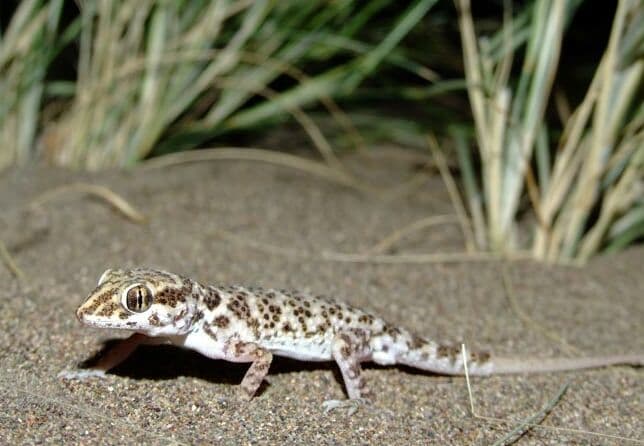
Bunopus tuberculatus
Bunopus tuberculatus, commonly known as the Baluch rock gecko or Arabian desert gecko, is a species of gecko native to the Middle East. This species is characterized by its tuberculated scales, a feature that gives it its distinctive appearance and contributes to its camouflage within its rocky and arid habitats.

Aspidoscelis marmorata marmorata
The marbled whiptail (Aspidoscelis marmoratus) is a slender, diurnal lizard found in the arid and semi-arid regions of the southwestern United States and northern Mexico. It is characterized by its grey or black coloration adorned with 4 to 8 yellow or white stripes, often with dark mottling, creating a marbled effect. This energetic species is known for its speed and wariness, darting into cover when approached.

Aspidoscelis laredoensis
The Laredo striped whiptail (Aspidoscelis laredoensis) is a lizard species native to southern Texas and northern Mexico. It is known for its dark green or brown coloration, distinguished by seven yellow or white stripes extending from head to tail, and a white underside. This species is parthenogenic, meaning females reproduce without fertilization, and it is a fast-moving, diurnal insectivore.