
Sceloporus poinsettii
The crevice spiny lizard (Sceloporus poinsettii) is a small, phrynosomatid lizard characterized by its distinctly spiny scales and a typically gray or ruddy red-brown coloration. Found in the semi-arid regions of the Chihuahua Desert and Edwards Plateau, as well as parts of Mexico, it prefers rocky habitats with numerous crevices for shelter. This species is ovoviviparous, giving birth to live young in midsummer.
Key Facts
- ›Possesses distinctly spiny scales, giving it a rough texture.
- ›Prefers semi-arid habitats, particularly rocky areas with ample crevices.
- ›Diet consists mainly of spiders, beetles, and other insects, with occasional consumption of tender vegetation.
- ›Is ovoviviparous, meaning it gives birth to live young.
- ›Breeding occurs in the spring, with litters born in midsummer.
- ›Males often display blue patches on their undersides.

Crevice Spiny Lizard
United States, Mexico
Semi-Arid Habitats, Limestone Rock Areas, Crevices, Rock Faces
- Typically Grey In Color, Sometimes With A Ruddy Red-Brown Appearance.
- Features A Black and White Collar Around the Neck Region.
- Underside Is Typically Light Grey.
- Males Often Have Blue Patches On Their Bellies.
- Tail Typically Has Black Banding.
- Scales Have A Distinctly Spiny Texture.
- Can Grow Up To 11.8 cm Snout-To-Vent Length.
- Can Reach A Total Length of Up To 31.1 cm.
Spiders, Beetles, Other Insects, Tender Vegetation
Shy, Nervous, Flee Quickly When Approached, Utilize Crevices and Rock Faces For Shelter
About Sceloporus poinsettii
Sceloporus poinsettii: The Crevice Spiny Lizard
The crevice spiny lizard, scientifically designated as Sceloporus poinsettii, is a small reptile belonging to the phrynosomatid family. This species is notably recognized for its distinctly spiny scales, which give its skin a rough texture. Its coloration typically ranges from grey to a ruddy red-brown, often accented by a contrasting black and white collar around the neck region. Males may also display distinctive blue patches on their undersides, and their tails commonly feature black banding.
Habitat and Distribution
Sceloporus poinsettii thrives in semi-arid environments, showing a strong preference for rocky terrains that offer abundant holes and easily accessible cracks. These features are crucial for their shelter and escape from predators. The species is found in the United States within the Chihuahua Desert and the Edwards Plateau regions of Texas and New Mexico. Its distribution extends into Mexico, encompassing border states from the Sierra Madre Occidental of Sonora eastward through Chihuahua, Coahuila, and Nuevo Leon. Further south, its range includes Durango, parts of Zacatecas, San Luis Potosi, and the Pacific slopes of the Sierra Madre Occidental in northern Jalisco.
Behavior and Diet
These lizards are characterized by their shy and nervous disposition. When they perceive a threat or are approached, their primary defense mechanism is to flee rapidly, either up a rock face or into the safety of a nearby crevice. Their diet is predominantly insectivorous, consisting of a varied intake of spiders, beetles, and other insects. However, they are known to supplement their diet with tender vegetation when available.
Reproduction
Sceloporus poinsettii exhibits ovoviviparity, a reproductive strategy where the eggs develop internally, and the female gives birth to live young. The breeding season typically occurs in the spring. Following this period, a litter, which can contain up to eleven offspring, is born in midsummer. Several subspecies of Sceloporus poinsettii are recognized, including the nominotypical subspecies Sceloporus poinsettii poinsettii.
Source: Wikipedia ↗
Frequently Asked Questions
What is the crevice spiny lizard?
The crevice spiny lizard, scientifically known as Sceloporus poinsettii, is a small lizard belonging to the phrynosomatid family. It is recognized by its spiny scales and preference for rocky, semi-arid environments.
Where does the crevice spiny lizard live?
Its geographic range includes the Chihuahua Desert and Edwards Plateau regions of Texas and New Mexico in the United States. In Mexico, it is found in border states such as Sonora, Chihuahua, Coahuila, Nuevo Leon, Durango, Zacatecas, San Luis Potosi, and northern Jalisco.
What does the crevice spiny lizard look like?
This lizard is typically gray, though it can also appear ruddy red-brown, and features a black and white collar around its neck. Its scales are notably spiny, and adults can reach a total length of up to 31.1 cm, with males sometimes exhibiting blue patches on their bellies.
What does the crevice spiny lizard eat?
The crevice spiny lizard is primarily insectivorous, feeding on a variety of spiders and beetles. It also supplements its diet by consuming tender vegetation.
How does the crevice spiny lizard reproduce?
Sceloporus poinsettii is ovoviviparous, meaning the eggs develop and hatch inside the mother, who then gives birth to live young. Breeding takes place in the spring, and litters of up to 11 offspring are born in midsummer.
What is the behavior of the crevice spiny lizard?
These lizards are generally shy and nervous. When approached, they tend to flee quickly up rock faces or into available crevices, which are their preferred shelter in semi-arid habitats.
Related Lizards
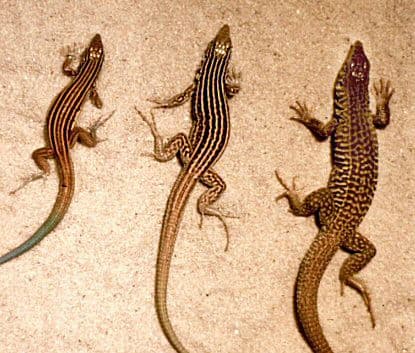
Aspidoscelis neomexicana
The New Mexico whiptail (Aspidoscelis neomexicana) is a unique, all-female lizard species native to the southwestern United States and northern Mexico, notable for its parthenogenetic reproduction. Characterized by its slender body, seven pale yellow stripes, and a blue or blue-green throat, this diurnal lizard inhabits a variety of semi-arid environments.
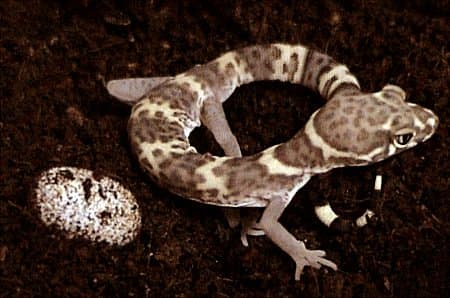
Coleonyx brevis
The Texas banded gecko (Coleonyx brevis) is a small, terrestrial lizard native to the southwestern United States and northern Mexico. It is characterized by distinct alternating bands of yellow and brown or pink, often with black accents. These geckos are primarily nocturnal and carnivorous, inhabiting semi-arid regions, frequently found near rock piles or canyon crevices.

Cyprus rock agama
The Cyprus rock agama is a species of agamid lizard endemic to the island of Cyprus. It inhabits a variety of rocky environments, from arid to Mediterranean habitats, and has adapted well to human presence in towns and agricultural areas. This diurnal lizard is primarily insectivorous but also consumes small vertebrates and fruits.