
Xantusia riversiana
Vulnerable (IUCN), Formerly Threatened (US ESA)·Ovoviviparous
The island night lizard (Xantusia riversiana) is a medium-sized reptile native to three of California's Channel Islands. It is characterized by its variable coloration and pattern, and it inhabits dense coastal scrub environments. Unlike many lizards, it gives birth to live young and can live for several decades.
Key Facts
- ›Native to San Nicolas, Santa Barbara, and San Clemente Islands in California.
- ›Ovoviviparous, meaning it gives birth to live young.
- ›Average snout-to-vent length is between 6.6 and 10.9 cm.
- ›Can live for 11-13 years in the wild, with some individuals potentially reaching over 30 years.
- ›Its conservation status has been upgraded from threatened to removed from the Federal List of Threatened and Endangered Wildlife.
- ›Prefers habitat within dense boxthorn and cacti thickets.
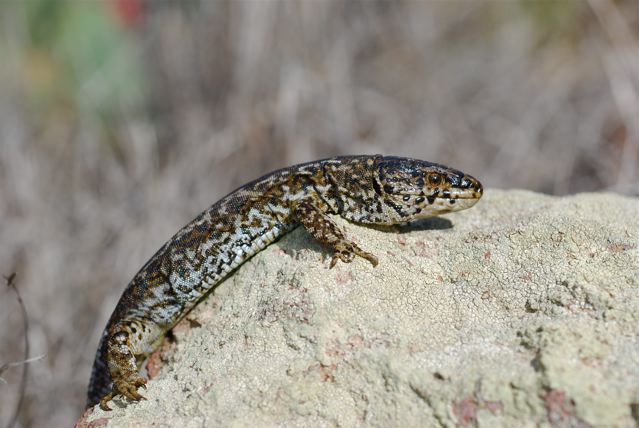
Island Night Lizard
California, Usa
Coastal Scrub, Boxthorn Thickets, Cacti Thickets
- Body Length Typically Between 6.6 and 10.9 cm .
- Coloration Varies From Pale Ash Gray and Beige To Brown and Black.
- May Exhibit Uniform, Mottled, Or Striped Patterns.
- Larger Than the Desert Night Lizard .
Non-Native Animals, Munitions-Sparked Wildfires
About Xantusia riversiana
Island Night Lizard (Xantusia riversiana)
The island night lizard, scientifically known as Xantusia riversiana, is a unique reptile native to the Channel Islands of California. Its range is confined to San Nicolas Island, Santa Barbara Island, and San Clemente Island, with a small additional population on Sutil Island.
Habitat and Description
This lizard thrives in dense coastal scrub environments, favoring areas rich with boxthorn and cacti thickets. Physically, the island night lizard is notably larger than its relative, the desert night lizard. Adult individuals typically measure between 6.6 and 10.9 centimeters (2.6 to 4.3 inches) in snout-to-vent length. Their coloration is diverse, ranging from pale ash gray and beige to darker shades of brown and black, and their patterns can be uniform, mottled, or striped.
Reproduction and Lifespan
A distinctive characteristic of the island night lizard, shared with other members of the Xantusiidae family, is its ovoviviparous reproductive method. This means that females give birth to live young rather than laying eggs. The typical lifespan for this species in the wild is between 11 and 13 years, though some individuals are estimated to live much longer, potentially exceeding 30 years.
Conservation Status
The island night lizard has experienced a significant improvement in its conservation status. It was listed as threatened under the U.S. Endangered Species Act since 1977 and as vulnerable by the IUCN. However, due to successful recovery efforts, including the removal of invasive species like cats and goats from the islands and cooperative conservation initiatives, the species was removed from the Federal List of Threatened and Endangered Wildlife in March 2014.
Source: Wikipedia ↗
Frequently Asked Questions
What islands are the island night lizard found on?
The island night lizard is naturally found on three of the Channel Islands of California: San Nicolas Island, Santa Barbara Island, and San Clemente Island. A small population also exists on Sutil Island, which is located near Santa Barbara Island.
How large do island night lizards get?
The island night lizard is larger than other species in its genus. Typically, its body length, excluding the tail, ranges from 6.6 to 10.9 cm (2.6 to 4.3 inches).
What is the lifespan of an island night lizard?
In the wild, island night lizards commonly live between 11 and 13 years. However, there are estimations that some individuals have survived for 30 years or more.
What is the conservation status of the island night lizard?
The island night lizard was previously listed as threatened under the Endangered Species Act in the United States and as vulnerable by the IUCN. However, due to recovery efforts, it was removed from the Federal List of Threatened and Endangered Wildlife in March 2014.
How does the island night lizard reproduce?
Following the pattern of other night lizards in the Xantusiidae family, the island night lizard is ovoviviparous. This means that instead of laying eggs, the females give birth to live young.
What kind of habitat does the island night lizard prefer?
The preferred habitat for the island night lizard consists of coastal scrub. They are particularly found in areas with dense thickets of boxthorn and cacti.
Related Lizards
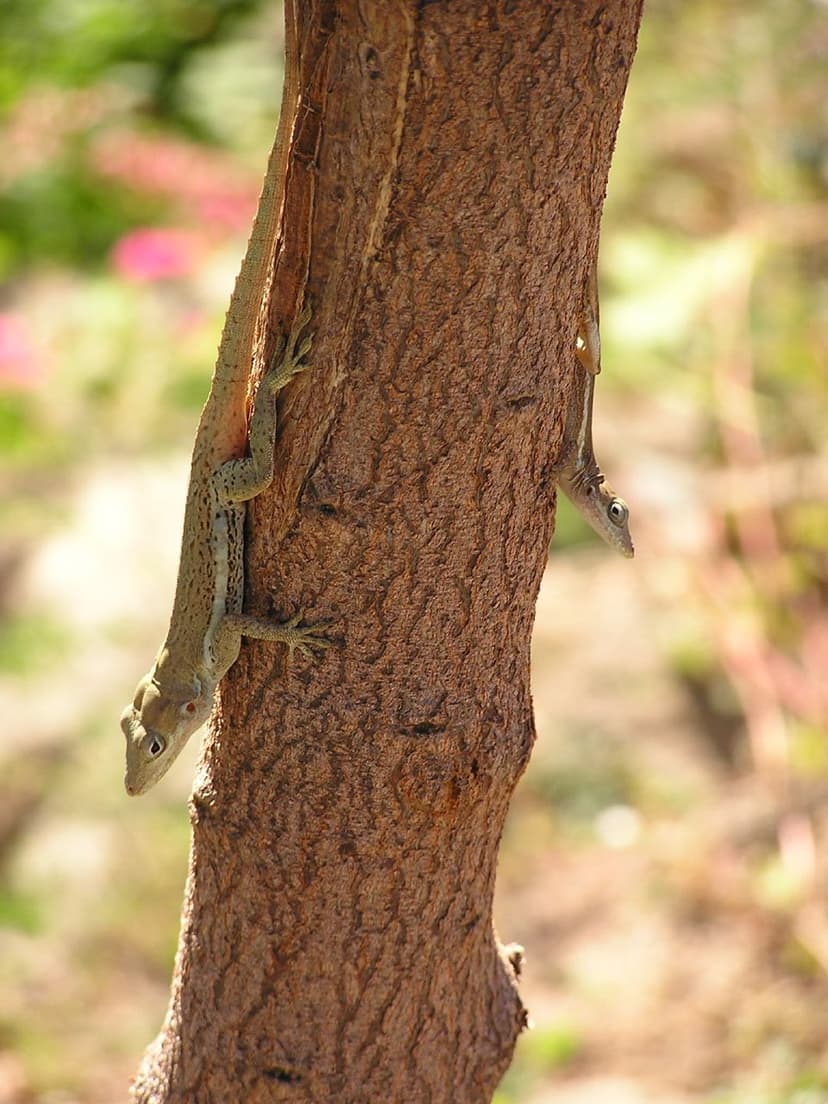
Anolis gingivinus
The Anolis gingivinus, also known as the Anguilla Bank tree anole, is a lizard species endemic to the northern Lesser Antilles islands of Anguilla, Saint Martin, and Saint Barthélemy. It is characterized by its olive to light grey coloration, bold stripes along the back, and a vivid orange chinflap, with males sometimes exhibiting dark marbled spotting. This adaptable species inhabits diverse mesic to xeric environments, including woods, coastal scrub, and overgrown fields, and can be found both in trees and on the ground.

Smallwood's anole
Smallwood's anole, also known as the green-blotched giant anole, is a lizard species native to Cuba. It primarily inhabits dry forest and coastal scrub areas, where it can be found perching on tree trunks and branches. This anole is characterized by its insectivorous diet and a snout-to-vent length typically measuring between 3 to 4 inches.

Chalcides sexlineatus
The Gran Canaria skink (Chalcides sexlineatus) is a species of skink endemic to the island of Gran Canaria in the Canary Islands. This lizard is characterized by its flattened body, wide head, and distinctive striping patterns, with variations between subspecies. It inhabits a wide range of environments across the island.