
Sonoran spiny-tailed iguana
Ctenosaura macrolopha·Iguanidae
The Sonoran spiny-tailed iguana is a species of iguana native to the Sonoran Desert of southwestern North America, primarily found in Mexico. Adults typically display grey and black scales with distinct stripes and banding, especially on their tails, while juveniles are characterized by bright green coloration. These iguanas can grow to over 1 meter in length.
Key Facts
- ›Native to the Sonoran Desert of Mexico and southwestern North America.
- ›Adults are grey and black with stripes; juveniles are bright green.
- ›Can reach lengths of over 1 meter (39 inches).
- ›Found in the Mexican states of Sonora, Sinaloa, and parts of Chihuahua.
- ›A hybrid population exists at the Arizona-Sonora Desert Museum.

Sonoran Spiny-Tailed Iguana
Mexico, Southwestern North America
- Adults: Generally Grey and Black Scales With Stripes and Banding, Especially Along the Tail.
- Juveniles: Possess Bright Green Scales.
- Size: Range From 12.5 cm To Well Over 1 m .
About Sonoran spiny-tailed iguana
The Sonoran spiny-tailed iguana (Ctenosaura macrolopha) is a species of lizard native to the arid landscapes of the Sonoran Desert in southwestern North America.
Description and Distribution
This iguana species is primarily found in the Mexican states of Sonora, Sinaloa, and parts of Chihuahua. Adults typically exhibit a coloration of grey and black scales, often featuring distinct stripes and banding, particularly along their tails. In contrast, juvenile Sonoran spiny-tailed iguanas are notable for their bright green scales. These lizards can grow to significant sizes, with individuals ranging from approximately 12.5 cm (4.9 inches) to well over 1 meter (39 inches) in total length.
Hybrid Populations
A notable population of hybrid Ctenosaura macrolopha x conspicuosa iguanas can be found on the grounds of the Arizona-Sonora Desert Museum in Tucson, Arizona, indicating interbreeding between closely related species in certain environments.
Source: Wikipedia ↗
Frequently Asked Questions
What is the scientific name for the Sonoran spiny-tailed iguana?
The scientific name for the Sonoran spiny-tailed iguana is *Ctenosaura macrolopha*.
Where are Sonoran spiny-tailed iguanas found?
These iguanas are endemic to the Sonoran Desert of southwestern North America, primarily inhabiting the Mexican states of Sonora, Sinaloa, and parts of Chihuahua.
What do Sonoran spiny-tailed iguanas look like?
Adults generally have grey and black scales with stripes and banding, particularly on their tail. Juveniles, however, exhibit bright green scales.
How large can Sonoran spiny-tailed iguanas get?
Individuals can range in size from 12.5 cm (4.9 in) up to well over 1 meter (39 inches) in length.
Related Lizards
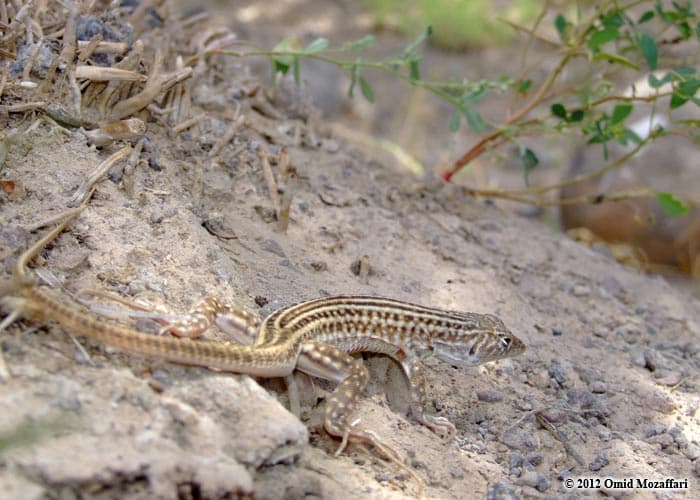
Acanthodactylus cantoris
The Indian fringe-fingered lizard (Acanthodactylus cantoris) is a terrestrial species endemic to Asia, primarily found in sandy desert and shrubland habitats. It is characterized by its acutely pointed snout, keeled dorsal scales, and strong digital denticulations. This oviparous lizard burrows in the sand for protection and its young have distinctive white longitudinal lines on a blackish background.
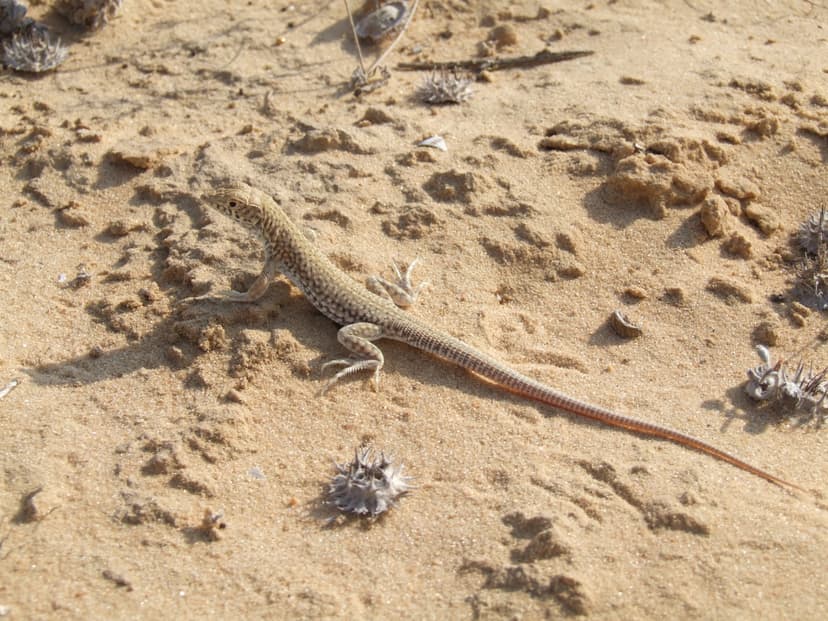
Acanthodactylus scutellatus
The Acanthodactylus scutellatus, commonly known as the Nidua fringe-fingered lizard, is a small lizard species endemic to northern Africa and the Middle East. It is recognized by its unique ventral scale arrangement and its adeptness at burrowing in loose sand for shelter. This diurnal species breeds in late winter, with females laying clutches of 3-6 eggs in the spring.

Agama anchietae
Agama anchietae, commonly known as Anchieta's agama or the western rock agama, is a species of lizard native to southern Africa. It is characterized by its cryptic coloration, a wider head and longer tail in males due to sexual dimorphism, and a diet primarily consisting of insects, particularly ants. This species inhabits diverse environments including deserts, shrublands, and grasslands, and it reproduces by laying eggs.