
Tarentola chazaliae
The helmethead gecko (Tarentola chazaliae) is a species of lizard native to the sandy and rocky desert coastlines of northwestern Africa. Characterized by a distinctive casque formed by enlarged tubercles at the back of its head, this nocturnal gecko possesses extraordinary color vision in low light conditions. Its populations are currently considered vulnerable due to habitat degradation and collection for the pet trade.
Key Facts
- ›Native to coastal northwestern Africa, including Mauritania, Morocco, and Western Sahara.
- ›Possesses a unique casque on its head formed by enlarged tubercles.
- ›Notable for its exceptional color vision at night, significantly better than humans.
- ›Primarily nocturnal, with pupils that change shape from circular to pinhole-like during the day.
- ›Considered vulnerable due to habitat loss and collection for the pet trade.
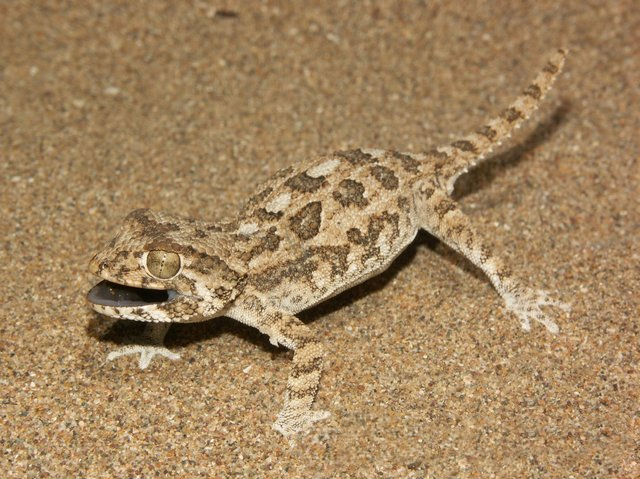
Helmeted Gecko
Mauritania, Morocco, Western Sahara
Sandy Desert, Rocky Desert, Coastal Zone
- Adult Snout-To-Vent Length of 7.5 cm .
- Total Length of About 11 cm .
- Head Covered With Small Granulations.
- Enlarged Tubercles At the Back of the Head Form A Casque.
- Digits Are Flattened and Spatulate.
- Dorsal Coloration Ranges From Light Grey To Dark Brown, Uniform Or With Pale Or Dark Blotches.
- Underside Is Light-Colored.
- Mainly Nocturnal.
- Possesses Advanced Color Vision At Night.
- Pupils Change From Circular At Night To Pinhole-Like During the Day.
- May Use Pinhole Pupils To Reduce Visibility To Predators While Basking.
Habitat Degradation By Coastal Development, Collection For the Pet Trade
About Tarentola chazaliae
Helmethead Gecko (Tarentola chazaliae)
The helmethead gecko, scientifically known as Tarentola chazaliae, is a fascinating lizard species native to the coastal desert regions of northwestern Africa, specifically found in Mauritania, Morocco, and Western Sahara. This gecko thrives in a unique environment characterized by sandy and rocky terrain with sparse vegetation, benefiting from the high humidity found near the coast.
Physical Characteristics and Adaptations
Adult helmethead geckos are relatively small, with an average total length of about 11 cm (4.3 inches) and a snout-to-vent length of approximately 7.5 cm (3.0 inches). A defining feature of this species is its head, which is covered in small granulations and possesses enlarged tubercles at the back, forming a distinctive casque that gives the gecko its common name. Their digits are flattened and spatulate, aiding in locomotion on their preferred surfaces. Dorsally, they exhibit coloration ranging from light grey to dark brown, often featuring pale or dark blotches, while their undersides are a pale color.
Perhaps the most remarkable adaptation of the helmethead gecko is its extraordinary visual acuity in low light. As a primarily nocturnal species, it has evolved a sophisticated optical system that allows for color vision at night, a trait uncommon among vertebrates. Its eyes are capable of distinguishing colors at light levels 350 times better than humans. During the day, its circular pupils transform into a pair of pinhole-sized openings in each eye, a change whose precise function is still debated but may serve to reduce its visibility to predators while basking in the sun.
Ecology and Conservation
The helmethead gecko's nocturnal habits and specialized vision are key to its survival in its desert habitat. While specific dietary details are not elaborated upon, geckos are typically insectivores or opportunistic carnivores.
The species faces significant conservation challenges. Its relatively restricted geographic range, combined with increasing habitat degradation due to coastal development and demand from the pet trade, has led to a declining population trend. Consequently, the International Union for Conservation of Nature has classified the helmethead gecko as 'vulnerable,' highlighting the need for conservation efforts to protect its dwindling populations and fragile habitat.
Source: Wikipedia ↗
Frequently Asked Questions
What is the helmethead gecko?
The helmethead gecko, scientifically known as Tarentola chazaliae, is a species of lizard found in northwestern Africa. It is recognized for its distinctive head shape and remarkable low-light vision capabilities.
Where does the helmethead gecko live?
This gecko inhabits the coastal desert regions of Mauritania, Morocco, and Western Sahara. Its preferred environment consists of sandy and rocky areas with sparse vegetation, benefiting from the high humidity near the coast.
What are the physical characteristics of the helmethead gecko?
Adult helmethead geckos typically measure about 11 cm in total length, with a snout-to-vent length of around 7.5 cm. Their heads are covered in small granulations, and enlarged tubercles at the back form a casque, giving them their common name. Their coloration ranges from light grey to dark brown dorsally, with a lighter underside.
How does the helmethead gecko see in the dark?
The helmethead gecko is a remarkable vertebrate with the ability to see color in very low light conditions, with its night vision being hundreds of times better than that of humans. It possesses a multifocal optical system and its circular pupils at night adapt to a pair of pinhole-like pupils during the day, potentially to reduce visibility to predators.
What is the conservation status of the helmethead gecko?
The International Union for Conservation of Nature has assessed the helmethead gecko as 'vulnerable.' This status is due to its restricted range, ongoing habitat degradation from coastal development, and collection for the pet trade, leading to a declining population trend.
Why is it called the helmethead gecko?
The common name 'helmethead gecko' is derived from the distinctive casque-like shape formed by enlarged, specialized scales at the back of its head. This anatomical feature is one of its most recognizable physical traits.
Related Lizards

Phrynosomatidae
The Phrynosomatidae are a diverse family of lizards native to North America, ranging from Panama to southern Canada. Many species inhabit arid desert environments, particularly hot, sandy deserts, though some prefer rocky terrain or even moist forest edges. This family includes both egg-laying (oviparous) and live-bearing (viviparous) species, with the latter being more prevalent at higher altitudes.

Diplodactylus conspicillatus
The variable fat-tailed gecko (Diplodactylus conspicillatus) is a small to medium-sized lizard endemic to arid and semi-arid regions of Australia. Characterized by its stout body, short limbs, and a broad, flat tail, it typically displays a fawn to reddish-brown coloration with a reticulated pattern and pale speckles. This nocturnal insectivore primarily feeds on termites and is known for its unique burrow-plugging behavior, though much of its ecology remains under-researched.

Dipsosaurus dorsalis
The desert iguana (Dipsosaurus dorsalis) is a medium-sized lizard native to the Sonoran and Mojave Deserts of the southwestern United States and northwestern Mexico. Characterized by its pale gray-tan to cream coloration with a reticulated pattern and a distinctive crest of spiked scales along its back, this species thrives in arid desert scrubland, often near creosote bushes. They are known for their ability to tolerate high temperatures and their herbivorous diet, supplemented with insects.