
Teratoscincus bedriagai
Teratoscincus bedriagai, also known as Bedriaga's wonder gecko or Bedriaga's plate-tailed gecko, is a small lizard native to the desert regions of Central and Western Asia. This species primarily inhabits desert and shrubland environments and is oviparous, laying eggs as its method of reproduction.
Key Facts
- ›Native to the desert basins of Iran and southern Afghanistan.
- ›Inhabits desert and shrubland habitats.
- ›Prefers altitudes between 100 and 1,400 meters.
- ›Reproduces by laying eggs (oviparous).
- ›Named in honor of herpetologist Jacques von Bedriaga.
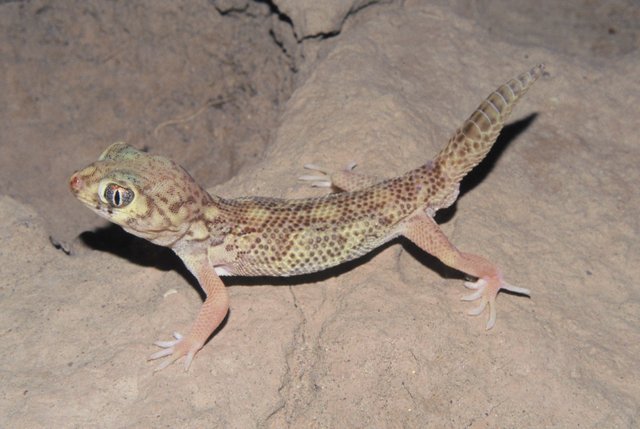
Bedriaga's Wonder Gecko, Bedriaga's Plate-Tailed Gecko
Iran, Afghanistan
About Teratoscincus bedriagai
Teratoscincus bedriagai, commonly known as Bedriaga's wonder gecko or Bedriaga's plate-tailed gecko, is a small lizard species belonging to the family Sphaerodactylidae. This species is native to the arid regions of Central and Western Asia, specifically found in the northern and eastern desert basins of Iran's central Plateau, Sistan, and the desert areas of southern Afghanistan, extending eastward to Kandahar.
Habitat and Distribution
The preferred natural habitats for Teratoscincus bedriagai are desert and shrubland environments. These geckos are typically found at altitudes ranging from 100 to 1,400 meters (approximately 330 to 4,590 feet). Ecological studies have indicated that isothermality plays a significant role in the species' distribution, contributing about 32% to its habitat selection.
Reproduction
Teratoscincus bedriagai reproduces by laying eggs, classifying it as an oviparous species. Further details regarding its reproductive cycle, such as clutch size or incubation periods, are not extensively documented in available records.
Etymology
The specific name, bedriagai, was given in honor of the Russian herpetologist Jacques von Bedriaga, recognizing his contributions to the field of herpetology.
Source: Wikipedia ↗
Frequently Asked Questions
What is Teratoscincus bedriagai commonly known as?
Teratoscincus bedriagai is commonly referred to as Bedriaga's wonder gecko or Bedriaga's plate-tailed gecko.
Where is Teratoscincus bedriagai found?
This species is native to the northern and eastern desert basins of the central Plateau of Iran, Sistan, and the desert regions of southern Afghanistan, extending as far east as Kandahar.
What type of habitat does Bedriaga's wonder gecko prefer?
Teratoscincus bedriagai prefers natural habitats such as desert and shrubland environments. It is typically found at altitudes ranging from 100 to 1,400 meters above sea level.
How does Teratoscincus bedriagai reproduce?
Teratoscincus bedriagai is oviparous, meaning it reproduces by laying eggs.
Who is Teratoscincus bedriagai named after?
The specific name 'bedriagai' honors the Russian herpetologist Jacques von Bedriaga.
Related Lizards
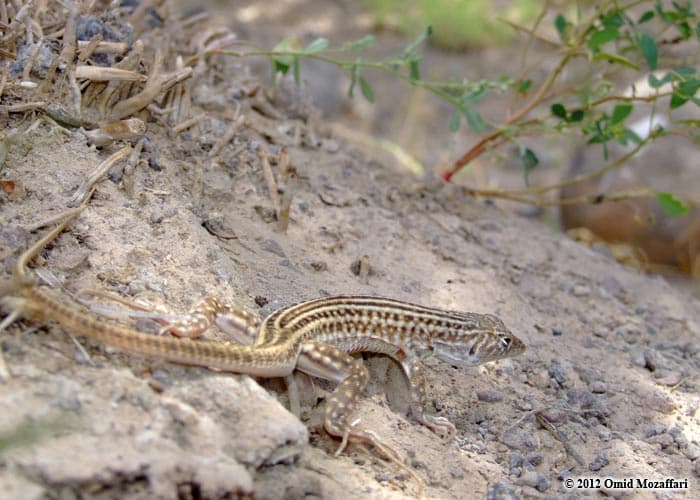
Acanthodactylus cantoris
The Indian fringe-fingered lizard (Acanthodactylus cantoris) is a terrestrial species endemic to Asia, primarily found in sandy desert and shrubland habitats. It is characterized by its acutely pointed snout, keeled dorsal scales, and strong digital denticulations. This oviparous lizard burrows in the sand for protection and its young have distinctive white longitudinal lines on a blackish background.

Agama anchietae
Agama anchietae, commonly known as Anchieta's agama or the western rock agama, is a species of lizard native to southern Africa. It is characterized by its cryptic coloration, a wider head and longer tail in males due to sexual dimorphism, and a diet primarily consisting of insects, particularly ants. This species inhabits diverse environments including deserts, shrublands, and grasslands, and it reproduces by laying eggs.
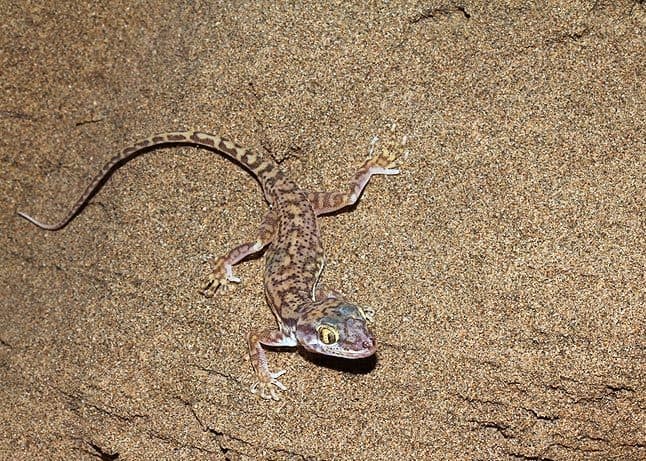
Crossobamon eversmanni
Crossobamon eversmanni, commonly known as the comb-toed gecko, is a species of Asian gecko found in desert, grassland, and shrubland habitats across Iran, Pakistan, and Central Asia. This terrestrial and nocturnal lizard is characterized by its burrowing behavior and oviparous reproduction, with females laying one to two eggs per clutch.