
Toeless snake skink
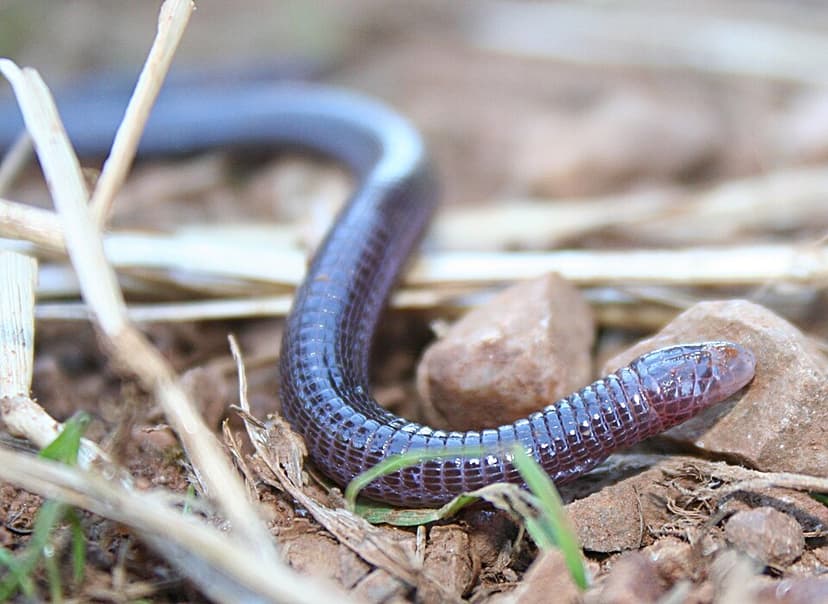
The toeless snake skink (Nessia monodactyla), also referred to as the one-toed nessia, is a species of skink found exclusively on the island of Sri Lanka. This slender, legless reptile inhabits montane forests, typically found under rubble, decaying logs, or within soil. Its diet consists primarily of insects.
Key Facts
- ›Endemic to Sri Lanka.
- ›Found in wet climatic zones between 400-1500m elevation.
- ›Has a slender body with no digits on its limbs.
- ›Inhabits montane forests, often under debris or in soil.
- ›Feeds on insects.
- ›Lays two eggs in loose soil.

One-Toed Nessia
Sri Lanka
Montane Forest, Soil, Humus
- Slender Body of Equal Girth From Head To Tail.
- Snout Is Short and Obtuse.
- Lower Eyelid Features A Transparent Disk.
- Limbs Are Present But Lack Digits.
- Dorsal Coloration Is Brown, Dark, Or Gray-Black.
Insects
- Hides Under Rubble, Decaying Logs, and In Soil Or Humus.
- When Exposed, Immediately Wriggles Into Loose Soil Or Under Rubble.
About Toeless snake skink
The toeless snake skink, scientifically classified as Nessia monodactyla and also known as the one-toed nessia, is a reptile species endemic to the island of Sri Lanka. This skink is characterized by its slender, snake-like body, which maintains an equal girth from head to tail, and notably, its limbs lack any digits.
Habitat and Distribution
This species is widely distributed across the wet climatic zones of Sri Lanka, typically inhabiting elevations between 400 and 1500 meters. Documented localities include areas such as Kandy, Nawalapitiya, Deniyaya, and Peradeniya. The toeless snake skink prefers to reside in montane forests, often seeking refuge and shelter beneath rubble, within decaying logs, or in the soil and humus layers of the forest floor.
Description and Behavior
Physically, the toeless snake skink possesses a short and obtuse snout, and its lower eyelid is equipped with a transparent disk. Its dorsal coloration can range from brown to dark or gray-black. When threatened or disturbed, these skinks exhibit a rapid escape behavior, immediately wriggling into loose soil or seeking concealment under debris. Their midbody scale rows typically range from 26 to 28.
Diet and Reproduction
The diet of the toeless snake skink consists primarily of insects. For reproduction, the female lays two eggs, depositing them in loose soil.
Source: Wikipedia ↗
Frequently Asked Questions
What is the toeless snake skink?
The toeless snake skink, scientifically known as Nessia monodactyla, is a species of skink native to Sri Lanka. It is characterized by its slender, legless body, resembling a snake, and is often called the one-toed nessia.
Where does the toeless snake skink live?
This species is widely distributed in the wet climatic zones of Sri Lanka, typically found at elevations ranging from 400 to 1500 meters. Known localities include Kandy, Nawalapitiya, Deniyaya, and Peradeniya.
What does the toeless snake skink eat?
The diet of the toeless snake skink primarily comprises insects. They forage for their food within their habitat.
How does the toeless snake skink reproduce?
Reproduction involves the laying of two eggs. These eggs are deposited in loose soil, where they incubate.
What are the physical characteristics of the toeless snake skink?
The toeless snake skink has a slender body of equal girth from head to tail, with a short, obtuse snout. A distinguishing feature is the transparent disk on its lower eyelid, and its limbs entirely lack digits.
What is the habitat of the toeless snake skink?
They are found in montane forests, hiding under rubble, decaying logs, and within soil or humus. When disturbed, they quickly burrow into loose soil or seek shelter under debris.
Related Lizards
Blanidae
Blanus, commonly known as worm lizards, is a genus of amphisbaenians adapted for a subterranean lifestyle. These lizards are characterized by their long, slender bodies, reduced limbs, and powerful skulls designed for burrowing. They are found across the Mediterranean region of Europe and North Africa.
Blanus
Blanus, commonly known as worm lizards, are a genus of amphisbaenians adapted for a subterranean life in the Mediterranean region. They possess long, slender bodies, reduced limbs, and rudimentary eyes, with powerful skulls and jaws designed for burrowing through soil. The genus contains several extant species, though their exact evolutionary relationships to other worm lizards are still under investigation.

Greer's Lanka skink
Greer's Lanka skink, also known as Deignan's tree skink, is a robust lizard species endemic to Sri Lanka. It inhabits the midhill, submontane, and montane forests, typically found in moist leaf litter, under stones, and logs. This species is characterized by its olive-brown coloration with distinct dark and yellowish stripes along its sides and a cream-white venter.