
Trachylepis nancycoutuae
Trachylepis nancycoutuae, also known as Nancy Coutu's mabuya or Nancy Coutu's skink, is a species of lizard endemic to Madagascar. This skink is found in rocky areas and shrubland habitats at moderate altitudes. Its reproduction method is currently unknown to science.
Key Facts
- ›Endemic to Madagascar.
- ›Inhabits rocky areas and shrubland.
- ›Found at altitudes between 700 and 750 meters.
- ›The specific name honors Nancy Coutu, a Peace Corps volunteer murdered in Madagascar.
- ›Belongs to the subfamily Lygosominae within the family Scincidae.

Nancy Coutu's Mabuya, Nancy Coutu's Skink
Madagascar
About Trachylepis nancycoutuae
Overview
Trachylepis nancycoutuae, commonly known as Nancy Coutu's mabuya or Nancy Coutu's skink, is a species of lizard belonging to the subfamily Lygosominae within the family Scincidae. This species is native to the island of Madagascar.
Habitat and Distribution
The preferred natural habitats of Trachylepis nancycoutuae are rocky areas and shrubland. These lizards are found at altitudes ranging from approximately 700 to 750 meters (2,300 to 2,460 feet). The species is endemic to Madagascar, meaning it is found only in this region.
Taxonomy and Naming
The scientific name, Trachylepis nancycoutuae, honors American Peace Corps volunteer Nancy Coutu. Ms. Coutu served in Madagascar and was tragically murdered there in 1996 by cattle thieves. The species was previously known under different combinations, including Mabuya nancycoutuae and Euprepis nancycoutuae, before its current placement was established.
Reproduction
Information regarding the reproduction of Trachylepis nancycoutuae is currently unknown. Scientists have not yet documented the specific methods or behaviors associated with its breeding cycle.
Source: Wikipedia ↗
Frequently Asked Questions
What is Trachylepis nancycoutuae commonly called?
Trachylepis nancycoutuae is commonly referred to as Nancy Coutu's mabuya or Nancy Coutu's skink. These names are derived from its scientific designation.
Where is Trachylepis nancycoutuae found?
This lizard species is endemic to Madagascar. Its natural habitats are specifically rocky areas and shrubland.
What are the preferred habitats of Trachylepis nancycoutuae?
Trachylepis nancycoutuae prefers natural habitats that include rocky areas and shrubland. It is typically found at altitudes ranging from 700 to 750 meters.
How does Trachylepis nancycoutuae reproduce?
The exact mode of reproduction for Trachylepis nancycoutuae is not currently known. Further research is needed to understand its reproductive behaviors and methods.
What is the origin of the scientific name Trachylepis nancycoutuae?
The specific name 'nancycoutuae' was given in honor of Nancy Coutu, an American Peace Corps volunteer who tragically died in Madagascar. She was murdered by cattle thieves during her service.
Related Lizards
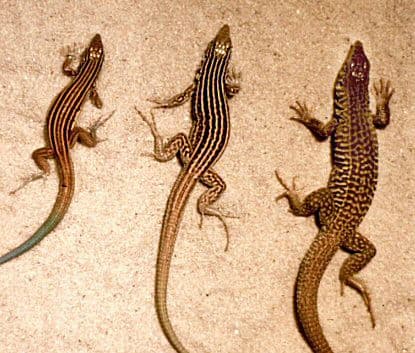
Aspidoscelis neomexicana
The New Mexico whiptail (Aspidoscelis neomexicana) is a unique, all-female lizard species native to the southwestern United States and northern Mexico, notable for its parthenogenetic reproduction. Characterized by its slender body, seven pale yellow stripes, and a blue or blue-green throat, this diurnal lizard inhabits a variety of semi-arid environments.
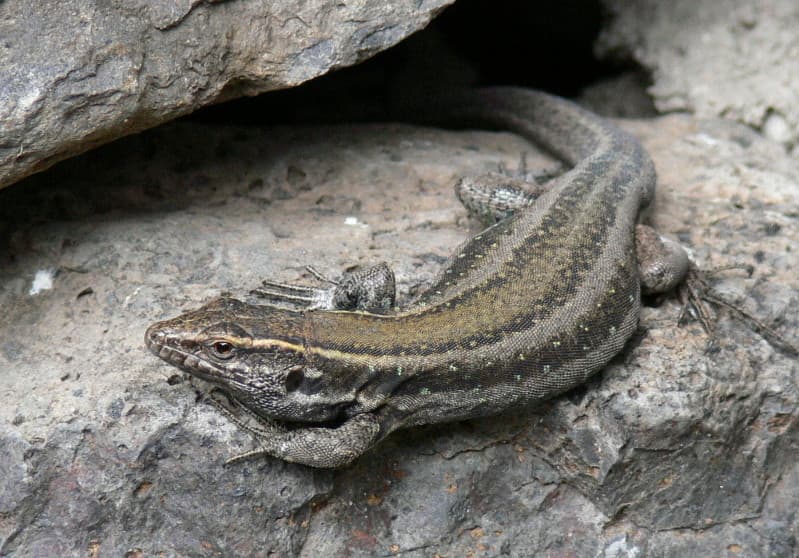
Boettger's lizard
Boettger's lizard (Gallotia caesaris) is a species of wall lizard endemic to the western Canary Islands, specifically El Hierro and La Gomera. This oviparous reptile inhabits rocky areas, shrubland, and forests, and is known for its capacity to lay multiple clutches of eggs per year. It is closely related to the Gallotia galloti species found on neighboring islands.
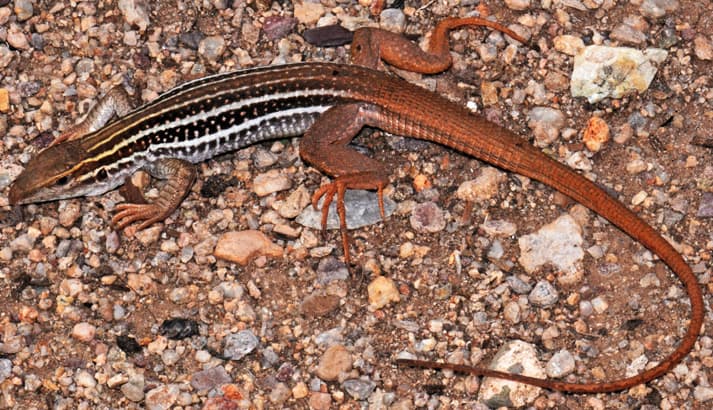
Canyon Spotted Whiptail
The Canyon Spotted Whiptail, also known as el huico manchado de cañón, is a lizard species found in northwestern Mexico and the southwestern United States. It inhabits forests, shrublands, and rocky areas, and is oviparous, laying eggs as its primary method of reproduction.