
Uromastyx ornata
The ornate mastigure (Uromastyx ornata) is a visually striking, medium-sized lizard endemic to the Middle East's rocky regions. Known for its vibrant coloration, especially in males, it features a spiny tail and is primarily herbivorous, though it may consume insects. These diurnal lizards are typically solitary or live in small groups and dig extensive burrows.
Key Facts
- ›Endemic to rocky areas in Egypt, Southern Israel, Saudi Arabia, and Yemen.
- ›Can reach a total length of approximately 35 cm (14 inches).
- ›Males are sexually dichromatic, displaying bright green, blue, or red with dark brown bands, while females are duller.
- ›Possesses a long, very spiny, and slightly flattened tail.
- ›Primarily herbivorous, with occasional insect consumption.
- ›Active during the day and digs burrows up to 1 meter deep.
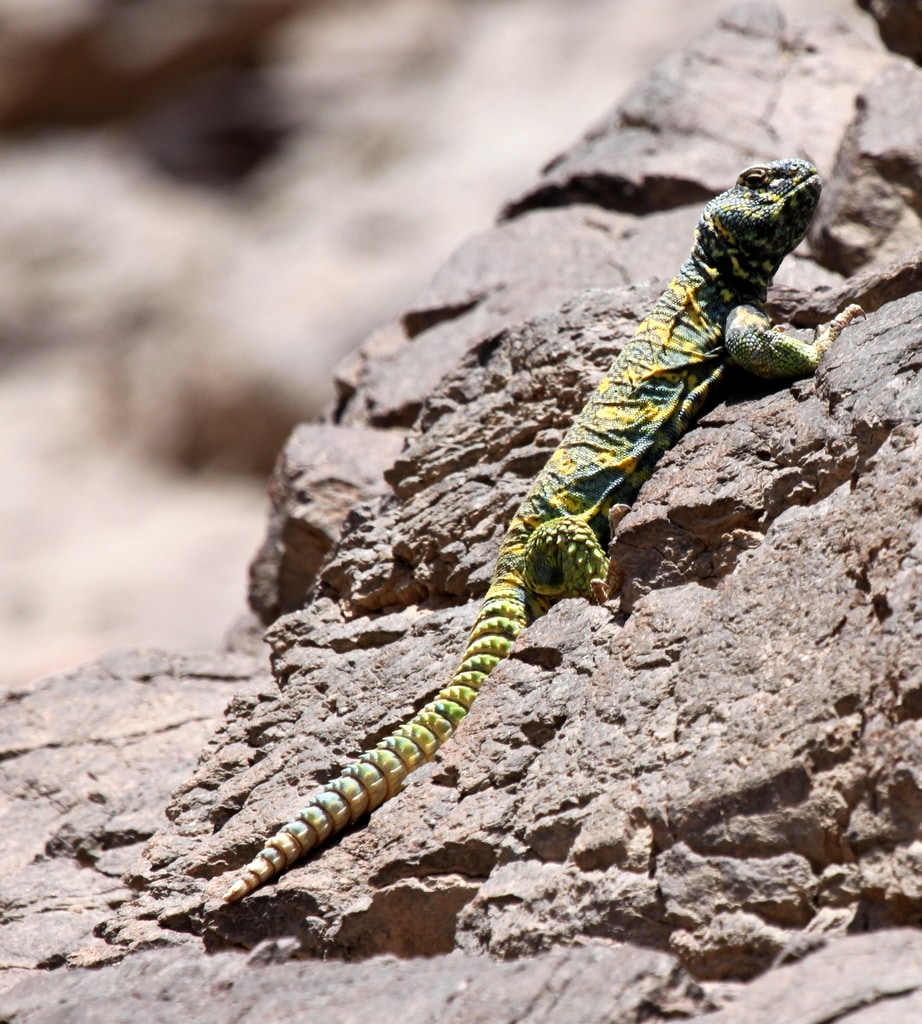
Ornate Mastigure
Egypt, Southern Israel, Saudi Arabia, Yemen
- Medium-Sized Lizard Reaching A Total Length of About 35 cm .
- Among the Most Colorful Members of the Genus.
- Body Color Is Variable, Basically Greenish With Yellowish Annuli.
- Possesses A Significantly Long, Very Spiny, and Slightly Flattened Tail Composed of 20-23 Segments.
- Features A Few Enlarged Scales On the Anterior Margin of the Ear Opening.
- Small Spines Are Present On the Upper Side of the Thighs.
- Sexually Dichromatic: Males Have Green, Blue, Or Red Backs With Dark Brown Bands Often Filled With Yellow Or Rounded Yellow Spots; Females Have A Lighter Brown Background With Light Yellow Transversal Lines.
- Belly Is Whitish.
Primarily Herbivorous, Sometimes Takes Insects
- Active During the Day .
- Live Alone Or In Small Groups .
- Dig Burrows Up To 1 Meter Deep.
- Adult Males Become Very Colorful During the Breeding Season.
About Uromastyx ornata
Uromastyx ornata: The Ornate Mastigure
The ornate mastigure, scientifically known as Uromastyx ornata, is a distinctive lizard species belonging to the Agamidae family. This medium-sized reptile is endemic to the arid, rocky terrains of the Middle East, with populations found in Egypt, Southern Israel, Saudi Arabia, and Yemen. It is recognized for its striking coloration, particularly in males, which can exhibit vibrant shades of green, blue, or red, contrasting with dark brown bands. Females are typically more subdued in color, featuring a lighter brown base with yellow markings.
Physical Characteristics and Habitat
Uromastyx ornata reaches an average total length of about 35 cm (14 inches). A key characteristic is its notably long, spiny tail, which is slightly flattened and composed of 20-23 segments. The species also possesses unique physical traits such as enlarged scales on the front edge of its ear openings and small spines on its upper thighs. These lizards are primarily found in rocky areas, where they construct burrows that can extend up to a meter deep, providing shelter and a stable microclimate.
Behavior and Diet
These lizards are diurnal, meaning they are active during the day. They often live solitary lives or in small social groups, typically consisting of a single male and several females. During the breeding season, adult males display an intensified coloration. The diet of the ornate mastigure is predominantly herbivorous, relying on plant matter for sustenance. However, it is known to supplement its diet opportunistically with insects, a common trait among many mastigure species.
Conservation
Globally, Uromastyx ornata is listed as Least Concern by the IUCN, indicating a relatively stable population. However, regional assessments, such as its classification as Endangered (B,C2a) in Israel, highlight the importance of continued monitoring and conservation efforts within specific parts of its range. The subspecies Uromastyx ornata philbyi is named in honor of the British Arabist Harry St. John Bridger Philby.
Source: Wikipedia ↗
Frequently Asked Questions
What are the common names for Uromastyx ornata?
Uromastyx ornata is commonly known as the ornate mastigure. This name reflects its decorative appearance and classification within the mastigure group.
Where can Uromastyx ornata be found?
This species is endemic to the Middle East, specifically found in rocky areas of Egypt, Southern Israel, Saudi Arabia, and Yemen. Its distribution is confined to these specific arid and semi-arid environments.
What does Uromastyx ornata eat?
The ornate mastigure is primarily herbivorous, feeding mainly on plant matter. However, like other members of its genus, it may supplement its diet by occasionally consuming insects.
How large does Uromastyx ornata get?
Adult Uromastyx ornata can reach a total length of about 35 centimeters, which is approximately 14 inches. This classifies them as medium-sized lizards within their genus.
What are the key physical characteristics of Uromastyx ornata?
Uromastyx ornata is noted for its vibrant coloration, particularly in males, and a significantly long, very spiny tail formed by 20-23 segments. Enlarged scales are present on the anterior margin of the ear opening, and small spines adorn the upper thighs.
What is the conservation status of Uromastyx ornata?
The IUCN currently lists Uromastyx ornata as Least Concern. However, it is rated as Endangered (B,C2a) in Israel, highlighting regional conservation concerns.
Related Lizards

Egernia stokesii
Egernia stokesii, also known as the Gidgee skink or spiny-tailed skink, is a gregarious lizard species native to Australia. It is distinguished by its spiny tail and complex social structures, forming stable, long-term aggregations. This diurnal species inhabits semi-arid environments and exhibits an omnivorous diet. While the species as a whole is listed as Least Concern, one subspecies is considered endangered.

Chalarodon madagascariensis
Chalarodon madagascariensis is a terrestrial lizard species native to Madagascar, primarily found in coastal, semi-arid to arid regions with sandy soil. It is an insectivore that occasionally consumes plant matter. A key distinguishing feature is its keeled gular and ventral scales.

Savigny's agama
Savigny's agama, scientifically known as *Trapelus savignii*, is a lizard species native to the Levant region, including Egypt, Israel, and the Palestinian territories. It inhabits hot deserts and dry shrublands, where it relies on its food for water. This species is characterized by its snout-to-vent length of up to 25 cm, with a tail nearly as long, and its diet includes vegetables, insects, and smaller lizards.