
Uroplatus fimbriatus
The common flat-tail gecko (Uroplatus fimbriatus) is a large, nocturnal gecko native to the tropical rainforests of eastern Madagascar and its surrounding islands. It is distinguished by its flattened tail and fringed skin, adaptations that aid in camouflage against tree bark. This species possesses highly sensitive eyes, allowing for color vision even in low light conditions.
Key Facts
- ›Endemic to eastern Madagascar and the islands of Nosy Bohara and Nosy Mangabe.
- ›Reaches a total length of up to 330 mm.
- ›Possesses highly sensitive eyes, enabling color vision at night.
- ›Known for its fringed skin and flattened tail, used for camouflage.
- ›Nocturnal behavior includes plastering itself to tree trunks during the day.

Common Flat-Tail Gecko
Madagascar, Nosy Bohara, Nosy Mangabe
- Large Gecko Reaching A Total Length of Up To 330 mm.
- Possesses Fringed Skin Along Its Body.
- Features A Flattened Tail.
- Eyes Are Extremely Sensitive To Light, 350 Times More Sensitive Than Human Eyes, Enabling Color Vision At Night.
- Nocturnal.
- By Day, Plasters Itself To A Small Tree Trunk and Rests Head Down.
- If Disturbed, It Will Raise Its Tail and Head, Open Its Mouth, and Scream.
Habitat Destruction, Deforestation, Collection For the Pet Trade
About Uroplatus fimbriatus
The Common Flat-Tail Gecko (Uroplatus fimbriatus)
The common flat-tail gecko, scientifically known as Uroplatus fimbriatus, is a distinctive species of gecko native to the island of Madagascar. Its name derives from the Greek 'ourá' (tail) and 'platys' (flat), with the specific epithet 'fimbriatus' referring to its fringed skin.
Description and Habitat
This is a large gecko, capable of reaching a total length of up to 330 millimeters. A defining characteristic is its flattened tail and the fringed skin that extends along its body, providing excellent camouflage against tree bark. The common flat-tail gecko inhabits the tropical rainforests found in eastern Madagascar, as well as the islands of Nosy Bohara and Nosy Mangabe. Its eyes are remarkably adapted for nocturnal life, being 350 times more sensitive to light than human eyes, which allows for color vision even in very low light conditions.
Behavior and Conservation
As a nocturnal species, the common flat-tail gecko spends its days plastered to tree trunks, often resting head-down. When threatened, it exhibits a defensive display involving raising its tail and head, and opening its mouth to emit a scream. The primary threats to its survival are habitat destruction through deforestation and its collection for the international pet trade. Consequently, the World Wide Fund for Nature has listed all Uroplatus species as highly threatened by illegal wildlife trade. The species is protected under CITES Appendix 2, though commercial export is considered potentially sustainable by some assessments.
Source: Wikipedia ↗
Frequently Asked Questions
What does the common flat-tail gecko look like?
The common flat-tail gecko is a large gecko, reaching up to 330 mm in total length. It is characterized by its fringed skin and a flattened tail, which aids in its camouflage against tree bark.
Where does the common flat-tail gecko live?
This gecko species is endemic to Madagascar, specifically found in the tropical rainforests of eastern Madagascar. It also inhabits the islands of Nosy Bohara and Nosy Mangabe.
What are the unique features of the common flat-tail gecko's eyes?
The common flat-tail gecko has eyes that are extremely sensitive to light, estimated to be 350 times more sensitive than human eyes. This remarkable adaptation allows the species to see in colors even during the night.
How does the common flat-tail gecko behave during the day?
During the day, the common flat-tail gecko typically plasters itself to a small tree trunk and rests with its head facing downwards. This behavior helps it remain hidden from predators.
What are the main threats to the common flat-tail gecko?
The primary threats to the common flat-tail gecko are habitat destruction and deforestation in Madagascar. It is also heavily collected for the international pet trade, leading to its inclusion on lists of threatened species.
Is the common flat-tail gecko protected?
Yes, the common flat-tail gecko is a CITES Appendix 2 protected animal. Despite this, the commercial export of the species is considered likely sustainable by some organizations.
Related Lizards

Uroplatus ebenaui
Uroplatus ebenaui, also known as Ebenau's leaf-tailed gecko, is the smallest species in the Uroplatus genus, reaching up to 4 inches in total length. This arboreal and nocturnal lizard is native to Madagascar and inhabits tropical rainforests and dry deciduous forests. It is well-camouflaged against tree bark and primarily feeds on insects.
Uroplatus lineatus
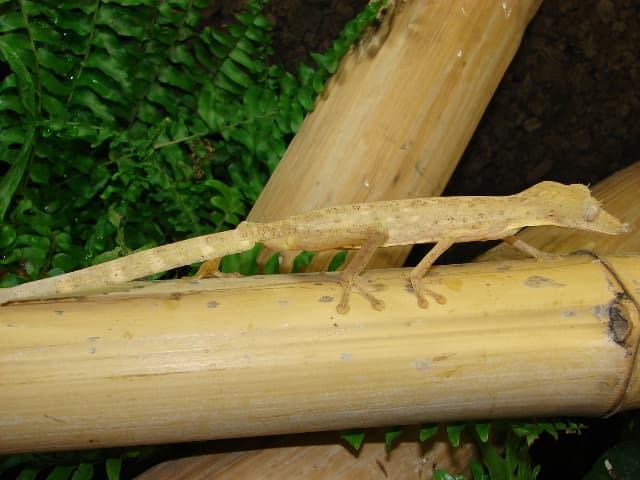
The lined flat-tail gecko (Uroplatus lineatus) is a species of gecko native to eastern Madagascar and the island of Nosy Bohara. These lizards are arboreal, inhabiting tropical rainforests and bamboo plants, and are characterized by their total length of up to 270 mm and distinctive longitudinal stripes. Unfortunately, deforestation and the illegal pet trade pose significant threats to their survival.

Argentine black and white tegu
The Argentine black and white tegu (Salvator merianae) is a large, omnivorous lizard native to South America, inhabiting tropical rainforests, savannas, and semideserts. Known for its intelligence and docile nature, this species is also notable for its unique partly endothermic behavior during the breeding season. It can reach lengths of up to 1.4 meters and is recognized by its distinctive black and white or green and black coloration.