
Western skink
The Western skink is a small, agile lizard known for its smooth scales and distinctive striped coloration. It inhabits a variety of open habitats across western North America, from sea level to high elevations. This diurnal reptile is an active forager, preying on small invertebrates, and exhibits complex parental care for its eggs.
Key Facts
- ›Measures 100 to 210 mm in total length.
- ›Features a brown back stripe edged with black and bordered by whitish dorsolateral stripes.
- ›Juveniles have bright blue tails that fade to grey with age.
- ›Found in open habitats, avoiding dense forests and heavy brush.
- ›Diet primarily consists of spiders and insects.
- ›Females exhibit significant nest guarding and care behavior.

Skilton's Skink
Southern British Columbia, Canada, Washington, Oregon, Nevada, Utah, Idaho, Wyoming, Western Montana, Northern Arizona, Missouri, Texas, Northern California, Central California, Southern California, Baja California, Mexico
Grassland, Broken Chaparral, Pinon-Juniper Woodland, Juniper-Sage Woodland, Open Pine-Oak Forest, Open Pine Forest, Early Successional Stages, Open Areas Within Late Successional Stages, Dry Hillsides
- Small, Smooth-Scaled Lizard With Relatively Small Limbs.
- Adults Have A Broad Brown Stripe Down Their Backs, Edged With Black.
- Each Side of the Brown Stripe Is Bordered By A Conspicuous Whitish To Beige Dorsolateral Stripe From Nose To Tail.
- A Second Pale Stripe Originates On the Upper Jaw, Low On the Sides, Separated By A Broad Dark Brown Or Black Band.
- Juvenile Tails Are Bright Blue, Fading To Grey In Adulthood.
- Breeding Season May Show Reddish Or Orange Coloration On the Side of the Head, Chin, and Sometimes the Tail.
- Usually Possess Seven Supralabial Scales and Four Enlarged Nuchals.
Spiders, Beetles, Crickets, Moths, Grasshoppers, Other Arthropods, Sow Bugs
- Diurnal During Warm Seasons, With Activity Concentrated In Morning and Late Afternoon.
- Secretive and Very Agile.
- Forages Actively Through Leaf Litter and Dense Vegetation.
- Can Be A Good Burrower.
- Females Guard Nests and Care For Eggs.
- May Bite If Grasped.
- Will Flee If Threatened.
- Can Perform Tail Autotomy.
- Rarely Plays Dead.
Mammalian Predators, Avian Predators, Reptilian Predators, Night Snakes, Striped Whipsnakes, Raptors, Black Bear Cubs, Bobcats, Coyotes, Foxes, Least Weasels, Pumas, Domestic Cats, Feral Cats, Domestic Dogs, Feral Dogs, Cooper's Hawk, Harris Hawks, Kestrels, Red-Tailed Hawks, Shrikes, Kingsnakes
About Western skink
The Western skink (Plestiodon skiltonianus) is a small, agile lizard recognized by its smooth scales and distinctive striped pattern. This species measures between 100 to 210 mm in total length and is characterized by a brown stripe on its back, bordered by black and then lighter dorsolateral stripes running from nose to tail. Juveniles are notable for their bright blue tails, which fade to a duller gray as they mature. During the breeding season, males and sometimes females may display reddish or orange coloration.
Habitat and Distribution
Western skinks inhabit a wide range of environments across western North America, from southern British Columbia in Canada down to Baja California, Mexico, and eastward into states like Utah, Arizona, and Missouri. They are most commonly found in open habitats such as grasslands, chaparral, and various woodland types, including piñon-juniper and pine-oak forests. While they can be found from sea level up to elevations of at least 2,130 meters (7,000 ft), they tend to avoid dense forests and heavy brush, preferring areas with more open ground.
Behavior and Diet
As a diurnal species, the Western skink is active during the warm seasons, with peak activity typically in the morning and late afternoon. They are secretive and quick, foraging for their diet of small invertebrates, which includes spiders, beetles, crickets, and other insects. Western skinks are known burrowers and exhibit interesting defensive behaviors, such as biting if caught and, most notably, tail autotomy, where they shed their tail to distract predators. Females display dedicated parental care, guarding their nests and eggs diligently.
Reproduction and Life Cycle
Reproduction in Western skinks typically occurs in the spring, with females laying clutches of 2 to 6 eggs during June and July. The eggs hatch in July and August. The young skinks reach sexual maturity around three years of age and can live for up to nine years. While the exact incubation period is not detailed, the care provided by the female is a significant aspect of their life history.
Source: Wikipedia ↗
Frequently Asked Questions
What is the scientific name for the Western skink?
The scientific name for the Western skink is Plestiodon skiltonianus. It was initially described and named in 1852 by Baird and Girard, with the species name honoring Dr. Avery Judd Skilton.
What do Western skinks eat?
Western skinks have a varied diet that includes small invertebrates such as spiders and a variety of insects like beetles, crickets, moths, and grasshoppers. They are active foragers and have been known to stalk their prey.
Where do Western skinks live?
The geographic range of the Western skink extends from southern British Columbia, Canada, down through most of the western United States, including Washington, Oregon, Nevada, Utah, Idaho, Wyoming, Montana, Arizona, and parts of California and Missouri. They can also be found in some areas of Texas.
What kind of habitats do Western skinks prefer?
Western skinks are found in a variety of habitats but are most common in early successional stages or open areas within late successional stages. They generally avoid heavy brush and densely forested areas, preferring grasslands, chaparral, and woodlands.
What is the lifespan of a Western skink?
Western skinks can live up to 9 years. They reach sexual maturity around 3 years of age. Information on their lifespan in the wild versus captivity is not specified.
Do Western skinks have any defense mechanisms?
Yes, Western skinks have several defense mechanisms. They are very agile and will flee when threatened. If grasped, they may bite. They can also perform autotomy, shedding their tail to distract predators, which then regrows, often darker and misshapen.
How do female Western skinks care for their eggs?
Female Western skinks are dedicated nest guardians. They construct nest chambers in loose, moist soil, typically under surface objects. The females remain with the eggs, defending the nest, repairing it, and even providing warmth by basking and returning to the nest.
Related Lizards
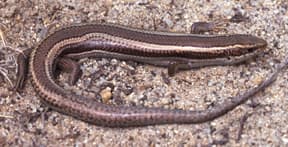
Plestiodon skiltonianus
The western skink (Plestiodon skiltonianus) is a small, agile lizard characterized by its smooth scales and distinctive striped coloration. It inhabits a variety of open habitats across western North America, from sea level to high elevations. Known for its secretive nature and defensive tail-dropping ability, this diurnal reptile plays a role in controlling invertebrate populations.

Anolis auratus
The grass anole, Anolis auratus, is a lizard species found across Central and South America, known for its tan coloration with distinctive stripes and spots. Unlike many of its relatives, it inhabits open grasslands rather than forests, adapting to transient environments and engaging in a unique "tyrant-subordinate" social system among males. This species is an opportunistic insectivore, relying on a sit-and-wait hunting strategy.

Diplodactylus intermedius
The Diplodactylus intermedius, commonly known as the eastern or southern spiny-tailed gecko, is a medium-sized lizard endemic to semi-arid regions of Australia. It is characterized by distinctive orange-brown spines along its back and tail, which can exude a foul-smelling fluid as a defense mechanism. This nocturnal and terrestrial gecko inhabits mallee shrubland, woodland, and grassland environments.