
Diplodactylus intermedius
The Diplodactylus intermedius, commonly known as the eastern or southern spiny-tailed gecko, is a medium-sized lizard endemic to semi-arid regions of Australia. It is characterized by distinctive orange-brown spines along its back and tail, which can exude a foul-smelling fluid as a defense mechanism. This nocturnal and terrestrial gecko inhabits mallee shrubland, woodland, and grassland environments.
Key Facts
- ›Possesses prominent orange-brown spines along its back and tail for defense.
- ›Can spray a harmless but foul-smelling fluid from its tail spines when threatened.
- ›Nocturnal and terrestrial, typically hiding under rocks, bark, or logs during the day.
- ›Diet consists exclusively of arthropods such as spiders, centipedes, and beetles.
- ›Females are generally larger than males and reach reproductive maturity at two years of age.

Eastern Spiny-Tailed Gecko, Southern Spiny-Tailed Gecko
Australia
Semi-Arid, Mallee Shrubland, Woodland, Grassland, Spinifex Grass
- Grey, Patterned Body With A Pale Belly.
- Two Longitudinal Rows of Prominent, Orange-Brown Tubercles Along the Back and Tail.
- Spines Become More Prominent Towards the Tail.
- Disced Tips On Digits, Characteristic of Gekkota.
- Blue Lining In the Mouth.
- Bright Orange Rim Around the Iris of the Eye.
- Oviform and Convex Head With A Rounded Snout and Large Eyes.
- No Spines Over the Eyes.
- Adults Have An Average Snout-To-Vent Length of 64 mm .
- Sexually Dimorphic, With Females Being Larger Than Males.
- Males Have Large Hemipenal Bulges, While Females Do Not.
Spiders, Centipedes, Scorpions, Cockroaches, Crickets, Beetles and Their Larvae
- Nocturnal
- Terrestrial
- Hides Under Rocks, Bark of Trees, Or In Logs During the Day.
- Active At Night Hunting For Food.
- Uses Spines and Fluid Secretion As A Defense Mechanism.
Birds, Feral Cats
Introduced Predators
About Diplodactylus intermedius
Diplodactylus intermedius: The Spiny-Tailed Gecko
Diplodactylus intermedius, commonly recognized as the eastern spiny-tailed gecko or southern spiny-tailed gecko, is a species of lizard belonging to the Diplodactylidae family. This reptile is endemic to semi-arid regions across Australia, inhabiting states such as New South Wales, the Northern Territory, South Australia, Victoria, and Western Australia. Its preferred environments include mallee shrubland, woodland, and grassland areas.
Physical Characteristics and Defense
Diplodactylus intermedius is notable for its size, being one of the larger gecko species found in Australia. It features a grey, patterned body contrasted by a pale belly. The species derives its common names from the two prominent rows of orange-brown spines running longitudinally along its back and tail. These spines, which become more pronounced towards the tail, serve as a significant defense mechanism. When threatened, the gecko can exude a harmless yet foul-smelling orange fluid from these tail spines, often directed at attackers.
Anatomically, Diplodactylus intermedius possesses strong limbs and body, with disced toe tips typical of most geckos. The head is oviform and convex, featuring a rounded snout and large eyes. Adults typically reach an average snout-to-vent length of 64 mm (2.5 inches). Sexual dimorphism is present, with females generally being larger than males, who also exhibit distinct hemipenal bulges.
Taxonomy and Etymology
The species was first identified by James Douglas Ogilby in 1892, who described it as Diplodactylus intermedius. The genus Strophurus, to which it belongs, is characterized by the spines found along the back and tail and comprises 20 species, all endemic to Australia. The genus name Strophurus translates to "turning tail" in Latin, while the specific epithet "intermedius" signifies its intermediate positioning within its genus.
Ecology and Behavior
Diplodactylus intermedius is a nocturnal and terrestrial species, meaning it is active at night and lives primarily on the ground. As an ectotherm, it thrives in warm, semi-arid habitats. During daylight hours, it seeks shelter under rocks, tree bark, or within fallen logs, and can also be found in spinifex grass. Its activity at night is dedicated to hunting for food.
Diet and Reproduction
The diet of Diplodactylus intermedius is exclusively composed of arthropods. This includes a variety of invertebrates such as spiders, centipedes, scorpions, cockroaches, crickets, and beetles. Females begin reproducing around two years of age and typically lay a clutch of two eggs during the summer months. The incubation period for these eggs is approximately 45 days. Both males and females reach sexual maturity at the same age of two years.
Predators and Conservation
While the spiny defense mechanism is effective, predators such as birds are known targets for the defensive spray. Introduced species, like feral cats, also pose a threat to Diplodactylus intermedius populations, particularly in central Australia where they are known to prey on reptiles. Despite these threats, the species is not considered endangered. It has been assessed by the IUCN Red List of Threatened Species and is categorized as 'Least Concern', indicating a stable and widespread population.
Source: Wikipedia ↗
Frequently Asked Questions
What is the scientific name for the eastern spiny-tailed gecko?
The scientific name for the eastern spiny-tailed gecko is Diplodactylus intermedius. It was first identified by James Douglas Ogilby in 1892 and was initially described as Diplodactylus intermedius.
What are the common names for Diplodactylus intermedius?
Diplodactylus intermedius is commonly known as the eastern spiny-tailed gecko or the southern spiny-tailed gecko. These names refer to its prominent spiny features and its distribution.
Where is Diplodactylus intermedius found?
This species is endemic to semi-arid regions of Australia. It is found in New South Wales, the Northern Territory, South Australia, Victoria, and Western Australia, with a common presence around Alice Springs, NT.
What kind of habitat does the eastern spiny-tailed gecko prefer?
Diplodactylus intermedius inhabits semi-arid, warm environments. It is typically found in mallee shrubland, woodland, grassland, and spinifex grass areas.
How does Diplodactylus intermedius defend itself?
Its primary defense mechanism involves the prominent spines along its back and tail. When threatened, these spines can exude a harmless yet smelly, orange fluid, which has been observed to be aimed at birds.
What does Diplodactylus intermedius eat?
The diet of Diplodactylus intermedius consists exclusively of arthropods. This includes a variety of invertebrates such as spiders, centipedes, scorpions, cockroaches, crickets, and beetles.
How does Diplodactylus intermedius reproduce?
Diplodactylus intermedius is oviparous, meaning it lays eggs. Females will lay a clutch of two eggs during the summer, and these eggs typically hatch after about 45 days.
What is the conservation status of Diplodactylus intermedius?
Diplodactylus intermedius is not considered a threatened species. It has been assessed as 'Least Concern' by the IUCN Red List of Threatened Species.
Related Lizards
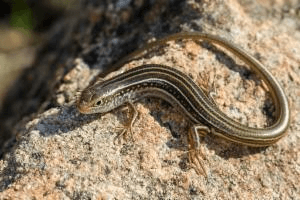
Ctenotus inornatus
The bar-shouldered ctenotus (Ctenotus inornatus) is an Australian skink species known for its intricate color patterns, often a complex blend of stripes and spots. It inhabits arid and desert regions across Australia, particularly favoring spinifex grass habitats. A key distinguishing feature is the arrangement of its supraciliary scales, with the first three being noticeably larger than the rest.

Egernia stokesii
Egernia stokesii, also known as the Gidgee skink or spiny-tailed skink, is a gregarious lizard species native to Australia. It is distinguished by its spiny tail and complex social structures, forming stable, long-term aggregations. This diurnal species inhabits semi-arid environments and exhibits an omnivorous diet. While the species as a whole is listed as Least Concern, one subspecies is considered endangered.
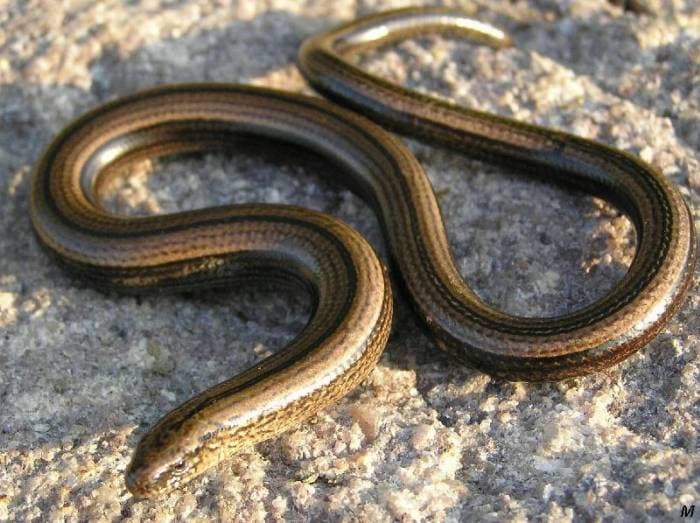
Anguis
Anguis, commonly known as slow worms, are a genus of legless lizards that are often mistaken for snakes. They are characterized by their grey-brown coloration, with females often exhibiting a coppery sheen and males displaying blue spots, especially during breeding season. These lizards inhabit a variety of warm, protected environments across Europe and parts of Asia, feeding primarily on invertebrates.