
Xantusia henshawi
The granite night lizard (Xantusia henshawi) is a flat-bodied lizard endemic to North America, found in Baja California, Mexico, and southern California, USA. It is characterized by its soft skin, rounded dark dorsal spots on a pale background, large eyes with vertical pupils, and lack of eyelids. This species is often found in rocky slopes with boulders and crevices, and exhibits crepuscular and nocturnal activity.
Key Facts
- ›Flat-bodied with a broad, flat head and soft skin.
- ›Features rounded, dark dorsal spots on a pale yellow or cream background.
- ›Possesses large eyes with vertical pupils and lacks eyelids.
- ›Inhabits rocky slopes with boulders and crevices, as well as coastal sage scrub and chaparral.
- ›Active in crevices during the day, but ventures onto the surface at night.
- ›Oviparous, meaning it lays eggs.
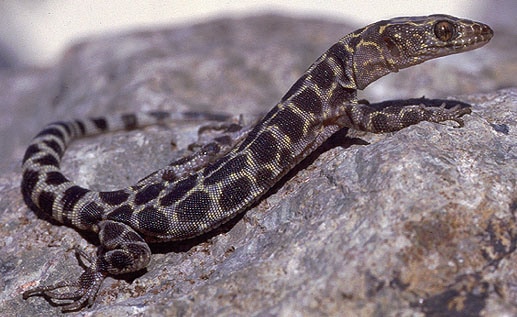
Henshaw's Night Lizard
Mexico, United States
- Flat-Bodied
- Broad, Flat Head
- Soft Skin
- Rounded, Dark Dorsal Spots On A Pale Yellow Or Cream Background
- Granular Scales On Dorsum
- Large, Squarish Scales On Ventral Surface
- Large Eyes With Vertical Pupils
- Lacks Eyelids
Active In Crevices During the Day, Moves On the Surface At Night
About Xantusia henshawi
Granite Night Lizard
The granite night lizard, scientifically known as Xantusia henshawi and also commonly called Henshaw's night lizard, is a species of lizard native to North America. This reptile is found in both Mexico, specifically in the state of Baja California, and in the adjacent southern regions of California in the United States.
Description and Habitat
This lizard is notable for its flattened body, broad and flat head, and characteristically soft skin. Its dorsal surface is adorned with rounded, dark spots set against a pale yellow or cream-colored background. The scales on its back are granular, while those on its belly are large and squarish. A distinctive feature is its large eyes, which possess vertical pupils, and the absence of eyelids. The granite night lizard typically inhabits rocky slopes that are abundant with large, exfoliating boulders and numerous crevices. However, it can also be found in coastal sage scrub and chaparral environments, sometimes even where boulders are scarce.
Behavior and Reproduction
The granite night lizard exhibits a unique behavioral pattern: it is active within crevices during daylight hours but emerges to move across the surface during the night. This species reproduces by laying eggs, classifying it as oviparous.
Source: Wikipedia ↗
Frequently Asked Questions
What is the granite night lizard?
The granite night lizard, scientifically known as Xantusia henshawi, is a species of lizard belonging to the Xantusiidae family. It is characterized by its flat body, soft skin, and distinctive dorsal spotting.
Where does the granite night lizard live?
This lizard species is endemic to North America, with its range extending across the Mexican state of Baja California and into adjacent southern California in the United States. They are typically found on rocky slopes with ample crevices.
What does the granite night lizard look like?
Xantusia henshawi has a flat body, a broad flat head, and soft skin. Its dorsal surface displays rounded, dark spots against a pale yellow or cream background. It also features large eyes with vertical pupils and notably lacks eyelids.
What is the habitat of Xantusia henshawi?
The granite night lizard prefers rocky slopes that offer large exfoliating boulders and numerous crevices for shelter. Occasionally, they can also be found in coastal sage scrub and chaparral habitats, even in areas without boulders.
When is the granite night lizard active?
While often found in crevices during the day, the granite night lizard is primarily active on the surface during the night. This behavior pattern is reflected in its common name.
How does the granite night lizard reproduce?
Xantusia henshawi is oviparous, which means that reproduction occurs through the laying of eggs.
Related Lizards

Anniella grinnelli
Anniella grinnelli, commonly known as the Bakersfield legless lizard, is a species of legless lizard native to California. Its most distinctive feature is the complete absence of limbs, a characteristic shared with other members of its genus. This species inhabits sandy soils and is often found in coastal sage scrub and chaparral habitats.

Ablepharus
Ablepharus, commonly known as snake-eyed skinks, are small lizards distinguished by fused eyelids that prevent blinking, similar to snakes. They inhabit dry fields, hills, and rocky areas, often concealed within leaf litter. These skinks possess shiny, bronze scales and a characteristic dark stripe along their sides, feeding primarily on small insects and mollusks.
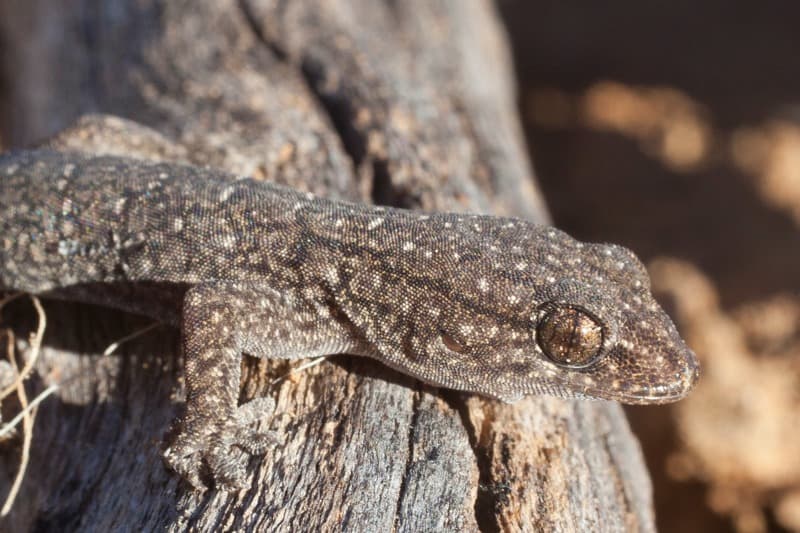
Gehyra variegata
Gehyra variegata, also known as the tree dtella, is a gecko species native to inland Australia. This lizard is characterized by its highly variable dorsal coloration, ranging from grey to brown with blotches or spots, and its ability to climb using specialized toe pads. It inhabits arid to sub-humid woodlands, shrublands, and rocky areas, demonstrating adaptability to disturbed land.