
Xantusia wigginsi
Xantusia wigginsi, also known as Wiggins' desert night lizard, is a small reptile found in Southern California and Mexico. This species is distinguished by its unique dorsal spotting pattern and is often found in arid regions associated with yuccas and agaves.
Key Facts
- ›Small lizard with a snout-vent length typically between 22.0-44.0 mm.
- ›Distinguished by dorsal spots that are distinct rather than fused.
- ›Found in Southern California, including the Sonoran Desert and Baja California.
- ›Often associated with yuccas, agaves, sotol, and pine logs.
- ›Exhibits a grayish-brown base coloration with dark brown dorsal spots.
- ›Suspected to use mouth-gaping as a threat display.
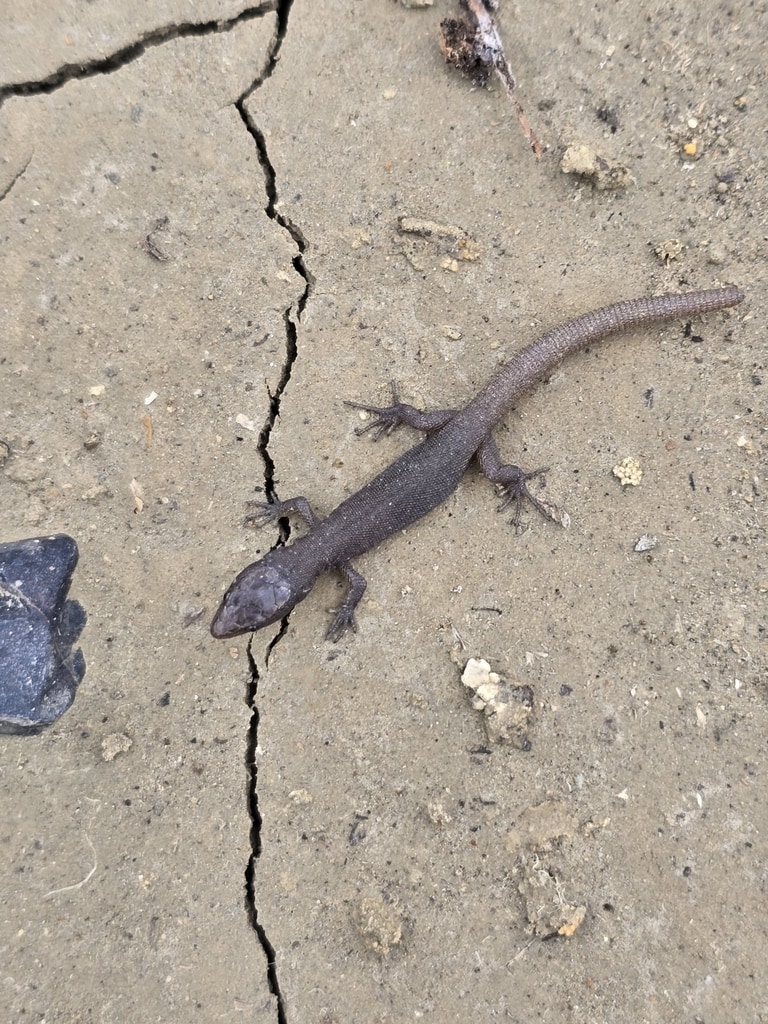
Wiggins' Desert Night Lizard
Southern California, Mexico, Baja California, Sonoran Desert
Arid Regions, Yucca Habitats, Agave Habitats, Sotol Habitats, Pine Logs Habitats
- Small Lizard With A Wedge-Shaped Head and Rounded Snout.
- Body Is Elongate and Flat.
- Tail Is Flat and Tapered, Slightly Longer Than the Body.
- Peritoneum Is Black.
- Base Coloration Is Grayish-Brown.
- Possesses Stripes Near the Eyes.
- Ventrum Is Light In Color.
- Dark Brown Spots Cover the Dorsal Region, Limbs, and Sides of the Body.
- Tail Tends To Be Lighter and Displays Spots At the Scale-Tips.
- Dorsal Pattern Consists of Distinct Rather Than Fused Spots.
- Gives Birth In Late Summer.
- Exhibits Mouth-Gaping Behavior As A Suspected Threat Display When Handled.
About Xantusia wigginsi
Wiggins' Desert Night Lizard (Xantusia wigginsi)
Xantusia wigginsi, commonly known as Wiggins' desert night lizard, is a small reptile belonging to the Xantusiidae family. This species is found in the arid regions of Southern California and Baja California, Mexico, particularly within the Sonoran Desert.
Description and Habitat
Wiggins' desert night lizard is characterized by its small size, with a snout-vent length typically ranging from 22.0 to 44.0 mm. Its tail is slightly longer than its body, and it possesses a distinctive dorsal pattern of separate spots, unlike the fused spots seen in some related subspecies. The lizard has a wedge-shaped head, a rounded snout, and an elongate, flat body. Its base coloration is usually grayish-brown, often with stripes near the eyes and a lighter underside. Dark brown spots are prevalent on its dorsal surface, limbs, and sides, while the tail tends to be lighter with spots visible only on the scale tips. These lizards are often found in microhabitats associated with yuccas and agaves, but have also been observed near sotol and pine logs.
Behavior and Reproduction
Observations suggest that Xantusia wigginsi may exhibit mouth-gaping behavior when handled, which is believed to be a threat display rather than a response to heat. This species typically gives birth in the late summer. While specific details on diet, lifespan, and predators are limited in available records, its habitat suggests a diet of small invertebrates common in desert ecosystems.
Source: Wikipedia ↗
Frequently Asked Questions
What are the key distinguishing features of Xantusia wigginsi?
Xantusia wigginsi is distinguished from other subspecies by its dorsal pattern of distinct, rather than fused, spots. It also features specific ventral sizing and tail spots that appear only on the scale-tips.
Where is Wiggins' desert night lizard found?
This lizard is endemic to the Americas, specifically found in Southern California, including the Sonoran Desert, and in Baja California, Mexico. Its range is generally continuous along the peninsula.
What type of habitat does Xantusia wigginsi prefer?
Xantusia wigginsi is often found in microhabitats associated with yuccas and agaves. It has also been observed near sotol and pine logs, indicating a preference for arid environments with specific vegetation.
How does Xantusia wigginsi behave when threatened?
Upon being handled, Xantusia wigginsi has been observed exhibiting mouth-gaping behavior. This is suspected to be a threat display rather than a reaction to heat.
What is the typical size of Xantusia wigginsi?
Xantusia wigginsi is a small lizard, with a snout-vent length ranging from approximately 22.0 to 44.0 mm. Its tail is typically slightly longer than its body.
Related Lizards

Ablepharus
Ablepharus, commonly known as snake-eyed skinks, are small lizards distinguished by fused eyelids that prevent blinking, similar to snakes. They inhabit dry fields, hills, and rocky areas, often concealed within leaf litter. These skinks possess shiny, bronze scales and a characteristic dark stripe along their sides, feeding primarily on small insects and mollusks.

Alsophylax pipiens
Alsophylax pipiens, commonly known as the even-fingered gecko, is a small gecko species found across Central Asia. It inhabits desert and arid regions, characterized by its modest size and adaptations for survival in harsh environments. This species is part of the Gekkonidae family.

Aqaba agama
The Aqaba agama (Pseudotrapelus aqabensis) is a species of lizard belonging to the agama family, found in arid regions of southern Jordan, Egypt's Sinai Peninsula, Israel, and northern Saudi Arabia. Its scientific name derives from the location where its holotype was discovered, Aqaba.