
Yellow monitor
Varanus flavescens·Varanidae
The Yellow monitor is a medium-sized lizard native to South Asia, found in the floodplains of major river systems. It is characterized by its olive or yellowish-brown coloration with darker markings and a typically short snout. This monitor lizard inhabits wet areas, forest edges, and areas near human settlements.
Key Facts
- ›Measures between 45 and 95 cm in length and weighs up to 1.45 kg.
- ›Native to the floodplains of the Indus, Ganges, and Brahmaputra rivers in India, Pakistan, Nepal, and Bangladesh.
- ›Inhabits wet areas, forest edges, and areas near human settlements and agricultural land.
- ›Threatened by hunting for its meat and skin, and habitat encroachment and pollution.
- ›International trade is regulated under CITES Appendix I.
- ›Listed as legally protected in India, Nepal, and Bangladesh.

Golden Monitor
India, Pakistan, Nepal, Bangladesh
- Medium-Sized Monitor Lizard, Measuring 45-95 cm In Total Length.
- Weighs Up To 1.45 kg.
- Short, Convex Snout.
- Nostril Is An Oblique Slit, Closer To the Snout Tip Than the Orbit.
- Digits Are Short, With the Fourth Toe Length Not Exceeding the Femur.
- Tail Is Feebly Compressed and Keeled Above.
- Head Scales Are Small and Subequal.
- Scales On Upper Surfaces Are Moderate, Oval, and Keeled.
- Abdominal Scales Are Smooth, Arranged In 65-75 Transverse Rows.
- Caudal Keel Is Low and Doubly Toothed.
- Adults: Olive Or Yellowish-Brown Above With Irregular Darker Markings, Often Forming Cross Bars; Blackish Temporal Streak; Yellowish Lower Surfaces With Indistinct Brown Cross Bars.
- Young: Dark Brown Above With Yellow Spots Forming Crossbars; Yellow Lower Surfaces With Dark Brown Cross Bars.
- Subcorneal Teeth, Scarcely Compressed.
- Each Tooth Position Has Only A Single Replacement Tooth.
- Thermoregulates By Moving Between Sunny and Shady Areas.
- Has Been Observed Lying On Hot Ash Piles For Heat.
- May Be Capable of Play Behavior.
- Observed Swimming In A Vertical Position and Floating Motionlessly In Water.
- Hunting For Meat and Skin
- Habitat Encroachment
- Pollution
- Conversion To Landfills
- Direct Killing Due To Fear In Some Local Populations
About Yellow monitor
What is the Yellow Monitor?
The Yellow monitor, scientifically known as Varanus flavescens, is a medium-sized monitor lizard native to South Asia. It is also commonly referred to as the golden monitor. This species is found within the floodplains of major river systems, including the Indus, Ganges, and Brahmaputra rivers, across India, Pakistan, Nepal, and Bangladesh.
Description and Habitat
Adult Yellow monitors typically measure between 45 and 95 cm in length, including their tail, and can weigh up to 1.45 kg. Their coloration ranges from olive to yellowish-brown above, often featuring irregular darker markings that can form broad cross bars. A distinctive blackish streak is usually present on the temporal region. The lower surfaces are yellowish with less distinct brown cross bars, particularly on the throat. Young individuals display a darker brown coloration with yellow spots that merge into crossbars. They inhabit wet areas, forest edges, and are often found in the vicinity of human settlements and agricultural lands.
Behavior and Ecology
As a diurnal lizard, the Yellow monitor regulates its body temperature by moving between sunny and shady spots. There is a notable report of one individual seeking warmth from a pile of hot ash from a human-lit fire. The species has also exhibited intriguing behaviors, such as swimming vertically and floating motionlessly in water, suggesting potential play behavior.
Conservation Concerns
The Yellow monitor faces significant threats, primarily from hunting for its meat and skin. Its preferred habitat is also under pressure due to human encroachment, pollution, and land conversion for landfills. In some regions, such as Kanchanpur District in Nepal, direct killing is a major threat driven by local fear of the species. Beyond consumption and skin trade, it is also utilized for medicinal purposes.
Legal Protection
International trade involving the Yellow monitor is strictly regulated under Appendix I of CITES. Furthermore, it is afforded legal protection within its range countries: listed under Schedule I of India's Wild Life (Protection) Act, 1972; Nepal's National Parks and Wildlife Conservation Act 1973; and Bangladesh's Wildlife (Conservation and Security) Act 2012.
Source: Wikipedia ↗
Frequently Asked Questions
What is the scientific name of the Yellow monitor?
The scientific name of the Yellow monitor is Varanus flavescens.
What is the typical size of a Yellow monitor?
Yellow monitors are medium-sized, typically measuring between 45 and 95 cm (18 to 37 inches) in total length, including the tail, and can weigh up to 1.45 kg (3.2 lb).
Where are Yellow monitors found?
They are native to South Asia, specifically inhabiting the floodplains of the Indus, Ganges, and Brahmaputra rivers in countries like India, Pakistan, Nepal, and Bangladesh.
What kind of habitat do Yellow monitors prefer?
Yellow monitors prefer wet areas, the edges of forests, and the vicinity of human settlements and agricultural land. They are found in areas with ample moisture.
What are the main threats to the Yellow monitor population?
The primary threats include hunting for their meat and skin. Their preferred habitat is also under pressure from encroachment, pollution, and conversion to landfills.
What conservation measures are in place for the Yellow monitor?
International trade is regulated under CITES Appendix I. They are also legally protected in India, Nepal, and Bangladesh under their respective wildlife protection acts.
Related Lizards

Varanus flavescens
The yellow monitor (Varanus flavescens), also known as the golden monitor, is a medium-sized lizard native to South Asia, found in the floodplains of major river systems. Characterized by its olive or yellowish-brown coloration with darker markings and a short snout, it inhabits wet areas, forest edges, and near human settlements. This species is primarily threatened by hunting for its meat and skin, as well as habitat encroachment.
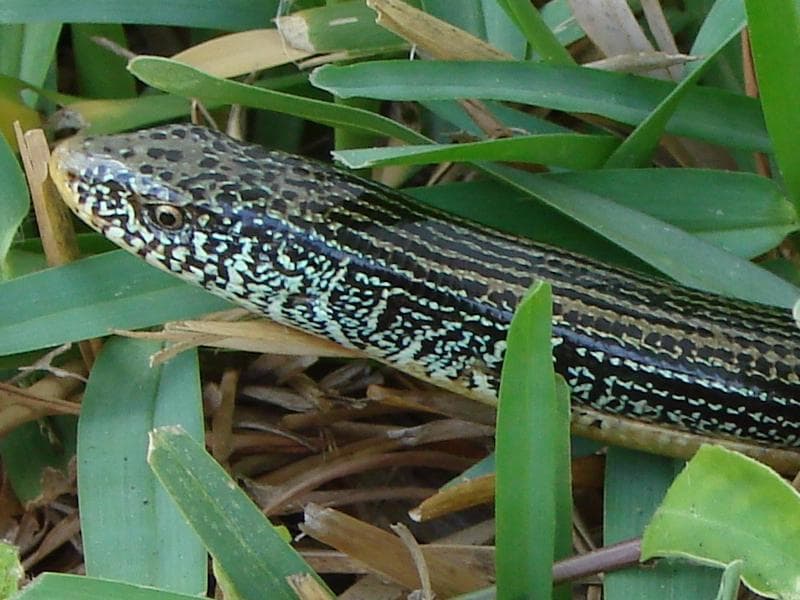
Eastern glass lizard
The Eastern glass lizard (Ophisaurus ventralis) is a legless lizard found in the Southeastern United States, often mistaken for a snake due to its appearance. It is distinguished from snakes by its movable eyelids, external ear openings, and a lateral groove separating its scales. This species inhabits wetlands, moist soils, and coastal areas, and is an opportunistic omnivore.
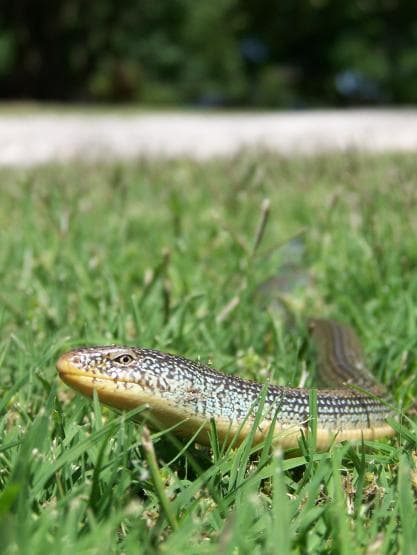
Ophisaurus ventralis
The eastern glass lizard (Ophisaurus ventralis) is a species of legless lizard endemic to the Southeastern United States, often mistaken for a snake due to its lack of limbs. It is characterized by its streamlined body, moveable eyelids, external ear openings, and a lateral groove separating its scales. This species inhabits wetlands, moist flatwoods, and even coastal dunes, and is known for its opportunistic diet and remarkable tail autotomy defense mechanism.