
Varanus flavescens
The yellow monitor (Varanus flavescens), also known as the golden monitor, is a medium-sized lizard native to South Asia, found in the floodplains of major river systems. Characterized by its olive or yellowish-brown coloration with darker markings and a short snout, it inhabits wet areas, forest edges, and near human settlements. This species is primarily threatened by hunting for its meat and skin, as well as habitat encroachment.
Key Facts
- ›Native to the flood plains of the Indus, Ganges, and Brahmaputra rivers in South Asia.
- ›Measures between 45 and 95 cm in length and can weigh up to 1.45 kg.
- ›Adults are olive or yellowish-brown with darker markings, while juveniles are dark brown with yellow spots.
- ›Inhabits wet areas, forest edges, and areas near human settlements and agricultural land.
- ›Threatened by hunting for meat and skin, and habitat loss due to encroachment and pollution.
- ›Internationally regulated under CITES Appendix I and legally protected in India, Nepal, and Bangladesh.

Golden Monitor
India, Pakistan, Nepal, Bangladesh
- Medium-Sized Monitor Lizard, Measuring 45-95 cm In Length, Including Tail.
- Weighs Up To 1.45 kg.
- Short and Convex Snout.
- Nostril Is An Oblique Slit, Nearer To Snout Tip Than Orbit.
- Fourth Toe Length Does Not Exceed Femur Length.
- Tail Is Feebly Compressed and Keeled Above.
- Head Scales Are Small and Subequal.
- Scales On Upper Surfaces Are Moderate, Oval, and Keeled.
- Abdominal Scales Are Smooth and In 65-75 Transverse Rows.
- Caudal Scales Are Keeled With A Low, Doubly Toothed Crest.
- Adults: Olive Or Yellowish-Brown Above With Irregular Darker Markings, Often Confluent Into Cross Bars; A Blackish Temporal Streak; Yellowish Lower Surfaces With Indistinct Brown Cross Bars.
- Young: Dark Brown Above With Yellow Spots Confluent Into Crossbars; Yellow Lower Surfaces With Dark Brown Cross Bars.
- Each Tooth Position Has Only A Single Replacement Tooth.
Carnivore
- Thermoregulates By Moving Between Sunny and Shady Areas.
- May Be Capable of Play Behavior, Observed Swimming Vertically and Floating Motionlessly In Water.
Not Specified
Hunting For Meat and Skin, Habitat Encroachment, Pollution, Conversion To Landfills, Direct Killing Due To Fear
About Varanus flavescens
The Yellow Monitor (Varanus flavescens)
The yellow monitor, scientifically identified as Varanus flavescens and also commonly known as the golden monitor, is a medium-sized lizard species indigenous to South Asia. Its natural range encompasses the floodplains of significant river systems, including the Indus, Ganges, and Brahmaputra rivers, with populations found in India, Pakistan, Nepal, and Bangladesh.
Description and Habitat
Adult yellow monitors typically measure between 45 and 95 centimeters in length, including their tail, and can weigh up to 1.45 kilograms. Their coloration varies with age; adults are generally olive or yellowish-brown above, featuring irregular darker markings that often form broad crossbars, and a distinct blackish temporal streak. The lower surfaces are yellowish with indistinct brown crossbars, most noticeable on the throat. Juveniles, in contrast, display a dark brown upper side adorned with yellow spots that merge into crossbars, and their undersides are yellow with dark brown crossbars.
These lizards prefer moist environments, often inhabiting forest edges and areas in proximity to human settlements and agricultural lands. Due to their short hind toes, they are not adept climbers and tend to remain closer to the ground.
Behavior and Ecology
As a diurnal species, the yellow monitor regulates its body temperature through behavioral thermoregulation, moving between sunny and shady locations. There is an account of one individual utilizing the residual heat from a human-lit fire. Interestingly, observations have suggested the potential for play behavior, with a yellow monitor seen alternating between swimming vertically and floating motionlessly in a wetland.
Threats and Conservation
Varanus flavescens faces considerable threats across its native range. It is hunted for its meat and skin, and its preferred habitat is increasingly compromised by encroachment, pollution, and conversion into landfills. In some regions, such as Kanchanpur District in Nepal, direct killing is a significant threat, fueled by local fear of the lizard. Beyond direct exploitation, the species is also utilized for medicinal purposes. Consequently, international trade in yellow monitors is regulated under CITES Appendix I. Furthermore, it is a legally protected species in India under Schedule I of the Wild Life (Protection) Act, 1972, and similarly protected by national legislation in Nepal and Bangladesh.
Source: Wikipedia ↗
Frequently Asked Questions
What is the yellow monitor lizard?
The yellow monitor, scientifically known as Varanus flavescens, is a monitor lizard species native to South Asia. It is also referred to as the golden monitor and is a medium-sized reptile found in river floodplains.
What does the yellow monitor look like?
Adult yellow monitors are typically olive or yellowish-brown above with irregular darker markings that often form cross bars. They have a short, convex snout and a feebly compressed tail. Young individuals are dark brown with yellow spots.
Where does the yellow monitor live?
This species is found in the floodplains of the Indus, Ganges, and Brahmaputra rivers, inhabiting areas such as wet regions, forest edges, and the vicinity of human settlements and agricultural lands in India, Pakistan, Nepal, and Bangladesh.
What are the main threats to the yellow monitor?
The yellow monitor faces significant threats from hunting for its meat and skin. Its preferred habitat is also endangered by encroachment, pollution, and conversion to landfills. In some regions, fear of the lizard leads to direct killing.
Is the yellow monitor protected?
Yes, the yellow monitor is a legally protected species in many of its range countries. International trade is regulated under CITES Appendix I, and it is listed under Schedule I of India's Wild Life (Protection) Act, 1972, and similar acts in Nepal and Bangladesh.
What is the size of a yellow monitor?
Yellow monitors are medium-sized, measuring between 45 and 95 cm (18 to 37 inches) in total length, including the tail. They typically weigh up to 1.45 kg (3.2 lb).
Related Lizards

Yellow monitor
The Yellow monitor is a medium-sized lizard native to South Asia, found in the floodplains of major river systems. It is characterized by its olive or yellowish-brown coloration with darker markings and a typically short snout. This monitor lizard inhabits wet areas, forest edges, and areas near human settlements.
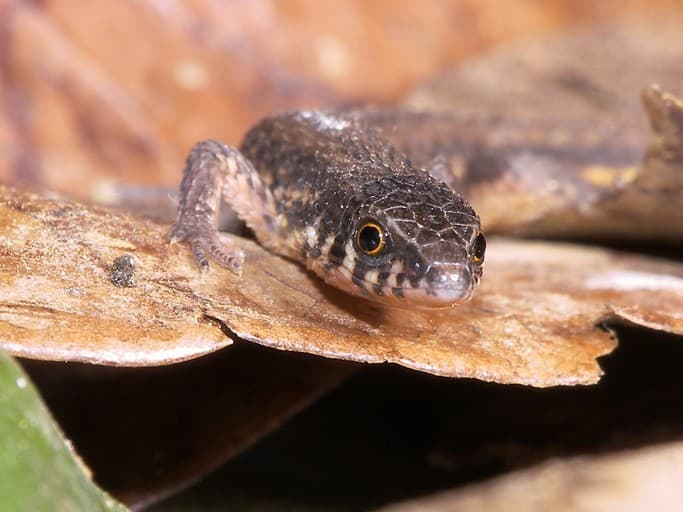
Gymnophthalmidae
Gymnophthalmidae, commonly known as spectacled lizards or microteiids, are a diverse family of lizards with at least 250 species found across Central and South America. They are characterized by their transparent, movable lower eyelids, which give them their "spectacled" appearance. These generally small lizards inhabit a wide range of environments, from deserts to rainforests, and are often found on the forest floor.
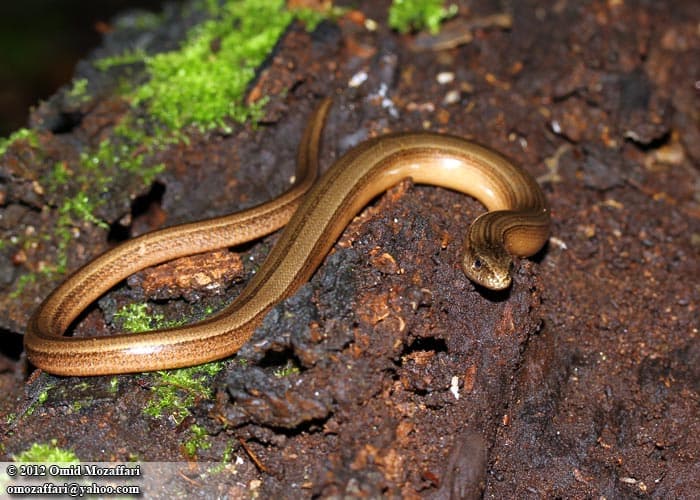
Eastern slowworm
The Eastern slow worm (Anguis colchica) is a legless lizard found across eastern and northern Europe and Asia. It inhabits forest edges, clearings, and shrub vegetation, often utilizing stone piles or rodent burrows for shelter. This species is primarily crepuscular and feeds on invertebrates like earthworms and slugs.