
Yuman fringe-toed lizard
Uma cowlesi·Phrynosomatidae
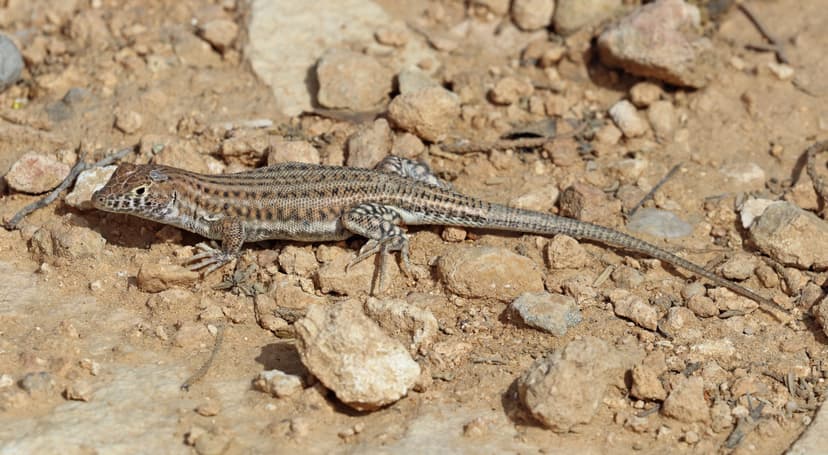
The Yuman fringe-toed lizard (Uma cowlesi) is a species of lizard found in northwestern Mexico, primarily in the Yuma Desert region of Sonora. It is known for its distinctive fringe-like scales on its toes, which aid in movement on sandy substrates. A hybrid population with Uma notata extends its range into southwestern Arizona.
Key Facts
- ›Endemic to northwestern Mexico, specifically the Yuma Desert in Sonora.
- ›A hybrid population with Uma notata is found in southwestern Arizona.
- ›Named in honor of American herpetologist Raymond Bridgman Cowles.
- ›Possesses fringe-like scales on its toes for efficient movement on sand.
- ›Its taxonomic history has been complex, with previous classifications being revised.

Yuman Desert Fringe-Toed Lizard
Northwestern Mexico, Southwestern Arizona
Possesses Fringe-Like Scales On Its Toes.
- Utilizes Fringe-Like Toe Scales For Efficient Movement On Sand.
About Yuman fringe-toed lizard
The Yuman Fringe-toed Lizard
The Yuman fringe-toed lizard, scientifically known as Uma cowlesi, is a distinct species of lizard found in the arid landscapes of northwestern Mexico. It is primarily associated with the Yuma Desert region within the Mexican state of Sonora, inhabiting sandy terrains where its specialized physical adaptations are most advantageous.
A notable characteristic of this lizard is the presence of fringe-like scales along the sides of its toes. These specialized scales significantly enhance its ability to move across loose sand, preventing it from sinking and allowing for swift locomotion. This adaptation is crucial for survival in its desert habitat, aiding in both foraging and escaping predators.
The taxonomic history of Uma cowlesi has been subject to revision. It was once classified under the name Uma rufopunctata, but subsequent research has clarified its distinct species status. Furthermore, a hybrid population resulting from interbreeding with Uma notata extends its recognized range northward into southwestern Arizona in the United States. The species is named in honor of American herpetologist Raymond Bridgman Cowles.
Source: Wikipedia ↗
Frequently Asked Questions
Where is the Yuman fringe-toed lizard found?
The Yuman fringe-toed lizard is primarily found in the Yuma Desert, a coastal region of Sonora in northwestern Mexico. A hybrid population with Uma notata also ranges north into southwestern Arizona in the United States.
What is the scientific name of the Yuman fringe-toed lizard?
The scientific name of the Yuman fringe-toed lizard is Uma cowlesi. It was once mistakenly referred to as Uma rufopunctata.
Why are its toes fringed?
The Yuman fringe-toed lizard has distinctive fringe-like scales along the sides of its toes. These fringes increase the surface area, providing better traction and allowing it to move more efficiently across sandy desert environments.
What is the taxonomic history of this lizard?
The Yuman fringe-toed lizard has a complicated taxonomic history. It was previously known as Uma rufopunctata, but later research indicated that this represented a hybrid population and that Uma cowlesi and Uma notata are distinct species.
Who is the Yuman fringe-toed lizard named after?
The specific name, cowlesi, is in honor of the American herpetologist Raymond Bridgman Cowles. His contributions to the study of herpetology are recognized through this species' designation.
Related Lizards
Acanthodactylus boskianus
Bosc's fringe-toed lizard (Acanthodactylus boskianus) is a medium-sized lizard found across North Africa and Western Asia. It is characterized by its olive-grey dorsal surface with dark stripes and distinctive long, fringed digits on its feet. This fast-moving lizard inhabits diverse environments, from coastal plains to oases, and is a common diurnal species within its extensive range.

Bosc's fringe-toed lizard
Bosc's fringe-toed lizard is a medium-sized lizard endemic to North Africa and Western Asia, distinguished by its olive-grey coloration with dark longitudinal stripes and fringed digits on its feet. This fast-moving and active forager inhabits diverse environments, including coastal plains, cultivated areas, saltmarshes, oases, and wadis, typically where vegetation cover is moderate on sandy or gravelly substrates. Males are territorial and generally larger than females, with reproductive success influenced by size, and females carry clutches of eggs whose number depends on abdominal capacity.

Egernia kingii
King's skink (Egernia kingii) is a large, heavy-bodied lizard endemic to the coastal regions of south-western Australia. This omnivorous species primarily feeds on softer plant matter, supplemented with insects and bird eggs. It is notable for being viviparous, giving birth to live young after a gestation period of approximately 20-22 weeks.