
Platypus
Mammalia, Monotremata, Ornithorhynchidae, Ornithorhynchus·Near-Threatened (IUCN classification, with recommendation for upgrade to Threatened)·duck-billed·Platypus
The platypus (Ornithorhynchus anatinus) is a unique, semiaquatic, egg-laying mammal native to eastern Australia. It is the sole living species in its genus and family, representing a vital link in mammalian evolution alongside the echidnas. Known for its distinctive duck-like bill, beaver-like tail, and webbed feet, the platypus possesses electroreception to find prey underwater and males have venomous spurs on their hind legs. This iconic Australian animal plays a significant role in evolutionary studies and cultural symbolism.
Key Facts
- ›The platypus is an egg-laying mammal, a characteristic shared with reptiles and birds.
- ›Males possess venomous spurs on their hind legs, capable of inflicting painful wounds.
- ›It has a unique sense of electroreception, used to detect prey underwater.
- ›The platypus is endemic to eastern Australia, including Tasmania.
- ›Its diet consists of aquatic invertebrates and small fish.
- ›It is a protected species and is considered near-threatened by the IUCN.
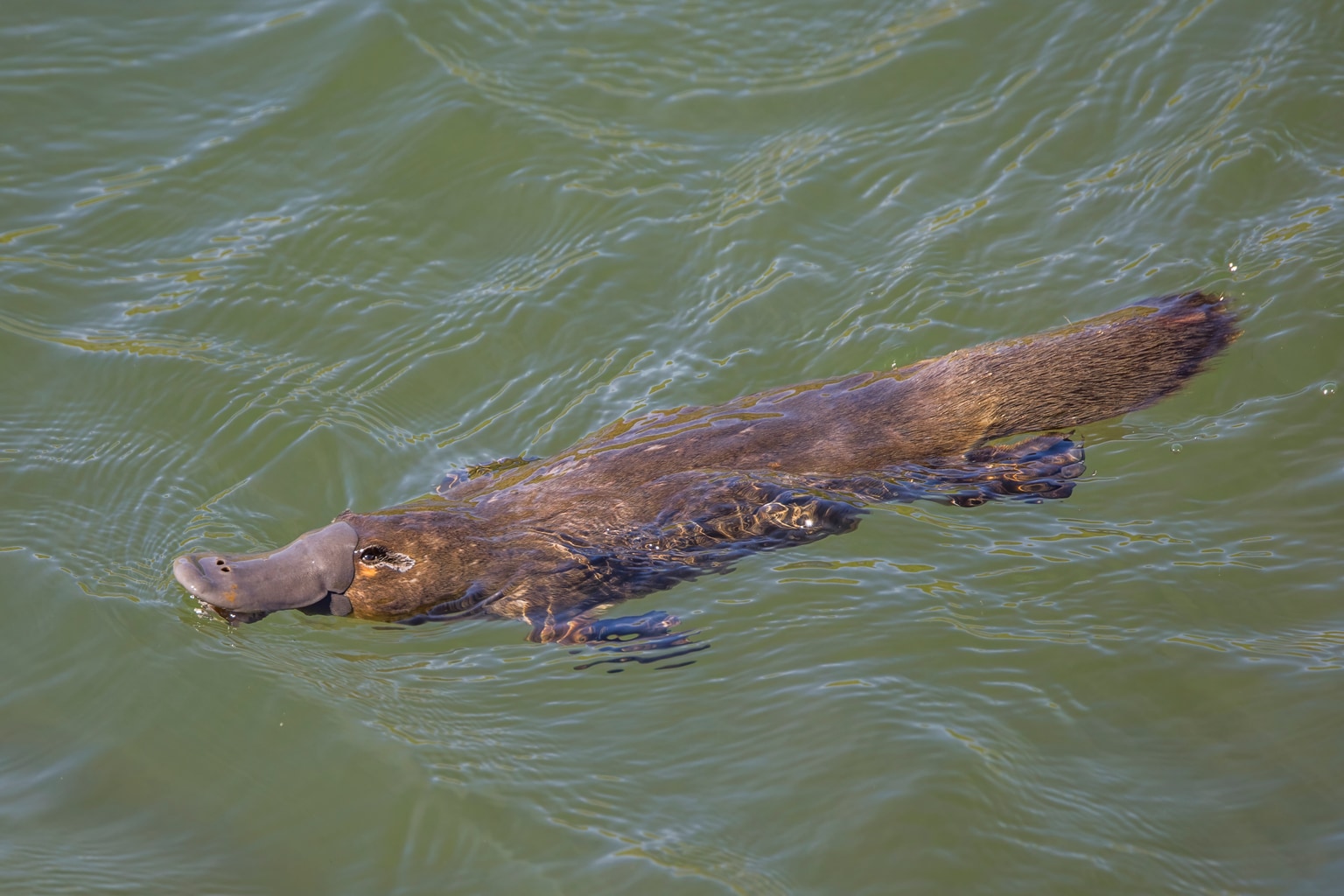
Aquatic, Freshwater, Terrestrial
- Streamlined Body Covered In Dense, Waterproof Brown Fur.
- Duck-Like Bill With Soft Skin Containing Electroreceptors and Mechanoreceptors.
- Beaver-Like Tail Used For Fat Storage and Steering.
- Short Legs With Webbed Feet, More Prominent On Front Feet.
- Males Have Venomous Spurs On Hind Feet.
- Lack Functional Teeth In Adulthood, Using Keratinised Grinding Pads.
- Biofluorescent, Glowing Cyan and Green Under Uv Light.
- Lower Body Temperature Than Placental Mammals .
- Semiaquatic, Spending Significant Time In Water.
- Mainly Nocturnal, But Also Active At Dusk and During Winter Daytime.
- Forages By Probing the Bottom of Freshwater Habitats.
- Uses Cheek Pouches To Store Food.
- Constructs Burrows In Riverbanks For Resting and Nesting.
- Uses Electrolocation To Detect Prey When Eyes, Ears, and Nostrils Are Closed Underwater.
- Moves By Alternating Strokes of Front Feet For Propulsion, Using Hind Feet and Tail For Steering.
Swimming, Walking, Burrowing
Goannas, Murray Cod, Carpet Snakes, Eagles, Saltwater Crocodiles, Red Foxes, Eels
About Platypus
What is the Platypus?
The platypus, scientifically known as Ornithorhynchus anatinus, is a remarkable and unusual mammal native to eastern Australia. It is one of only five extant species of monotremes, a group of mammals characterized by their ability to lay eggs rather than give birth to live young. This unique trait, shared with reptiles and birds, positions the platypus as a crucial subject in the study of evolutionary biology.
Description and Characteristics
The platypus possesses a distinctive appearance that has historically captivated and baffled observers. Its body is covered in dense, waterproof brown fur that provides insulation in its aquatic environment. A prominent feature is its duck-like bill, which is soft and leathery, housing thousands of electroreceptors and mechanoreceptors that enable it to detect the faint electrical fields generated by prey and sense touch. Its tail is broad and flat, similar to a beaver's, and is used for fat storage and as a rudder while swimming. The platypus has short legs with webbed feet, which are folded up when walking on land to protect the webbing. Males of the species are distinguished by venomous spurs located on their hind ankles, capable of delivering a potent toxin.
Habitat and Behavior
This semiaquatic creature inhabits freshwater environments across eastern Australia, including rivers, streams, lakes, and lagoon-like pools. Platypuses are primarily nocturnal but can also be active during dusk and, in winter, during the day. They construct burrows in riverbanks, which can range from simple resting spots to complex nesting chambers. Foraging involves probing the muddy bottoms of waterways with their bills, and they store captured food in cheek pouches for later consumption. Their swimming technique is distinctive, propelling themselves with alternating strokes of their front feet.
Diet and Reproduction
As carnivores, platypuses feed on a variety of aquatic invertebrates such as insect larvae, worms, shrimp, crayfish, and bivalves, as well as tadpoles and fish eggs. Reproduction involves the laying of typically two small, leathery eggs, which are incubated by the female. Unlike placental mammals, platypuses lack teats; milk is secreted through pores in the skin, and the young lap it up from the mother's fur. Young platypuses are blind and hairless at birth and are dependent on their mother's milk for approximately four months.
Conservation and Significance
Once hunted for its fur, the platypus has been a legally protected species in Australia since 1912. Despite conservation efforts, it faces significant threats from habitat degradation, pollution, climate change, and bycatching. The International Union for Conservation of Nature (IUCN) currently classifies the platypus as Near-Threatened, with recommendations to upgrade its status due to declining populations. The platypus is an iconic symbol of Australia, holding cultural significance for Aboriginal peoples and playing an indispensable role in understanding mammalian evolution.
Source: Wikipedia ↗
Frequently Asked Questions
What makes the platypus unique among mammals?
The platypus is unique because it is one of the few mammals that lays eggs instead of giving birth to live young. It also possesses a duck-like bill equipped with electroreceptors to sense prey underwater and males have venomous spurs.
Where can platypuses be found?
Platypuses are native to the freshwater habitats of eastern Australia, ranging from Queensland down to Tasmania. They inhabit rivers, streams, lakes, and lagoon-like pools.
What do platypuses eat?
Platypuses are carnivores that forage by probing the bottom of freshwater bodies. Their diet includes insect larvae, annelid worms, shrimp, crayfish, bivalves, tadpoles, and fish eggs.
Are male platypuses venomous?
Yes, male platypuses are venomous. They have spurs on their hind feet that can deliver a potent venom, which is powerful enough to cause excruciating pain in humans and can last for months.
How do platypuses reproduce?
Platypuses are seasonal breeders that lay leathery eggs, typically two per clutch. The female incubates the eggs and nurses the blind, hairless young with milk secreted from pores in her skin.
What are the main threats to platypus populations?
Platypus populations face threats from habitat destruction, pollution, bycatching in fishing gear, and climate change. Poor water management has also led to declines in some areas.
Related Monotreme species
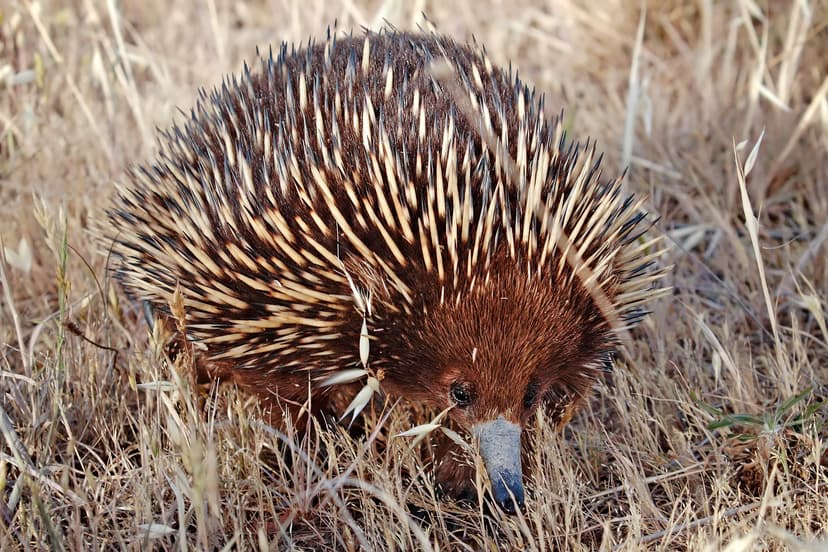
Short-beaked echidna
The short-beaked echidna (Tachyglossus aculeatus), also known as the common echidna or short-nosed echidna, is one of four living species of echidna and the sole member of the genus Tachyglossus. This mammal is characterized by its covering of fur and spines, a distinctive snout, and a specialized, fast-moving tongue used for catching insect prey. As a monotreme, it uniquely lays eggs, a trait shared with reptiles and birds, while also possessing mammary glands to nourish its young. The short-beaked echidna is found throughout Australia, making it the most widespread native mammal there, and in coastal and highland regions of eastern New Guinea. It is a crucial species in understanding mammalian evolution, representing a link to ancient mammalian ancestors.
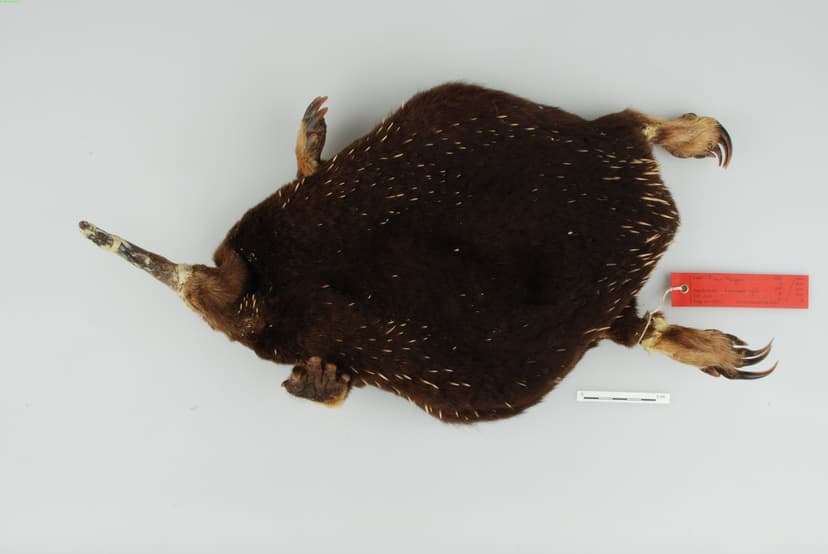
Sir David's long-beaked echidna
Sir David's long-beaked echidna (Zaglossus attenboroughi) is a critically endangered monotreme species found in the Cyclops Mountains of Western New Guinea. It is the smallest member of the Zaglossus genus and is distinguished by its long beak and five-clawed feet. This species primarily feeds on earthworms and is nocturnal, exhibiting defensive behavior by rolling into a spiky ball. Despite being named in honor of Sir David Attenborough, it remained unconfirmed by scientific sightings for decades until recent video footage captured its presence, confirming its survival after being presumed extinct.