
Short-beaked echidna
Mammalia, Monotremata, Tachyglossidae, Tachyglossus·Least Concern·spines·Short-beaked echidna
The short-beaked echidna (Tachyglossus aculeatus), also known as the common echidna or short-nosed echidna, is one of four living species of echidna and the sole member of the genus Tachyglossus. This mammal is characterized by its covering of fur and spines, a distinctive snout, and a specialized, fast-moving tongue used for catching insect prey. As a monotreme, it uniquely lays eggs, a trait shared with reptiles and birds, while also possessing mammary glands to nourish its young. The short-beaked echidna is found throughout Australia, making it the most widespread native mammal there, and in coastal and highland regions of eastern New Guinea. It is a crucial species in understanding mammalian evolution, representing a link to ancient mammalian ancestors.
Key Facts
- ›Lays eggs, a characteristic of monotremes.
- ›Covered in fur and sharp spines for defense.
- ›Possesses a long, specialized tongue for catching insects.
- ›Has strong limbs and claws for rapid burrowing.
- ›Found across Australia and in parts of New Guinea.
- ›Undergoes torpor and hibernation during the Australian winter.
- ›Females develop a temporary pouch to carry their egg and young.
- ›Can tolerate high levels of carbon dioxide and low oxygen while burrowing.
- ›Snout is equipped with mechanoreceptors and electroreceptors.
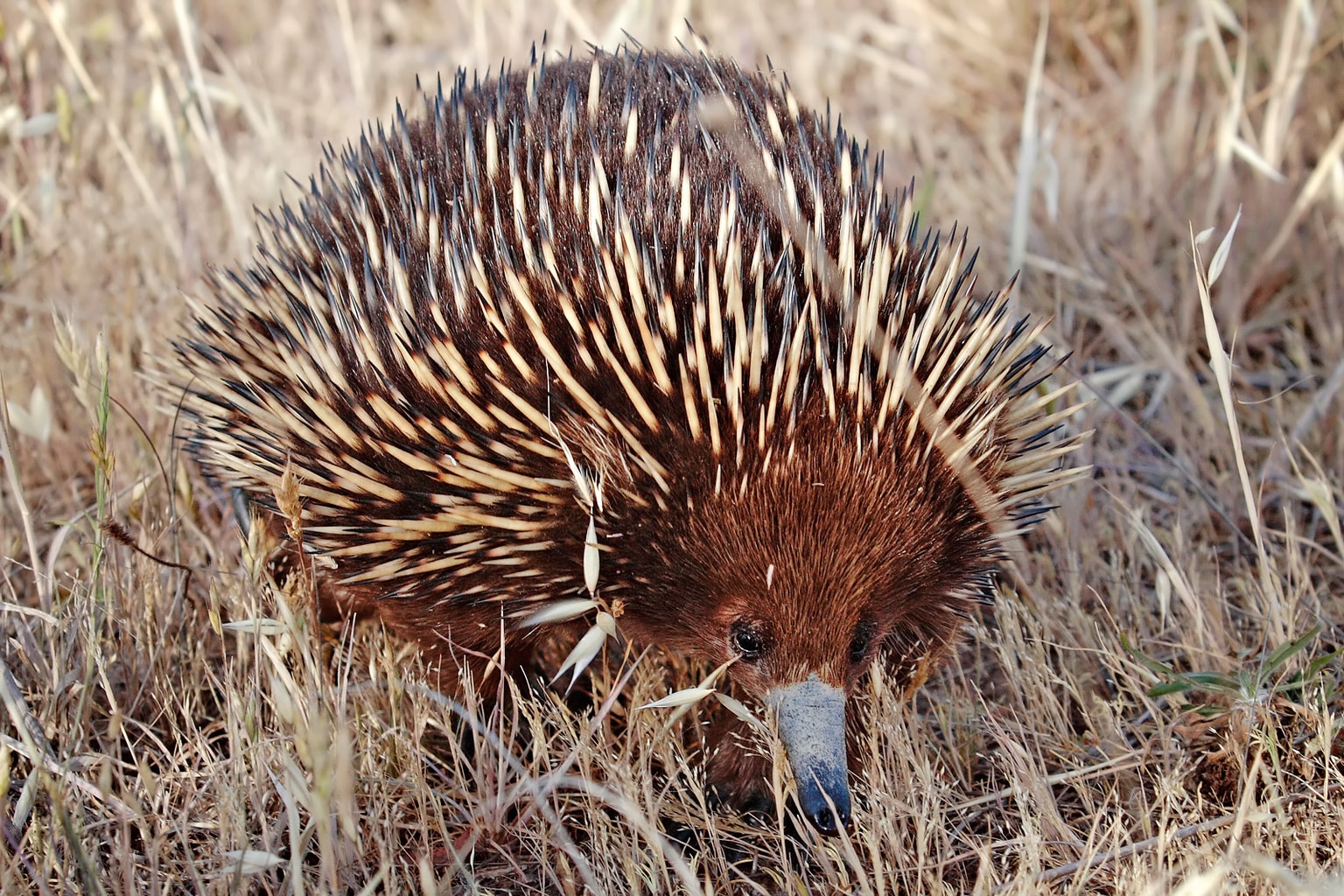
- Covered In Fur and Cream-Coloured Spines Up To 50 mm Long.
- Distinctive Wedge-Shaped Snout With Mechanoreceptors and Electroreceptors.
- Long, Sticky Tongue For Catching Insects.
- Strong Front Limbs With Powerful Claws For Digging.
- Small Eyes .
- Low Body Temperature .
- Possesses A Cloaca.
- Males Have A Four-Knobbed Penis.
- Females Develop A Temporary Pouch.
- Solitary Animals, Except During Mating Season.
- Active Primarily During the Day, But Can Become Crepuscular Or Nocturnal In Hot Weather.
- Enters Periods of Torpor Or Deep Hibernation During the Australian Autumn and Winter.
- Deters Predators By Curling Into A Ball.
- Can Swim If Necessary.
- Burrows Rapidly To Escape Predators Or Find Prey.
- Can Survive In High Carbon Dioxide and Low Oxygen Environments.
- Ranges Over Wide Areas, But Does Not Defend A Specific Territory.
Walking, Burrowing, Swimming
About Short-beaked echidna
The short-beaked echidna (Tachyglossus aculeatus), also known as the common echidna or short-nosed echidna, is a remarkable mammal belonging to the unique order of monotremes. This species is distinguished by its covering of fur interspersed with sharp spines, a characteristic that aids in its defense. It possesses a slender, specialized tongue that can extend rapidly to capture its primary prey: ants and termites. As one of the world's only two groups of living monotremes (the other being the platypus), the short-beaked echidna lays eggs, a trait shared with reptiles and birds, yet it also nourishes its young with milk produced by mammary glands.
Distribution and Habitat
The short-beaked echidna is the most widespread native mammal across Australia, inhabiting diverse environments from arid regions to coastal and highland areas. It is also found in similar habitats in eastern New Guinea, where it is known by local names such as "mungwe." Its adaptability allows it to thrive in various terrestrial settings, and it is particularly adept at burrowing, creating shelters underground.
Physical Adaptations
This echidna is equipped with powerful front limbs and strong claws, enabling it to dig with great speed and force, often excavating up to a meter into the ground. Its snout is a sophisticated sensory organ, featuring mechanoreceptors and electroreceptors that help it detect its surroundings and locate buried prey. Unlike most mammals, it lacks sweat glands and has a low body temperature that can drop significantly during periods of torpor. When threatened, it can curl into a protective ball, presenting its spines to deter predators. Its eyes are small, and while it can distinguish between black and white, its eyesight is not considered crucial for survival.
Behavior and Reproduction
Short-beaked echidnas are generally solitary animals, with the mating season being the primary time they interact. During the Australian winter, they enter a state of torpor or deep hibernation to conserve energy. Females lay a single egg per year, which is incubated in a temporary pouch. The newborn, known as a puggle, develops rapidly on its mother's nutrient-rich milk. After about seven weeks, the puggle becomes too large for the pouch and is expelled into the mother's burrow, with no further contact after approximately six months.
Evolutionary Significance
The short-beaked echidna represents a vital link in understanding mammalian evolution. Fossil evidence suggests its lineage dates back approximately 15 million years. Echidnas are believed to have diverged from the platypus lineage around 66 million years ago. Their unique combination of reptilian (egg-laying) and mammalian (milk production, fur) traits makes them a subject of ongoing scientific interest.
Source: Wikipedia ↗
Frequently Asked Questions
What is a short-beaked echidna?
The short-beaked echidna, also known as the common echidna, is a mammal belonging to the monotreme order. It is covered in fur and spines and is notable for laying eggs.
Where does the short-beaked echidna live?
This species is found throughout Australia, where it is the most widespread native mammal. It also inhabits coastal and highland regions of eastern New Guinea.
What does the short-beaked echidna eat?
The short-beaked echidna primarily feeds on ants and termites, using its specialized, fast-moving tongue to capture them. Some subspecies also consume scarab larvae.
How does the short-beaked echidna protect itself?
Lacking weapons or fighting ability, the short-beaked echidna deters predators by curling into a ball, presenting its sharp spines. It can also burrow rapidly to escape threats.
What are the key physical characteristics of a short-beaked echidna?
They are typically 30-45 cm long, weigh 2-7 kg, and are covered in fur and spines up to 50 mm long. They have strong digging claws, a distinctive snout with sensory receptors, and a cloaca for waste and reproduction.
How do short-beaked echidnas reproduce?
Female short-beaked echidnas lay a single egg each year, which is incubated in a temporary pouch on her underside. The young echidna develops in the burrow and leaves after about six months.
Related Monotreme species
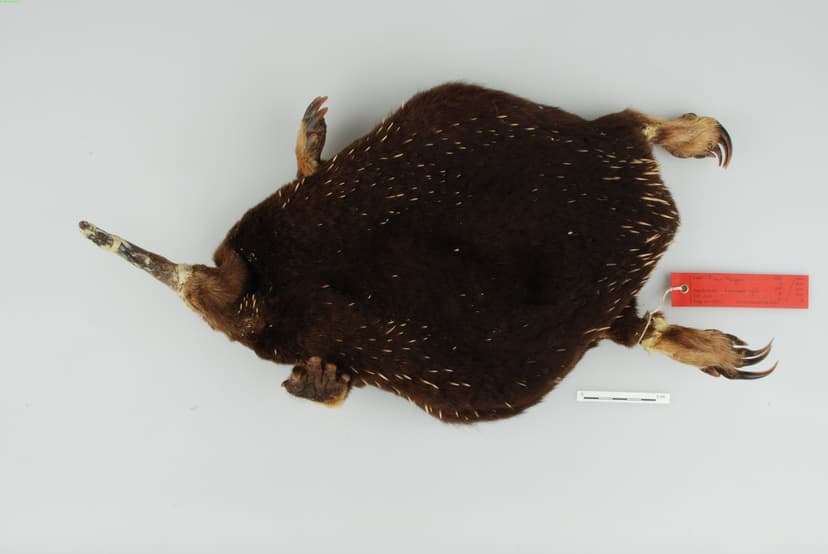
Sir David's long-beaked echidna
Sir David's long-beaked echidna (Zaglossus attenboroughi) is a critically endangered monotreme species found in the Cyclops Mountains of Western New Guinea. It is the smallest member of the Zaglossus genus and is distinguished by its long beak and five-clawed feet. This species primarily feeds on earthworms and is nocturnal, exhibiting defensive behavior by rolling into a spiky ball. Despite being named in honor of Sir David Attenborough, it remained unconfirmed by scientific sightings for decades until recent video footage captured its presence, confirming its survival after being presumed extinct.
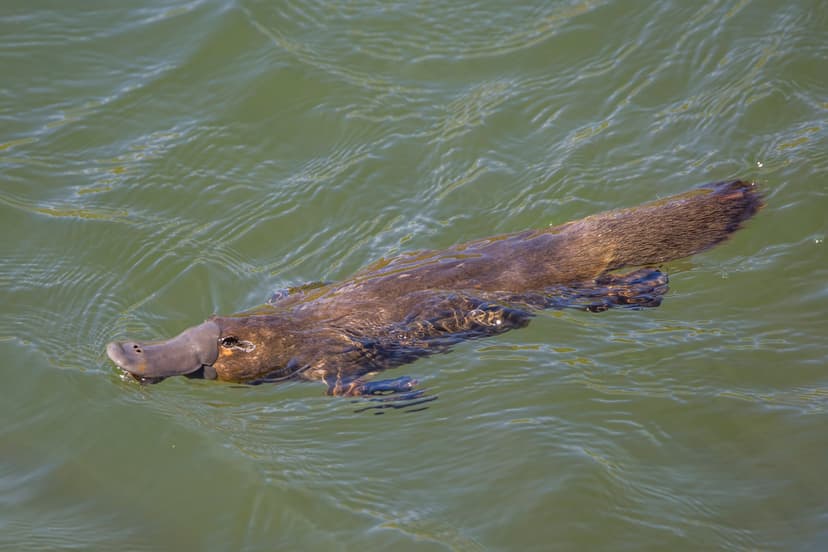
Platypus
The platypus (Ornithorhynchus anatinus) is a unique, semiaquatic, egg-laying mammal native to eastern Australia. It is the sole living species in its genus and family, representing a vital link in mammalian evolution alongside the echidnas. Known for its distinctive duck-like bill, beaver-like tail, and webbed feet, the platypus possesses electroreception to find prey underwater and males have venomous spurs on their hind legs. This iconic Australian animal plays a significant role in evolutionary studies and cultural symbolism.