
Adirondack Mountains
Uplift due to a hotspot, preceded by the Grenville orogeny and subsequent glaciation
The Adirondack Mountains are a prominent massif in Northeastern New York State, forming a circular dome of ancient rocks uplifted by relatively recent geological processes. This region is significant for its extensive natural resources, recreational opportunities, and unique ecological transition zone, encompassing over 100 peaks and thousands of lakes and rivers within the vast Adirondack Park.
Key Facts
- ›The Adirondacks are a circular massif approximately 160 miles wide, covering about 5,000 square miles.
- ›The region contains over 100 peaks, with Mount Marcy being the highest point in New York at 1,629 meters.
- ›Geologically young despite ancient rocks, the mountains are thought to be uplifted by a hotspot, with uplift continuing annually.
- ›The Adirondack Park, established in 1892, is a New York state protected area covering over 6,000,000 acres.
- ›The name "Adirondack" is believed to originate from the Mohawk word "atirǫ́·taks," meaning "eaters of trees."
- ›The region is a significant ecological transition zone, featuring a MIX of boreal and hardwood forests and alpine tundra.

Tsiiononteskowa, Latilu·Taks
Metamorphic Rock, Anorthosite, Marble, Sandstone
Continental, Alpine
Spruce, Pine, Deciduous Trees, Balsam Fir, Black Spruce, Sphagnum Moss, Orchids, Pitcher Plants, Pickerel Weed
Bullfrogs, Spring Peepers, Spotted Salamanders, Great Blue Herons, American Bitterns, Painted Turtles, Boreal Chickadees, Canada Jays, Spruce Grouse, Black-Backed Woodpeckers, Common Loons, Crossbills, Raccoons, Beavers, River Otters, Bobcats, Moose, Black Bears, Coyotes
About Adirondack Mountains
The Adirondack Mountains, located in Northeastern New York State, form a distinctive circular massif characterized by ancient geological foundations uplifted by more recent geological forces. Covering approximately 5,000 square miles (13,000 km2) and spanning about 160 miles (260 km) in width, this region is notable for its extensive natural beauty and ecological significance.
Geological Formation and Characteristics
Geologically, the Adirondacks are a relatively young mountain range despite their ancient rock composition, which dates back over a billion years. The core of the massif is made up of metamorphic rocks formed during the Grenville orogeny. Modern uplift is attributed to a theorized hotspot beneath the region, causing a continuous rise of the landmass at a rate of 1.5 to 3 mm annually. The landscape bears the distinct marks of Pleistocene glaciation, evident in features like eskers, glacial erratics, kames, moraines, cirques, and outwash plains. The soils are generally thin, sandy, acidic, and infertile, a direct result of glacial retreat.
Geography and Hydrology
The region boasts over 100 peaks, with Mount Marcy standing as the highest point in New York at 5,344 feet (1,629 m). The Adirondack High Peaks, a list of 46 mountains over 4,000 feet, are popular hiking destinations. The mountains are also home to over 200 named lakes, including notable ones like Lake George and Lake Placid, with thousands of smaller bodies of water. Over 1,200 miles (1,900 km) of rivers flow through the area.
Human History and Indigenous Significance
The Adirondacks have been inhabited since around the 14th millennium BC by Paleo-Indians. Later, Iroquoian peoples, such as the Mohawk and Oneida, and Algonquian groups like the Mahicans, considered the mountains their hunting grounds, referring to the region by names that reflected its natural resources and perceived sustenance. The name "Adirondack" itself is believed to stem from the Mohawk word "atirǫ́·taks," meaning "eaters of trees," a term that spoke to the indigenous peoples' relationship with the land.
European explorers first encountered the region in the early 17th century. Initially perceived as an inhospitable wilderness, the Adirondacks later became a source of lumber and, with the rise of the Romantic movement, a cherished destination for those seeking escape into nature. This perception of wilderness and natural beauty has persisted, shaping the region's modern identity.
Conservation and Modern Significance
In response to concerns over deforestation and water quality, Adirondack Park was established in 1885 and later expanded. This protected area, covering over 6,000,000 acres, is one of the largest in the United States and plays a crucial role in preserving the region's natural resources and providing recreational opportunities. In 1989, a portion of the Adirondack region was designated as the Champlain-Adirondack Biosphere Reserve by UNESCO, recognizing its ecological importance.
Ecology and Climate
The Adirondacks represent a significant ecological transition zone, marking the southernmost extent of the taiga ecotype in North America. The heavily forested mountains feature a mix of spruce, pine, and deciduous trees, alongside extensive wetlands such as swamps, marshes, and bogs. The climate is strongly continental, with warm, rainy summers and long, cold, snowy winters. A small alpine climate zone exists on the highest peaks, supporting fragile tundra vegetation.
Source: Wikipedia ↗
Frequently Asked Questions
What is the origin of the name Adirondack?
The name "Adirondack" is believed to derive from the Mohawk word "atirǫ́·taks," which translates to "eaters of trees." This term was used by the Iroquois as a sometimes derogatory name for Algonquian groups who did not practice agriculture and might resort to eating tree bark during harsh winters.
What is the geological makeup and formation of the Adirondack Mountains?
The Adirondack Mountains are composed of ancient metamorphic rocks, over a billion years old, formed during the Grenville orogeny. Despite the age of the rocks, the mountains themselves are geologically young, formed by recent glaciation and a theorized hotspot beneath the region causing ongoing uplift.
What are the prominent geographical features of the Adirondacks?
The Adirondacks feature a circular dome with over 100 peaks, the highest being Mount Marcy. The region is characterized by more than 200 named lakes and over 3,000 smaller bodies of water, alongside more than 1,200 miles of rivers.
What is the significance of Adirondack Park?
Adirondack Park, established in 1892, is a New York state protected area covering over 6,000,000 acres, representing more than 20 percent of the state's land area. It was created to preserve the region's natural resources and provide public recreational opportunities.
What kind of climate can be expected in the Adirondacks?
The Adirondacks experience a strongly continental climate with high humidity and year-round precipitation. Summers are warm and rainy, while winters are long, cold, snowy, and harsh, with short transitional seasons in spring and fall.
What are some notable ecological characteristics of the Adirondacks?
The Adirondacks are heavily forested, serving as the southernmost part of the Eastern forest-boreal transition ecoregion. The area includes diverse wetlands like swamps, marshes, and bogs, and is home to specialized northern forest bird species and mammals, though some species have been extirpated.
Related Mountain ranges

Absaroka Range
The Absaroka Range is a significant sub-range of the Rocky Mountains, forming a substantial natural boundary in the northwestern United States. It plays a crucial role in defining the eastern edge of Yellowstone National Park and the Paradise Valley, while also marking the western perimeter of the Bighorn Basin. The range is notable for its volcanic geological history and its extensive protected wilderness areas.

Ahaggar Mountains
The Ahaggar Mountains, also known as the Hoggar Mountains, are a highland region in the central Sahara desert of southern Algeria. This vast, rocky desert area is significant for its unique biodiversity, ancient geological formations, and rich cultural history, particularly for the Tuareg people. It is home to the highest peak in Algeria, Mount Tahat, and contains the Ahaggar Cultural Park, a protected area of immense ecological and historical importance.
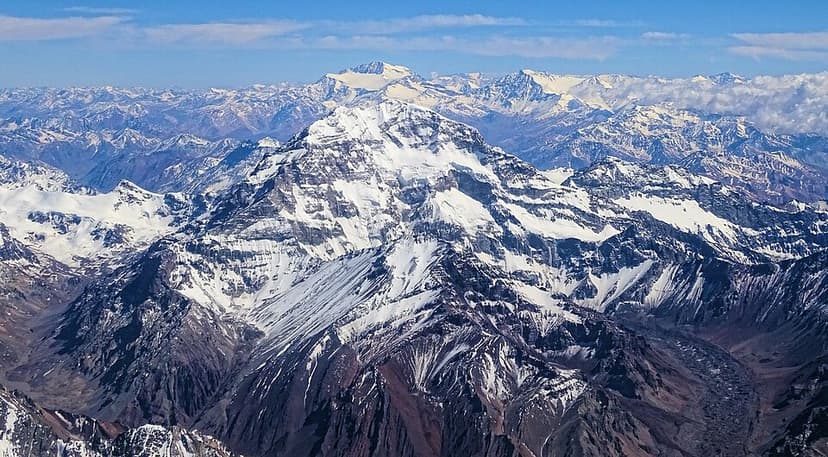
Aconcagua
Aconcagua is the highest mountain in the Americas and the highest peak outside of Asia, located in the Andes mountain range in Mendoza Province, Argentina. It is a significant peak for mountaineers worldwide, often referred to as the highest non-technical mountain, though its extreme altitude presents considerable challenges and risks.