
Ancistrochilus
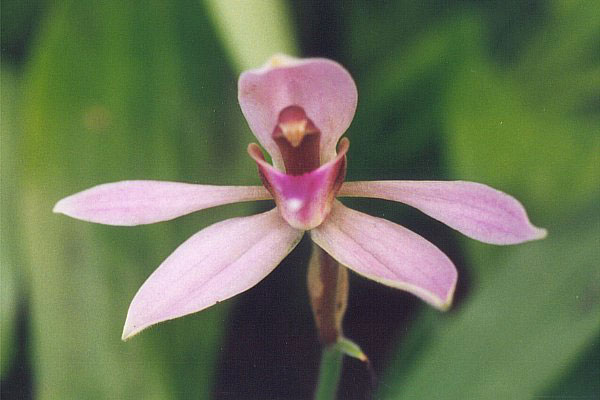
Ancistrochilus is a small genus of orchids, recognized for its large, fragrant flowers with striking rose-pink petals and sepals and magenta lips. These sympodial epiphytic plants are native to tropical West Africa, extending to Tanzania and Uganda, where they grow on tree trunks and branches at moderate elevations.
Key Facts
- ›Comprises only two species within the Orchidaceae family.
- ›Native to tropical West Africa, Tanzania, and Uganda.
- ›Characterized by conical or pyriform pseudobulbs and broad, lanceolate leaves that are shed after growth.
- ›Produces 3-4 large, attractive, fragrant flowers approximately 8 cm across.
- ›Flowers feature dark-colored, rose-pink petals and sepals, with a magenta, three-lobed lip.
- ›The lip has an elongated, narrow, curved projection, inspiring the genus name.
West Africa, Tanzania, Uganda
Epiphytic
Rose Pink, Magenta
About Ancistrochilus
What is Ancistrochilus?
Ancistrochilus is a genus of orchids belonging to the family Orchidaceae, notable for containing only two recognized species. These orchids are characterized by their sympodial growth habit and their presence in tropical regions of Africa. The genus is distinguished by its attractive and fragrant flowers, which have a unique lip structure.
Description and Habitat
These orchids are described as cool to hot growing, typically found in tropical West Africa, extending eastward to Tanzania and Uganda. They grow epiphytically on tree trunks and large branches, usually at elevations between 500 and 1100 meters. The plants feature characteristic conical or pyriform pseudobulbs that are sympodial. Each pseudobulb supports two to three broad, acute, lanceolate leaves, which are shed after the plant's growth period slows down.
Flowers
Ancistrochilus orchids produce a pubescent inflorescence from the base of mature, leafless pseudobulbs, bearing three to four large and attractive flowers. Each flower measures approximately 8 cm across and is notably fragrant. The petals and sepals are typically a dark rose-pink color, while the three-lobed lip is a vibrant magenta. A distinctive feature of the lip is its elongated, narrow, and curved projection, which gives the genus its name.
Taxonomy
The scientific name Ancistrochilus is derived from two Greek words: 'ankistron,' meaning 'hook,' and 'cheilos,' meaning 'lip.' This nomenclature directly references the hooked or curved form of the orchid's lip, a key identifying characteristic.
Source: Wikipedia ↗
Frequently Asked Questions
What are the key characteristics of Ancistrochilus orchids?
Ancistrochilus orchids are sympodial epiphytic plants known for their conical pseudobulbs and broad leaves that are shed annually. They are most notable for their large, fragrant flowers, which have rose-pink petals and sepals and a magenta lip.
Where are Ancistrochilus orchids found naturally?
These orchids are found in tropical West Africa, with occurrences extending to Tanzania and Uganda. They typically grow on tree trunks and large branches at elevations ranging from 500 to 1100 meters.
What is the significance of the name Ancistrochilus?
The genus name Ancistrochilus is derived from the Greek words 'ankistron' meaning 'hook' and 'cheilos' meaning 'lip'. This naming refers to the distinctive hooked or curved projection found on the orchid's lip.
What do the flowers of Ancistrochilus look like?
The flowers are large and attractive, measuring about 8 cm across, and are fragrant. They feature dark-colored, rose-pink petals and sepals, contrasting with a vibrant, three-lobed magenta lip that has a unique elongated, curved tip.
Related Orchid species

Eurychone
Eurychone is a genus of flowering plants belonging to the orchid family, Orchidaceae. Established in 1918 by Rudolf Schlechter, this genus encompasses two recognized species, both of which are indigenous to tropical Africa. These orchids are distinguished by their specific geographic distributions within the African continent.
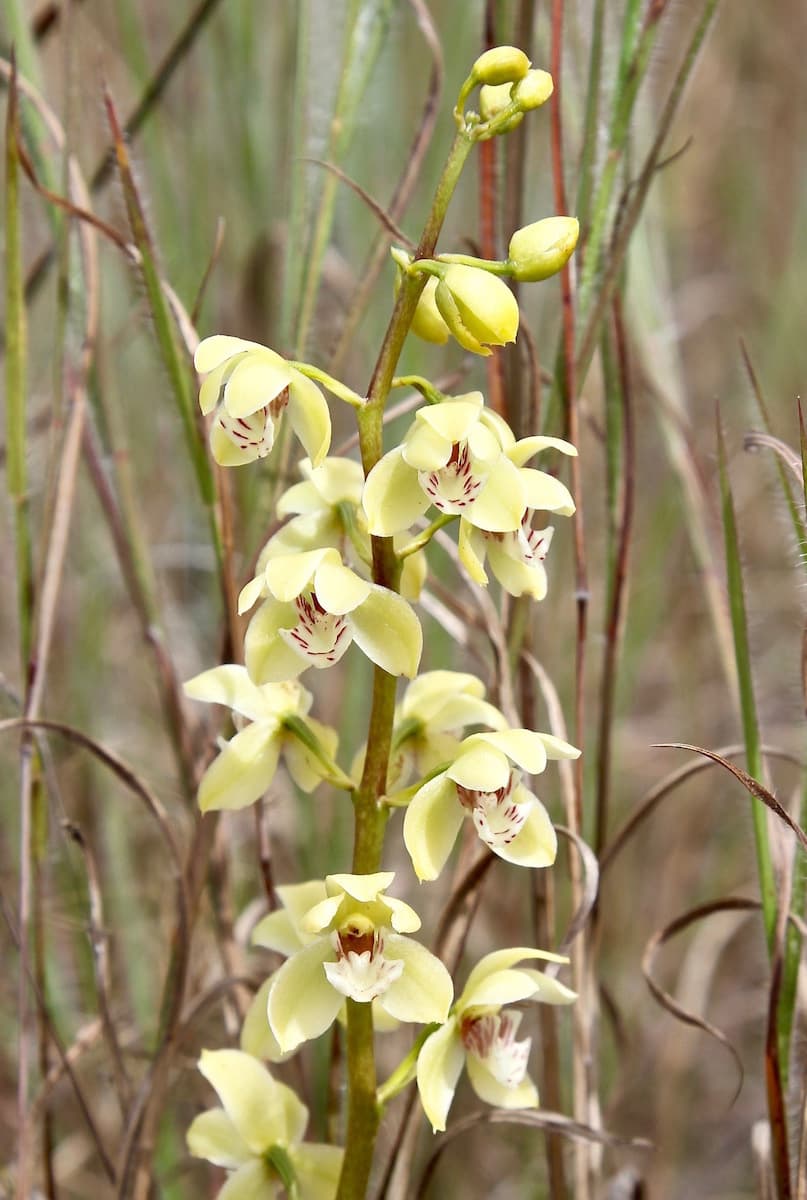
Koellensteinia
Koellensteinia is a genus of approximately 19 orchid species native to South America, Belize, Trinidad, and Puerto Rico. These plants are characterized by their short, leafy stems, often forming pseudobulbs, and produce small to medium-sized, fragrant flowers that are typically yellow or white, often with magenta or violet barring. They are found in low to mid-elevation forests and are cultivated under intermediate conditions with moderate shade and high humidity.
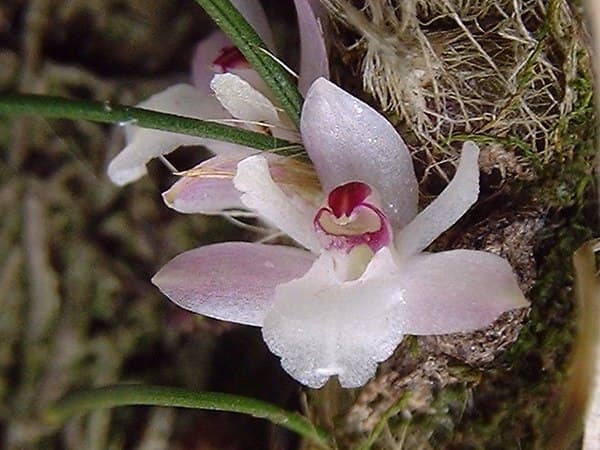
Isabelia
Isabelia is a genus of orchids comprising three species and one natural hybrid, found from northeastern Brazil to Argentina. These tiny orchids are closely related to the genus Constantia and are distinguished by their unifoliated pseudobulbs, linear or acicular leaves, and erect inflorescences bearing one to a few flowers. Their flowers feature petals, sepals, and labellum of the same color, ranging from white to pale pink or magenta, and they bloom from early autumn to early winter.