
Koellensteinia
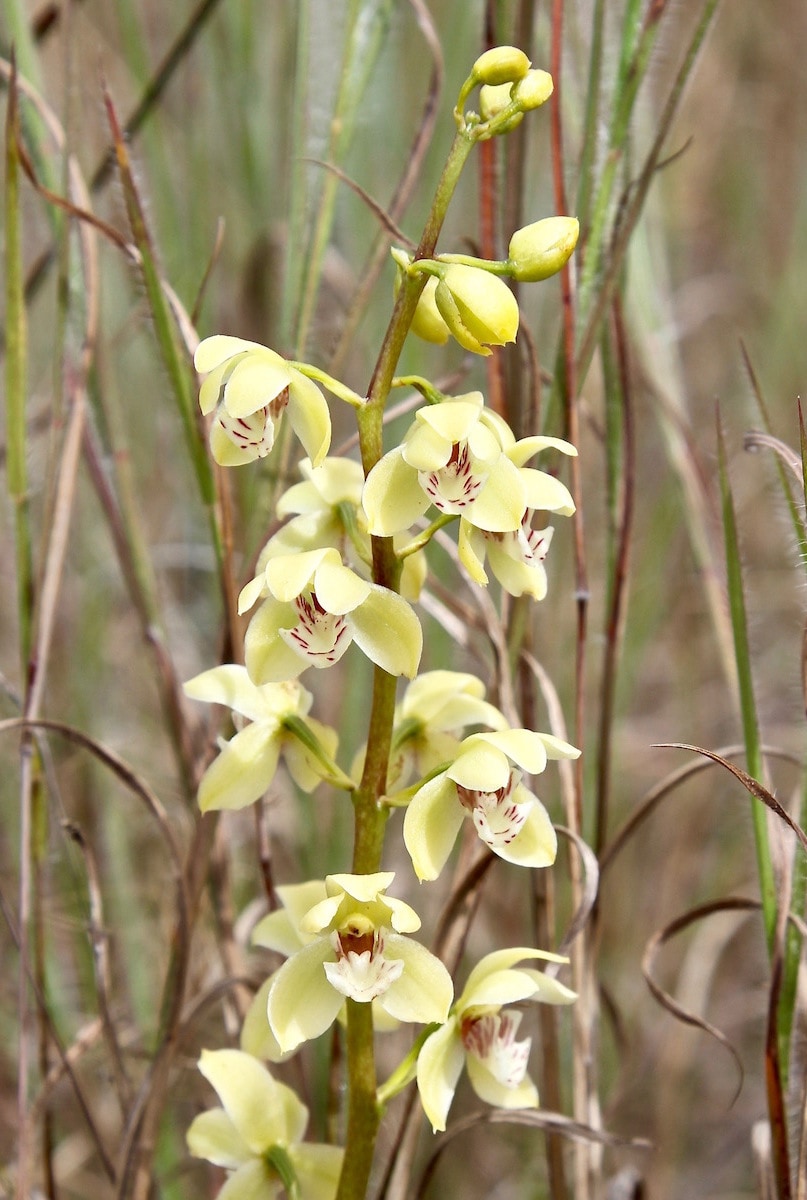
Koellensteinia is a genus of approximately 19 orchid species native to South America, Belize, Trinidad, and Puerto Rico. These plants are characterized by their short, leafy stems, often forming pseudobulbs, and produce small to medium-sized, fragrant flowers that are typically yellow or white, often with magenta or violet barring. They are found in low to mid-elevation forests and are cultivated under intermediate conditions with moderate shade and high humidity.
Key Facts
- ›Native to South America, Belize, Trinidad, and Puerto Rico.
- ›Flowers are typically yellow or white with magenta or violet barring.
- ›Fragrant flowers are small to medium-sized.
- ›Grows terrestrially or epiphytically in forests.
- ›Requires intermediate growing conditions, moderate shade, and high humidity.
- ›Related to the Zygopetalum genus.
South America, Belize, Trinidad, Puerto Rico
Terrestrial, Epiphytic
Bark Mixture
About Koellensteinia
Koellensteinia is a genus of flowering plants belonging to the orchid family, Orchidaceae. The genus was named by Heinrich Gustav Reichenbach in honor of Captain Carl Kellner von Koellenstein, an Austrian military officer and a botanical correspondent of Reichenbach.
Distribution and Ecology
This genus comprises approximately 19 species that are naturally found in South America, as well as in Belize, Trinidad, and Puerto Rico. Koellensteinia orchids inhabit low to mid-elevation forests, thriving in hill and mountain environments. They exhibit a dual growth habit, growing either terrestrially in the soil or epiphytically attached to trees.
Characteristics
Related to the genus Zygopetalum, Koellensteinia orchids feature short, leafy stems that typically form pseudobulbs, with each stem bearing one to three leaves. The leaves are petiolate, ranging from linear to oblong in shape, and are characteristically narrow and pleated with light veining. The inflorescence arises from the side of the stem, is erect and slender, and can be either branched or unbranched, bearing numerous to few flowers. The flowers themselves are small to medium in size and are fragrant. Their coloration is predominantly yellow or white, often adorned with magenta, rose, or violet barring, and suffused with pink on the outer surfaces of the petals and sepals. The sepals and petals are similar in shape and spread freely. The lip is trilobed, featuring small, spreading or erect side lobes and a larger, broad midlobe that is entire or slightly bilobed, with a bilobed, erect callus. The column is short, sometimes winged, and possesses a conspicuous foot, with pollinia numbering two or four.
Cultivation
Cultivating Koellensteinia orchids requires intermediate environmental conditions, including moderate shade and high humidity. For potted specimens, a free-draining bark mixture is recommended as the growing medium. It is important to maintain consistent moisture, ensuring the plants do not dry out completely for extended periods.
Accepted Species
As of current acceptance, there are 11 recognized species within the Koellensteinia genus. These include species such as Koellensteinia carraoensis, Koellensteinia dasilvae, Koellensteinia eburnea, Koellensteinia florida, Koellensteinia graminea, Koellensteinia hyacinthoides, Koellensteinia ionoptera, Koellensteinia kellneriana, Koellensteinia lilijae, Koellensteinia spiralis, and Koellensteinia tricolor, each with specific geographic distributions.
Source: Wikipedia ↗
Frequently Asked Questions
What are the natural growing conditions for Koellensteinia orchids?
Koellensteinia orchids are found in low to mid-elevation, hill, and mountain forests. They grow either terrestrially or epiphytically, meaning they can grow in soil or attached to trees.
What do Koellensteinia flowers look like?
The flowers of Koellensteinia are described as small to medium-sized and fragrant. Their primary colors are typically yellow or white, often featuring barring with magenta, rose, or violet, and suffused pink on the outside.
How should Koellensteinia orchids be cultivated?
For cultivation, Koellensteinia orchids require intermediate conditions, moderate shade, and high humidity. They are best grown potted in a free-draining bark mixture and should be kept consistently moist, without allowing them to dry out completely.
What is the genus Koellensteinia related to?
The genus Koellensteinia is related to Zygopetalum. This suggests they may share similar botanical characteristics and cultivation needs.
Where in the world can Koellensteinia orchids be found naturally?
Koellensteinia species are native to a wide range of areas in South America, including Brazil, Venezuela, Colombia, and Ecuador, as well as Belize, Trinidad, and Puerto Rico.
Related Orchid species

Epipactis
Epipactis, commonly known as helleborine, is a genus of approximately 70 terrestrial orchid species found in temperate and subtropical climates across America, Asia, and Europe. These orchids are distinctive for their creeping, fleshy rhizomes, lanceolate leaves that can be blue-purple in species with reduced chlorophyll, and colorful, bilaterally symmetrical flowers that grow from a terminal raceme. Some species, like the violet helleborine, can survive without chlorophyll due to their reliance on mycorrhizal symbiosis.
Ancistrochilus
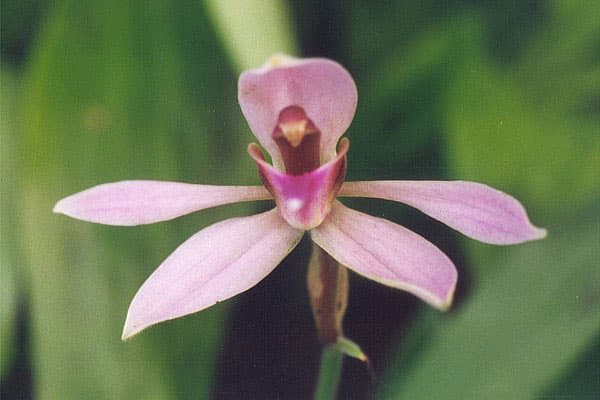
Ancistrochilus is a small genus of orchids, recognized for its large, fragrant flowers with striking rose-pink petals and sepals and magenta lips. These sympodial epiphytic plants are native to tropical West Africa, extending to Tanzania and Uganda, where they grow on tree trunks and branches at moderate elevations.
Aerides
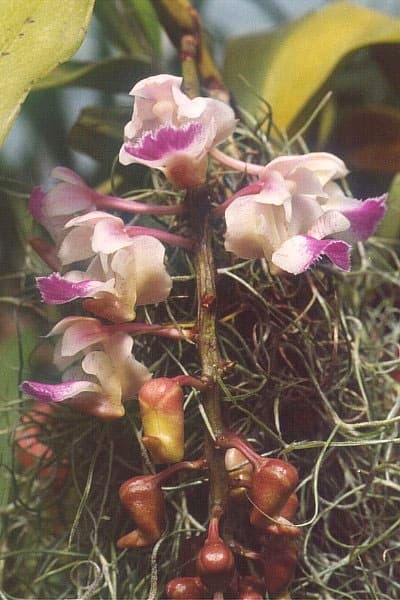
Aerides, commonly known as cat's-tail orchids and fox brush orchids, is a genus of tropical epiphytic orchids native to Asia. These orchids are highly valued in horticulture for their showy, fragrant, and long-lasting flowers, which typically appear in racemes and are often white with colorful edges.