
Apostasioideae
Apostasioideae·Orchidaceae
Apostasioideae is a small subfamily within the orchid family, Orchidaceae, comprising only two genera and around 15 species. These terrestrial orchids are found in humid regions of Southeast Asia, Malaysia, Japan, and northern Australia. They are distinguished from most other orchids by possessing three stamens, unlike the single stamen found in most other subfamilies, and are considered a basal lineage within the orchid family.
Key Facts
- ›Apostasioideae is one of five subfamilies of the Orchidaceae family.
- ›It contains two genera: Neuwiedia and Apostasia.
- ›There are approximately 15 recognized species within this subfamily.
- ›Members of Apostasioideae are terrestrial orchids.
- ›They are found in humid regions of northern Australia, Southeast Asia, Malaysia, and Japan.
- ›Apostasioideae orchids possess three stamens, a characteristic that distinguishes them from many other orchid lineages.

Terrestrial
About Apostasioideae
The subfamily Apostasioideae represents a distinct lineage within the vast orchid family, Orchidaceae. It is characterized by its limited species diversity, encompassing only two genera, Neuwiedia and Apostasia, and approximately 15 recognized species. These orchids are exclusively terrestrial, finding their habitat in the humid environments of northern Australia, Southeast Asia, Malaysia, and Japan.
Key Distinctions and Evolutionary Significance
A significant characteristic that sets Apostasioideae apart from most other orchid subfamilies is the structure of their flowers. While the majority of orchids are monandrous (possessing a single stamen), Apostasioideae orchids feature three stamens. This anatomical difference, alongside molecular data, has led botanists to consider Apostasioideae as the sister group to all other orchid lineages. This position suggests that Apostasioideae represents one of the earliest diverging branches in the evolutionary history of orchids, offering crucial insights into their development and diversification.
Source: Wikipedia ↗
Frequently Asked Questions
What is the Apostasioideae subfamily?
The Apostasioideae is one of the five recognized subfamilies within the orchid family, Orchidaceae. It is notable for being a relatively small group, containing only two genera and about 15 species.
Where are Apostasioideae orchids found?
These orchids are terrestrial plants that grow naturally in humid areas. Their distribution spans across northern Australia, Southeast Asia, Malaysia, and Japan.
What makes Apostasioideae orchids distinct?
A key distinguishing feature of Apostasioideae orchids is their flower structure, specifically the presence of three stamens. This contrasts with most other orchid subfamilies, which typically have only one stamen.
What is the relationship of Apostasioideae to other orchids?
Based on molecular data and flower morphology, the Apostasioideae are considered to be the sister group to all other orchid lineages. This suggests they represent an early diverging branch within the orchid family tree.
Related Orchid species
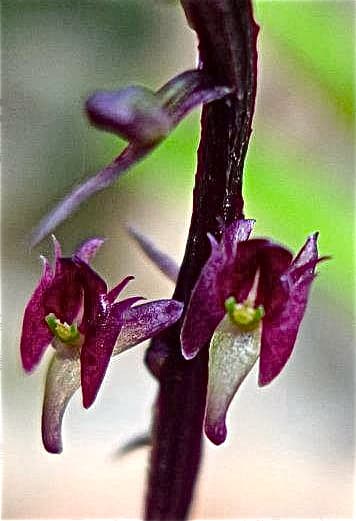
Crepidium
Crepidium, also known by its Chinese name 沼兰属 (zhao lan shu) and commonly as spur orchids, is a genus of approximately three hundred species of evergreen orchids. These plants are predominantly terrestrial, characterized by short, ground-hugging stems, large pleated leaves, and small, non-resupinate flowers with spreading sepals and petals. The genus is widely distributed across the tropics, with a significant diversity found in New Guinea.

Bromheadia
Bromheadia, commonly known as reed orchids, is a genus of approximately 29 species of evergreen terrestrial and epiphytic orchids. Native to tropical Asia and extending to northern Australia, these orchids are characterized by their unbranched stems with leaves arranged in two rows and their distinctive labellum that acts as a landing platform. The flowers, appearing singly and in succession, are typically white, creamy yellow, or reddish.

Bryobium
Bryobium, commonly known as urchin orchids, is a genus of epiphytic or lithophytic plants belonging to the Orchidaceae family. Native to tropical Asia and northern Australia, these orchids are distinguished by their large, fleshy pseudobulbs, leathery leaves, and small, often hairy flowers that typically do not open widely.