
Cardiochilos
Cardiochilos
Cardiochilos is a monotypic genus of orchids, meaning it contains only one species, Cardiochilos williamsonii. This epiphytic herb is found in mist forests and is distinguished by its solitary flowers, which feature a heart-shaped labellum – the source of its genus name. The genus name itself is derived from Greek words for 'heart' and 'lip'.
Key Facts
- ›Cardiochilos williamsonii is the sole species within the Cardiochilos genus.
- ›It is a monopodial, epiphytic herb with fleshy roots.
- ›The flowers are solitary and non-resuspinate, with hairy peduncles.
- ›The most distinctive feature is the heart-shaped labellum, which gives the genus its name.
- ›It inhabits mist forests at high elevations.

Mist Forests
Epiphytic
About Cardiochilos
Cardiochilos is a genus of flowering plants belonging to the orchid family, Orchidaceae. This genus is monotypic, meaning it contains only a single species: Cardiochilos williamsonii.
Description and Ecology
Cardiochilos williamsonii is characterized as a monopodial, epiphytic herb. The plant typically features stems up to 10 cm in height and fleshy roots that can extend up to 20 cm in length. Its flowers are solitary and non-resuspinate, meaning they do not invert themselves after opening. These flowers are borne on peduncles that are described as hairy. The most distinctive characteristic of the flowers, and indeed the genus, is the labellum, which is heart-shaped. This feature is directly reflected in the genus name, Cardiochilos, derived from the Greek words 'kardia' (heart) and 'cheilos' (lip).
Ecologically, Cardiochilos williamsonii has been observed in mist forests. It thrives at significant elevations, specifically noted at 2590 meters above sea level. The specific geographic origins beyond its habitat type are not detailed in the provided information, but its presence in mist forests suggests a requirement for high humidity and specific temperature ranges typical of such environments.
Source: Wikipedia ↗
Frequently Asked Questions
What does the name Cardiochilos mean?
The genus name Cardiochilos is derived from Greek words. 'Cardio' comes from 'kardia' meaning heart, and 'chilos' comes from 'cheilos' meaning lip. This name refers to the distinctive heart-shaped lip of the flower.
What kind of plant is Cardiochilos williamsonii?
Cardiochilos williamsonii is an epiphytic herb, meaning it grows on other plants, typically trees. It is a monopodial orchid with fleshy roots and stems that can grow up to 10 cm tall.
Where can Cardiochilos williamsonii be found?
This orchid species has been found in mist forests. It typically grows at elevations of 2590 meters above sea level.
What is unique about Cardiochilos flowers?
The flowers of Cardiochilos williamsonii are solitary and non-resuspinate. Their most notable feature is the labellum, which is heart-shaped, giving the genus its descriptive name.
Related Orchid species

Cottonia
Cottonia peduncularis is a monotypic genus of orchid native to India and Sri Lanka. Its most distinctive feature is its lip, which is shaped like a hairy bee, earning it the common name "bee-orchid," though unlike the Ophrys genus, no specific bee pollinator has been identified.
Bifrenaria
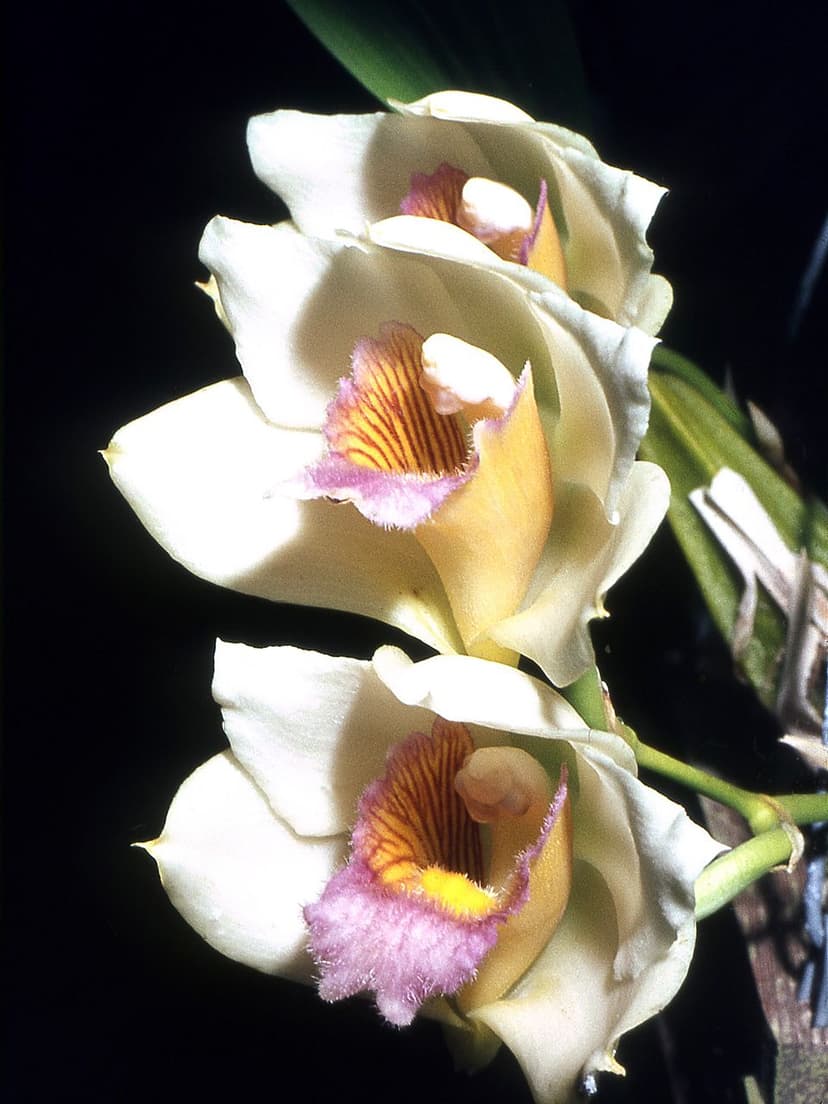
Bifrenaria is a genus of orchids comprising about twenty species native to Panama, Trinidad, and South America, primarily found in the Amazon and Atlantic Forests of Brazil. These orchids are admired by growers for their abundant and striking flowers, which are often strongly scented and possess a distinctive calcar at the base of the sepals.
Huntleya
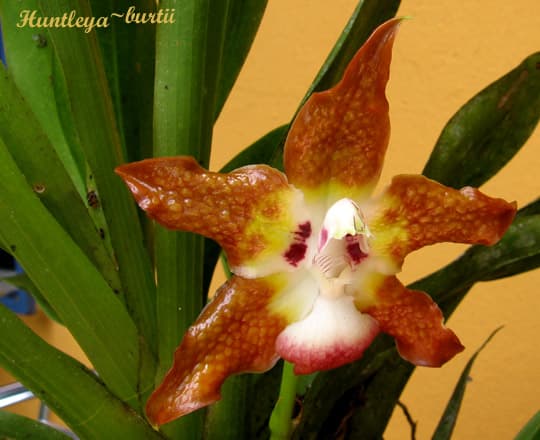
Huntleya is a small genus of orchids native to South America, Central America, and Trinidad. These plants are characterized by their epiphytic growth habit, pseudobulbless structure, and erect, single-flowered inflorescences. They are typically found growing in wet cloud forests at medium altitudes.