
Cattleya
Cattleya
Cattleya is a genus of orchids native to Central and South America, ranging from Costa Rica to Argentina. These epiphytic or terrestrial plants are distinguished by their fleshy roots, upright pseudobulbs, and showy, often fragrant flowers with a distinctive lip that partially envelops the column.
Key Facts
- ›Found from Costa Rica south to Argentina.
- ›Orchids can be epiphytic (growing on trees) or terrestrial (growing in soil).
- ›Features fleshy roots, upright pseudobulbs, and terminal racemes of flowers.
- ›Flowers have sepals and petals that are free from each other, with a uniquely colored lip.
- ›The genus was named by John Lindley in 1824 after horticulturalist William Cattley.
- ›Requires bright, indirect light and temperatures between 25–30 °C during the day.

Epiphytic, Terrestrial
About Cattleya
The genus Cattleya encompasses a group of orchids native to the Americas, with a natural range extending from Costa Rica southwards to Argentina. These orchids are characterized by their fleshy, noodle-like roots and upright pseudobulbs, from which one or two leaves emerge. The leaves are typically somewhat fleshy, with smooth margins, and can vary in shape from oblong to elliptical.
Cattleya orchids produce an inflorescence, usually a terminal raceme, bearing several flowers. The individual flowers feature sepals and petals that are distinct from one another. A notable characteristic is the lip, or labellum, which is the lowermost petal and often displays a different coloration and shape than the other floral parts; it partially encircles the flower column, forming a tube-like structure. The reproductive structures include four pollinia, which are sac-like organs containing pollen. The fruit of a Cattleya orchid is a capsule that contains numerous small seeds.
Taxonomy and Naming
The genus Cattleya was formally described and named in 1824 by the botanist John Lindley. The genus is named in honor of William Cattley, an influential horticulturalist. Cattley was instrumental in the successful cultivation and blooming of a specimen of Cattleya labiata, which had been discovered by William Swainson in Pernambuco, Brazil, in 1817. This bloomed plant served as the type specimen from which Lindley based his description of the species.
Cultivation
For successful cultivation, Cattleya orchids require specific environmental conditions. They thrive in bright light, but it is crucial to provide shade when sunlight is intense to prevent damage. Ideal daytime temperatures range from 25–30 °C (77–86 °F), with nighttime temperatures ideally not falling below 10–12 °C (50–53.6 °F). Adequate ventilation is important, along with maintaining humidity levels between 40% and 70%, though direct air currents should be avoided.
Watering should be done cautiously, only when the growing substrate has dried out. A general guideline is to water approximately once a week, but this frequency is highly dependent on the specific environmental conditions and the prevailing season. While Cattleyas can grow without supplemental fertilization, it is recommended to use nitrogen-based fertilizers that are free of urea, particularly during the active growth period. To prevent the buildup of salts in the substrate, it is advisable to water thoroughly between fertilizer applications.
Source: Wikipedia ↗
Frequently Asked Questions
What is a Cattleya orchid?
Cattleya is a genus of orchids found in Central and South America. They are known for their often large, showy flowers and can grow as epiphytes on trees or as terrestrial plants in soil.
Where do Cattleya orchids grow naturally?
Cattleya orchids are naturally found in a range extending from Costa Rica in Central America down to Argentina in South America.
What are the growing requirements for Cattleya orchids?
Cattleya orchids require bright, indirect light, avoiding direct sunlight. Daytime temperatures should be between 25–30 °C, with nighttime temperatures not dropping below 10–12 °C. They also need good ventilation and humidity levels between 40–70%.
How should I water my Cattleya orchid?
Water your Cattleya orchid only when the substrate is dry. This is typically done once a week, but the frequency can vary depending on environmental conditions and the season.
When was the Cattleya genus established and named?
The genus Cattleya was established and named in 1824 by John Lindley. It was named in honor of the horticulturalist William Cattley, who successfully bloomed a specimen of Cattleya labiata.
Related Orchid species

Barbosella
Barbosella is a genus of creeping orchids comprising about 20 species, primarily found across the West Indies and Latin America, from Mexico down to Argentina. These orchids are distinguished by their solitary flowers, which feature a unique lip base that functions like a ball and socket joint. The genus was named in honor of João Barbosa Rodrigues, a notable investigator of Brazilian orchids.
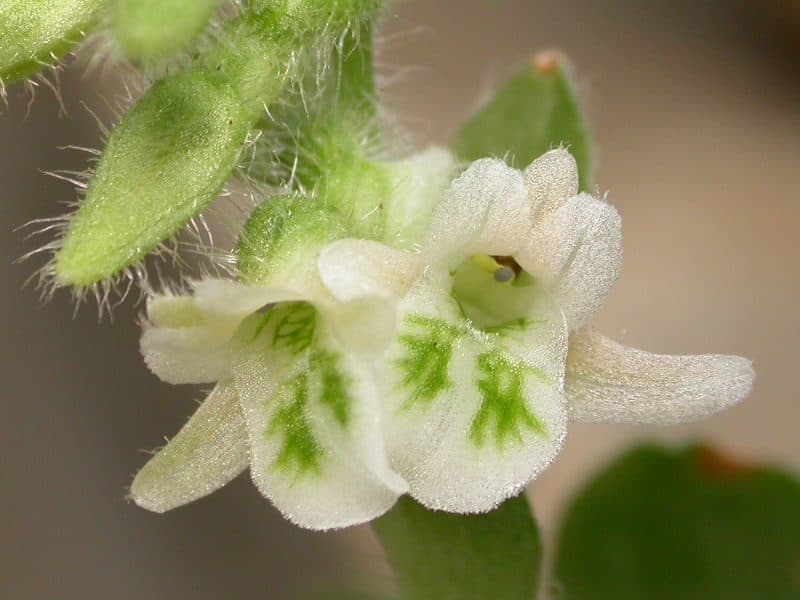
Lankesterella
Lankesterella is a genus of flowering plants belonging to the orchid family, Orchidaceae. Primarily found in South America, several species extend their range northward into the Caribbean and Central America. The genus is distinguished by its diverse geographical distribution and numerous recognized species.
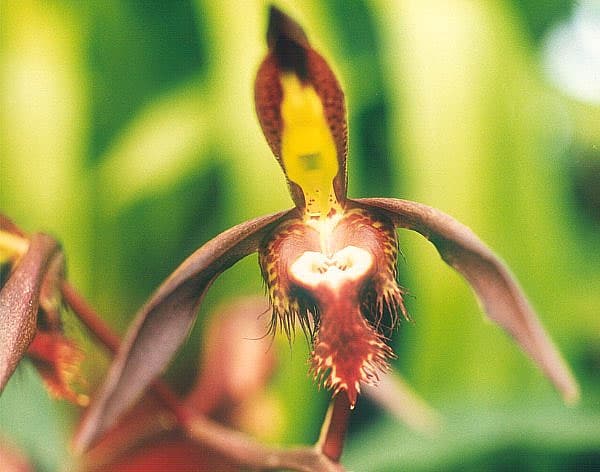
Catasetum
Catasetum is a genus of showy epiphytic orchids belonging to the family Orchidaceae. Native to regions spanning from Mexico to Argentina, many species are highly valued in horticulture for their striking flowers. A distinctive characteristic of Catasetum is its unisexual flowers, with male and female blooms often appearing on separate plants, a phenomenon that historically puzzled botanists until explained by Charles Darwin.