
Centrostigma
Centrostigma
Centrostigma is a genus of flowering plants belonging to the orchid family, Orchidaceae. All three accepted species within this genus are native to Africa, with distinct distributions across various countries on the continent. These orchids are characterized by their terrestrial growth habit.
Key Facts
- ›Centrostigma is a genus of orchids with three accepted species.
- ›All species of Centrostigma are native to Africa.
- ›The genus is part of the Orchidaceae family.
- ›Centrostigma species are terrestrial orchids.
- ›Known distribution includes countries like Tanzania, Malawi, Zambia, and Angola.

About Centrostigma
Centrostigma is a genus of flowering plants that belongs to the esteemed orchid family, Orchidaceae. This genus is notable for its exclusively African origins, with all of its recognized species being native to the continent. Currently, there are three accepted species within the Centrostigma genus, each with specific geographical distributions that highlight their presence across various African nations.
Species and Distribution
The three species recognized within Centrostigma are:
- Centrostigma clavatum: This species is found in Tanzania, Malawi, Zambia, and Congo-Kinshasa.
- Centrostigma occultans: With a broader distribution, this species occurs in Tanzania, Malawi, Zambia, Congo-Kinshasa, Zimbabwe, Angola, and the Transvaal region.
- Centrostigma papillosum: This species is documented in Zimbabwe, Angola, Malawi, and Zambia.
Botanical Characteristics
A key characteristic of Centrostigma orchids is their growth habit. All species within this genus are terrestrial, meaning they grow rooted in the soil, as opposed to epiphytic orchids that grow on other plants or lithophytic orchids that grow on rocks. This terrestrial nature influences their habitat preferences and cultivation requirements.
While detailed descriptions of flower color, size, and fragrance are not extensively documented in the provided information, the genus's placement within Orchidaceae suggests a complex floral morphology typical of the family. Further research into individual species would be necessary to ascertain specific horticultural details.
Source: Wikipedia ↗
Frequently Asked Questions
What is Centrostigma?
Centrostigma is a genus of flowering plants belonging to the orchid family, Orchidaceae. It comprises three currently accepted species, all of which are native to the African continent.
Where are Centrostigma orchids found?
The species within the Centrostigma genus are found across various regions of Africa. Their native ranges include countries such as Tanzania, Malawi, Zambia, Congo-Kinshasa, Zimbabwe, and Angola.
What is the growth habit of Centrostigma orchids?
Centrostigma orchids are terrestrial plants, meaning they grow in the ground rather than on trees or rocks. This is a common characteristic for the species within this genus.
How many species are in the Centrostigma genus?
There are three currently accepted species within the Centrostigma genus. Each of these species has a documented distribution across different African countries.
Related Orchid species

Graphorkis
Graphorkis is a genus of flowering plants belonging to the orchid family, Orchidaceae. It is comprised of four known species, all of which are native to Africa and islands in the Indian Ocean, including Madagascar. This genus is distinguished by its placement within the Orchidaceae family and its specific geographic distribution.

Cypripedioideae
Cypripedioideae, commonly known as lady's slipper orchids, are a subfamily of perennial herbaceous plants characterized by their distinctive slipper-shaped flower pouches. These orchids are found across various regions of the Americas, Europe, Asia, and Africa, and are notable for their unique pollination mechanism that traps insects within the modified labellum.
Bulbophyllum
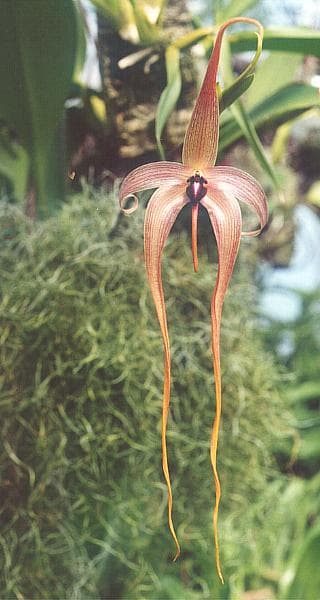
Bulbophyllum is a large genus of orchids primarily found in warmer regions of the world, known for their diverse habitats and unique floral mechanisms. Characterized by creeping rhizomes and pseudobulbs, these orchids exhibit a wide range of flower forms and often emit strong odors to attract pollinators.