
Cypripedioideae
Cypripedioideae
Cypripedioideae, commonly known as lady's slipper orchids, are a subfamily of perennial herbaceous plants characterized by their distinctive slipper-shaped flower pouches. These orchids are found across various regions of the Americas, Europe, Asia, and Africa, and are notable for their unique pollination mechanism that traps insects within the modified labellum.
Key Facts
- ›Cypripedioideae is a subfamily of orchids comprising approximately 165 species.
- ›The flowers feature a prominent slipper-shaped pouch (labellum) that traps insects.
- ›This subfamily includes five genera: Cypripedium, Mexipedium, Paphiopedilum, Phragmipedium, and Selenipedium.
- ›They are found in diverse habitats across North and South America, Europe, Asia, and parts of Africa.
- ›Pollination occurs through a trap-lip mechanism where insects are forced to move past reproductive organs.
- ›Unlike most orchids, these species are 'diandrous', possessing two fertile anthers.

Lady's Slipper Orchids, Lady Slipper Orchids, Slipper Orchids
Herbaceous
Bees, Hoverflies
About Cypripedioideae
Cypripedioideae: The Lady's Slipper Orchids
Cypripedioideae, widely recognized as the lady's slipper orchids, lady slipper orchids, or simply slipper orchids, represent a distinct subfamily within the Orchidaceae family. This group is characterized by its approximately 165 species, all of which are perennial, herbaceous plants. Their most striking feature is the unique, slipper-shaped pouch formed by the modified labellum of the flower. This specialized structure plays a crucial role in their pollination strategy, acting as a trap for insects.
Description and Morphology
The plants typically possess fleshy roots and leaves that are arranged spirally or in two rows along a slender or compressed shoot. The leaves are often rolled in the bud and can be plicate (folded), smooth, and leathery. The inflorescence is terminal and usually unbranched, bearing flowers that are resupinate and arranged spirally or in two lines. The flower's structure is complex, with petals in threefold circles and often two petals fused. The prominent labellum forms a sac-like pouch, while the ovary is inferior and can be one- or three-chambered. A fused structure comprising two fertile stamens, a staminode, and a style is a hallmark of these orchids. The style is short and thick, with a large, convex stigma. The two lateral stamens are fertile, with pollen grains forming a paste or connected pollinia in some species. The central staminode is barren and shield-shaped. The fruits are typically capsule fruits, though some species in the genus Selenipedium produce berry-like fruits containing numerous small seeds.
Distribution and Habitat
The geographic range of Cypripedioideae is extensive, spanning across the Americas, Europe, Asia, and parts of Africa. Species are found in northern South America and Central America, as well as circumboreally across North America, Europe, and northern Asia. They also inhabit subtropical and tropical Southeast Asia. Notably, this subfamily does not occur in Australia or the majority of Africa. It is hypothesized that their evolutionary spread may have originated from a center in Central America.
Pollination Mechanism
Cypripedioideae utilize a sophisticated trap-lip pollination mechanism, often employing mimicry and deception to attract pollinators, primarily bees and hoverflies. Insects enter the flower through a dorsal opening into the pouch. Once inside, their only escape route is through small lateral openings. In their struggle to exit, insects are compelled to pass beneath the stigma, where they deposit pollen, and then past the anthers, where they collect pollen for future pollination events.
Taxonomy and Genera
The classification of Cypripedioideae has been a subject of debate due to their unique morphology, particularly their possession of two fertile anthers, classifying them as 'diandrous'. This led to discussions about whether they should form a separate family, Cypripediaceae. However, modern molecular phylogenetics and DNA sampling have solidified their position as a subfamily within Orchidaceae. The subfamily comprises five genera:
- Cypripedium: Found across North America, Europe, Africa (notably Algeria), and Asia. Notable species include the showy lady's slipper (state flower of Minnesota) and the pink lady's slipper (official flower of Prince Edward Island).
- Mexipedium: A monotypic genus containing a single species, found in a specific locality in Oaxaca, Mexico.
- Paphiopedilum: Native to the tropical forests of Southeast Asia and southern China. These are popular among orchid enthusiasts and have faced extensive over-collection.
- Phragmipedium: Distributed across northern South and Central America, these orchids are also relatively easy to cultivate and often require cooler temperatures than Paphiopedilum.
- Selenipedium: Found in Central and South America.
Intergeneric hybrids within the subfamily are recognized under nothogenera such as × Cyphiopedilum, × Cyphragmipedium, and × Phragmipaphium.
Source: Wikipedia ↗
Frequently Asked Questions
What are lady's slipper orchids?
Lady's slipper orchids, scientifically known as Cypripedioideae, are a subfamily of orchids recognized by their unique, slipper-shaped flower pouches. These plants are perennial and herbaceous, with a distinctive trap pollination mechanism.
Where are Cypripedioideae found?
This subfamily has a wide distribution, occurring in northern South America and Central America, circumboreally in North America, Europe, northern Asia, and subtropical and tropical Southeast Asia. They are notably absent from Australia and most of Africa.
How do lady's slipper orchids pollinate?
Cypripedioideae employ a trap-lip pollination mechanism. Insects are lured into the slipper-shaped labellum and, in their attempt to escape, are forced to climb past the stigma and stamens, facilitating pollination.
What are the main genera within Cypripedioideae?
The subfamily Cypripedioideae is divided into five genera: Cypripedium, Mexipedium, Paphiopedilum, Phragmipedium, and Selenipedium. Each of these genera contains various species with distinct characteristics and geographical distributions.
Are lady's slipper orchids easy to cultivate?
Some genera within the Cypripedioideae, such as Paphiopedilum and Phragmipedium, are noted for being relatively easy to cultivate. This popularity has unfortunately led to over-collection of certain species in their natural habitats.
Related Orchid species
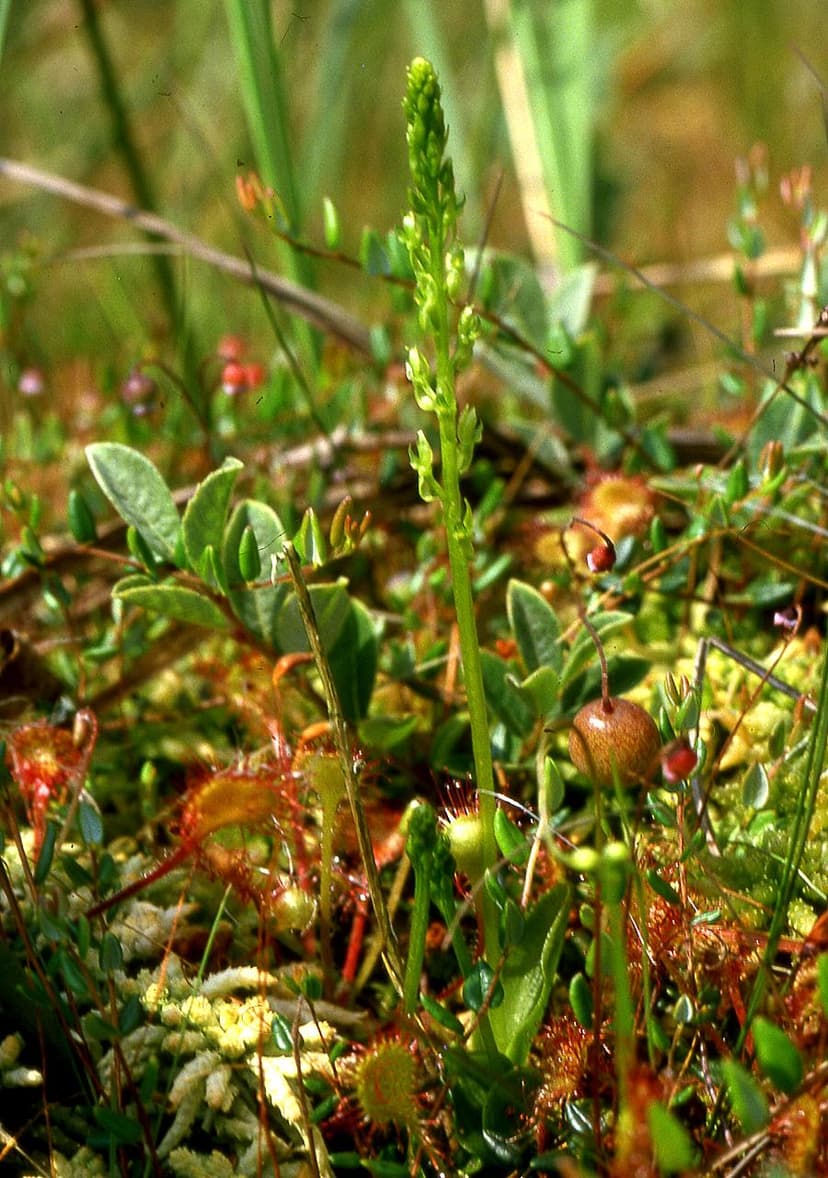
Hammarbya
Hammarbya paludosa, commonly known as the bog orchid, is a unique species in the Orchidaceae family, notable for being the only orchid to produce plantlets on its leaf tips. It is found across the Circumboreal Region, thriving in boggy and swampy environments. Its distinctive floral structure, with an upward-pointing lip, has made it a subject of study in orchid evolution.
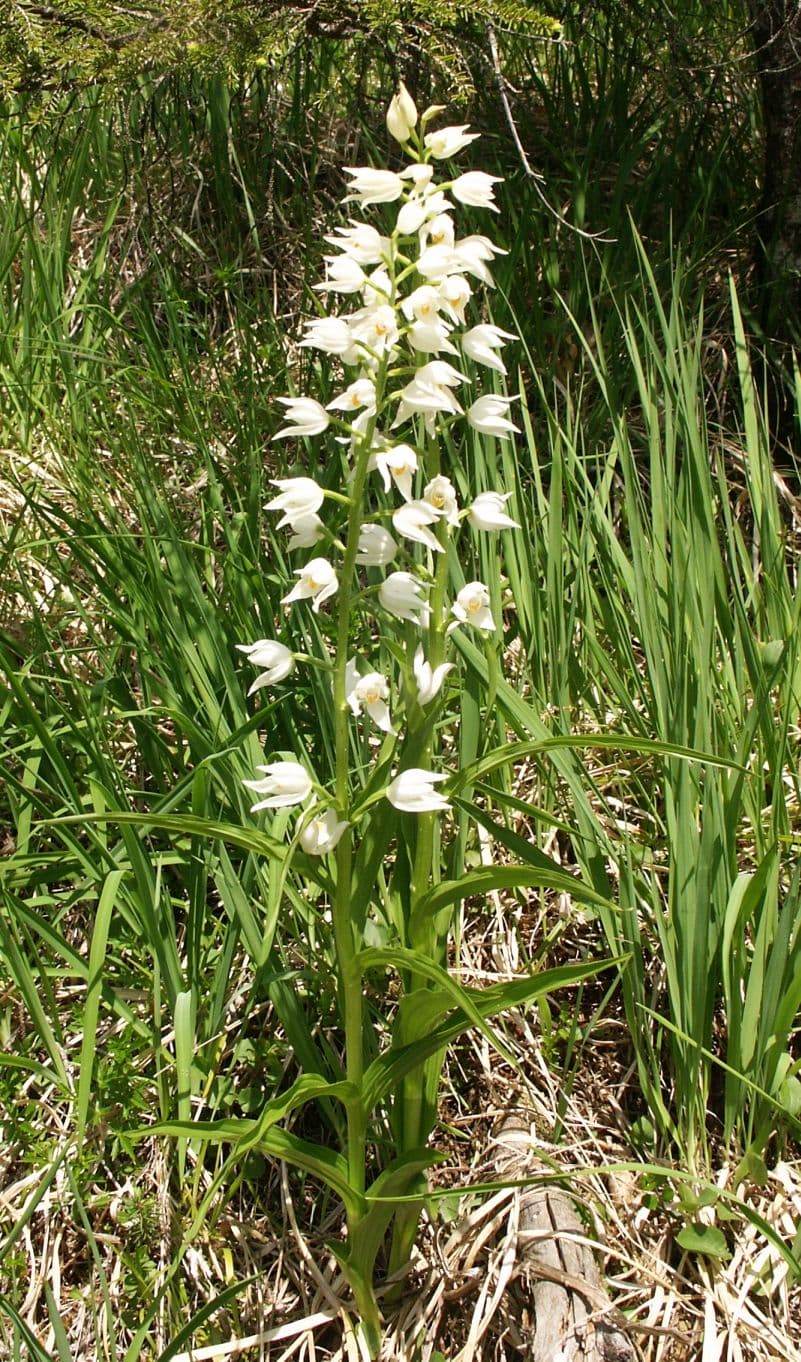
Cephalanthera
Cephalanthera is a genus of terrestrial orchids primarily found in Europe and Asia, characterized by their rhizomes instead of tubers. The genus encompasses approximately 15 recognized species, with Cephalanthera austiniae being the sole species native to North America and notable for its partially myco-heterotrophic nature. Some Eurasian species are known to hybridize.
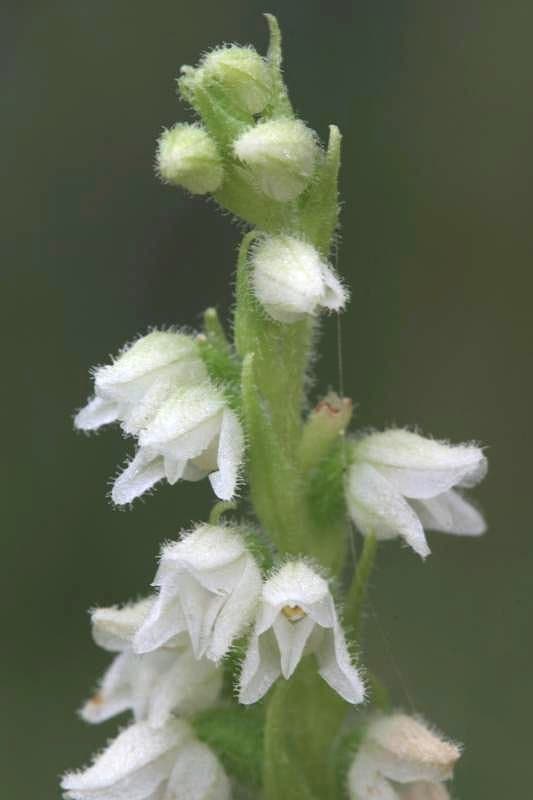
Goodyera
Goodyera, commonly known as rattlesnake plantain or jade orchids, is a widespread genus of orchids found across Europe, North and Central America, Australia, and various islands. These terrestrial orchids are distinguished by their rosette of leaves at the base, often marked with white or pale green, and typically bear numerous small, white, resupinate flowers. They are differentiated from similar genera like Spiranthes by their creeping rhizome, leaf shape and coloration, and the presence of a small pouch on the labellum.