
Chelonistele
Chelonistele
Chelonistele is a genus of orchids comprising 13 accepted species, native to Indonesia, Malaysia, and the Philippines. These orchids are characterized by their epiphytic or lithophytic growth habit. The genus name is derived from Chelone, a nymph from Greek mythology.
Key Facts
- ›The genus Chelonistele contains 13 currently accepted species.
- ›It is native to Indonesia, Malaysia, and the Philippines.
- ›Chelonistele orchids grow as either epiphytes or lithophytes.
- ›The genus name originates from Chelone, a mountain nymph in Greek mythology.
- ›The genus was first circumscribed by Ernst Hugo Heinrich Pfitzer in 1907.
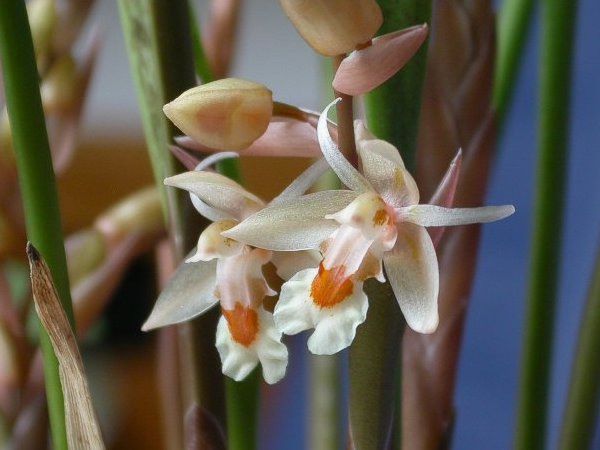
Epiphytic, Lithophytic
About Chelonistele
Chelonistele is a genus of orchids recognized for its 13 currently accepted species, primarily found in the natural landscapes of Indonesia, Malaysia, and the Philippines. The genus was formally circumscribed in 1907 by Ernst Hugo Heinrich Pfitzer. The name 'Chelonistele' itself draws from classical origins, being named after Chelone, a nymph from Greek mythology known as a mountain nymph.
Growth and Habitat
Orchids belonging to the Chelonistele genus are characterized by their epiphytic or lithophytic growth habits. This means they do not grow in soil but rather attach themselves to other plants, typically trees, as epiphytes, or grow on rocky surfaces as lithophytes. This specialized growth strategy influences their environmental needs and cultivation requirements.
Known Species and Distribution
The genus encompasses a variety of species, with specific distributions documented across Southeast Asia. Accepted species include Chelonistele amplissima from Borneo, Chelonistele brevilamellata found in Kalimantan, and Chelonistele dentifera native to Sarawak. Other species like Chelonistele sulphurea have a broader range, appearing in Borneo, Java, Malaysia, Sumatra, and the Philippines, with noted varieties such as Chelonistele sulphurea var. crassifolia in Sabah.
Source: Wikipedia ↗
Frequently Asked Questions
What is Chelonistele?
Chelonistele is a genus within the orchid family, recognized for its 13 accepted species. These orchids are found naturally in Indonesia, Malaysia, and the Philippines.
How do Chelonistele orchids grow?
Chelonistele orchids exhibit an epiphytic or lithophytic growth habit. This means they typically grow on other plants, such as trees, or on rocky surfaces, rather than directly in soil.
Where are Chelonistele orchids found?
The natural distribution of Chelonistele species spans across Indonesia, Malaysia, and the Philippines. Specific accepted species are documented in regions like Borneo, Sarawak, Sabah, Kalimantan, Brunei, Java, and Sumatra.
What is the origin of the name Chelonistele?
The genus name, Chelonistele, is derived from Chelone, a figure from Greek mythology. Chelone was a mountain nymph, lending a classical allusion to the orchid's name.
Related Orchid species
Aerides
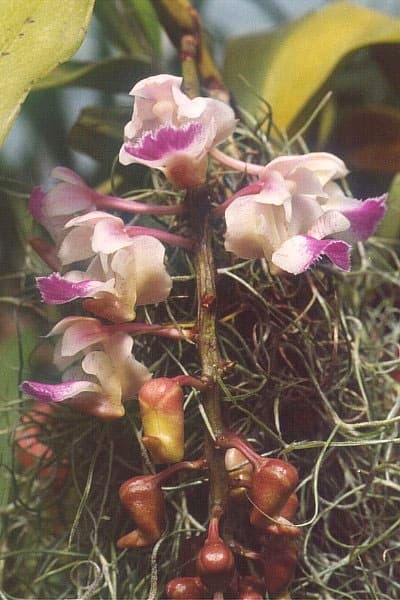
Aerides, commonly known as cat's-tail orchids and fox brush orchids, is a genus of tropical epiphytic orchids native to Asia. These orchids are highly valued in horticulture for their showy, fragrant, and long-lasting flowers, which typically appear in racemes and are often white with colorful edges.

Dipodium
Dipodium, commonly known as hyacinth orchids, is a genus of approximately forty orchid species native to tropical, subtropical, and temperate regions across Southeast Asia, New Guinea, the Pacific Islands, and Australia. This genus is distinguished by its large, often colorful flowers borne on tall stems, and includes species that are either terrestrial or climbing, some with leaves and some leafless.
Dimorphorchis
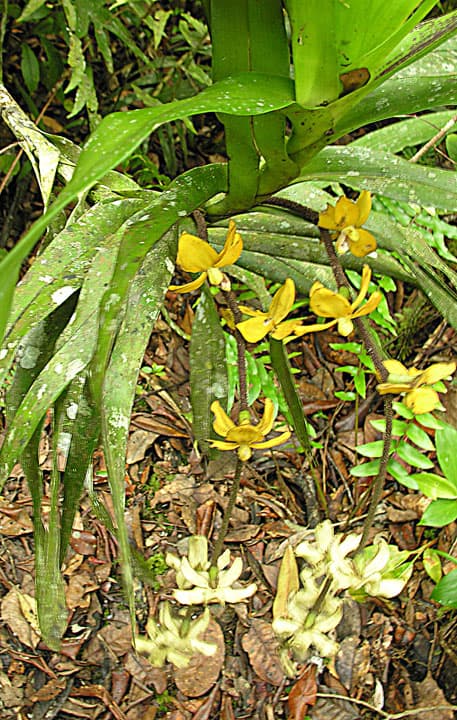
Dimorphorchis is a genus of nine orchid species found in Southeast Asia and Oceania, remarkable for producing two distinct flower forms on the same plant. These epiphytic or lithophytic herbs are characterized by long stems and leathery leaves, with their inflorescences bearing dimorphic flowers that differ in size, scent, and petal shape.