
Dactylorhiza
Dactylorhiza
Dactylorhiza, commonly known as marsh orchids or spotted orchids, is a genus of hardy, tuberous geophytes belonging to the Orchidaceae family. These orchids are characterized by their distinctive finger-like tubers, lanceolate leaves often speckled with darker spots, and racemes of 25-50 flowers that bloom in shades of white, pink, and red. They are found across the subarctic and temperate Northern Hemisphere, thriving in basic, moist soils in habitats like wet meadows and bogs.
Key Facts
- ›Dactylorhiza species are hardy tuberous geophytes adapted to store water in their thickened, finger-like underground stems.
- ›Their leaves are typically long and lanceolate, often displaying speckles, and grow along a stem reaching up to 70-90 cm.
- ›The inflorescence is a compact raceme bearing 25-50 flowers in dominant colors of white, pink, and red, often sprinkled with darker speckles.
- ›The genus name Dactylorhiza is derived from Greek words meaning 'finger' and 'root,' referencing the distinctive shape of their tubers.
- ›Species within this genus are known to hybridize readily, leading to complex taxonomic classifications and 'hybrid swarms' in certain disturbed habitats.
- ›Dactylorhiza are terrestrial orchids found in basic soils across the subarctic and temperate Northern Hemisphere, including Europe, North Africa, and Asia.

Marsh Orchids, Spotted Orchids
Subarctic Northern Hemisphere, Temperate Northern Hemisphere, Europe, North Africa, Asia
Terrestrial
About Dactylorhiza
Dactylorhiza is a genus of perennial, herbaceous plants belonging to the Orchidaceae family, commonly known as marsh orchids or spotted orchids. These hardy tuberous geophytes are recognized for their unique underground stems, which are thickened and flattened into finger-like tubers capable of storing significant amounts of water, enabling them to survive arid conditions. The genus name itself, Dactylorhiza, is derived from the Greek words 'daktylos' (finger) and 'rhiza' (root), a direct reference to these distinctive tubers.
Description and Characteristics
The plants typically grow to a height of 70–90 cm, with long, lanceolate leaves that are often adorned with darker speckles, though this characteristic varies among species. The leaves are arranged along a rather long stem, with those lower on the stem generally being longer than those higher up. The inflorescence is a relatively short, compact raceme containing 25 to 50 flowers that develop from axillary buds. The dominant floral colors range from white to all shades of pink and red, frequently sprinkled with darker speckles, adding to their visual appeal.
Distribution and Habitat
Dactylorhiza species are widespread throughout the subarctic and temperate Northern Hemisphere. They are terrestrial orchids that prefer basic soils and are commonly found in wet meadows, bogs, heathland, and areas with sparse tree populations. Their natural distribution spans across much of Europe, North Africa, and Asia, with reported occurrences from Portugal and Iceland eastward to Taiwan and Kamchatka, including extensive ranges within Russia, Japan, China, Central Asia, the Middle East, Ukraine, and Scandinavia.
Taxonomy and Hybridization
The taxonomy of Dactylorhiza is notably complex due to the high degree of hybridization that occurs between its species. This frequent interbreeding can lead to vague species boundaries, necessitating regular taxonomic revisions and often resulting in the formation of extensive hybrid swarms, particularly in disturbed habitats like fresh industrial waste sites. While the exact number of accepted species can fluctuate with ongoing research, numerous species and subspecies have been described across its vast geographical range.
Source: Wikipedia ↗
Frequently Asked Questions
What are Dactylorhiza commonly known as?
Dactylorhiza species are commonly referred to as marsh orchids or spotted orchids. This nomenclature reflects their typical habitat and the distinctive speckled patterns often found on their leaves and flowers.
What are the defining physical characteristics of Dactylorhiza?
Dactylorhiza orchids are characterized by their hardy, tuberous geophyte nature, with underground stems that store water. They possess flattened, finger-like tubers, long, lanceolate leaves that are often speckled, and a compact raceme of 25-50 flowers.
Where are Dactylorhiza orchids found in the wild?
These orchids are distributed throughout the subarctic and temperate Northern Hemisphere. They inhabit basic soils in wet meadows, bogs, heathland, and areas with sparse tree cover, with a range extending across much of Europe, North Africa, and Asia.
Why is the taxonomy of Dactylorhiza considered complex?
The taxonomy of Dactylorhiza is complex due to the high propensity for species within the genus to hybridize readily. This widespread hybridization can blur species boundaries, leading to frequent name changes and taxonomic revisions.
What is the origin of the name Dactylorhiza?
The name Dactylorhiza originates from Greek words: 'daktylos' meaning 'finger' and 'rhiza' meaning 'root'. This name was chosen to describe the distinct palmately two- to five-lobed tubers characteristic of the genus.
Related Orchid species
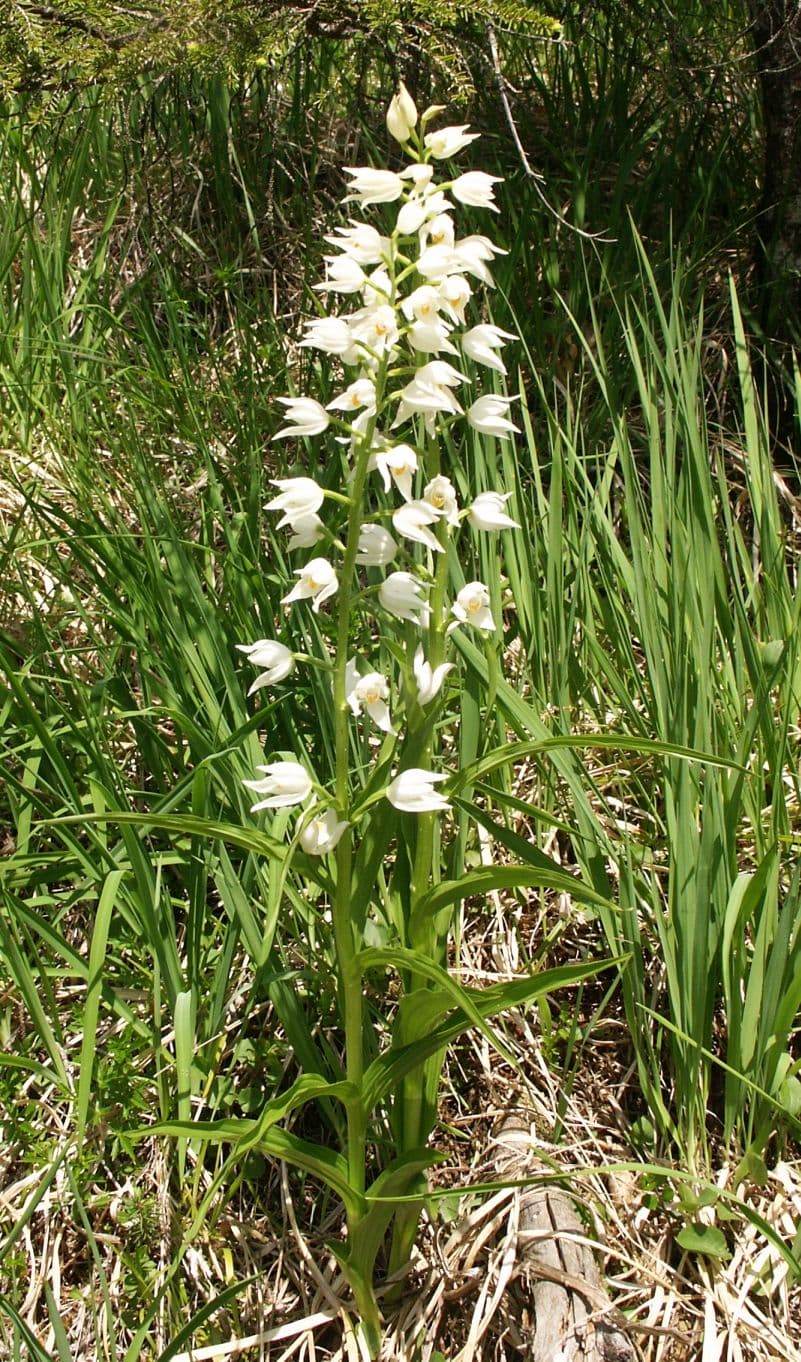
Cephalanthera
Cephalanthera is a genus of terrestrial orchids primarily found in Europe and Asia, characterized by their rhizomes instead of tubers. The genus encompasses approximately 15 recognized species, with Cephalanthera austiniae being the sole species native to North America and notable for its partially myco-heterotrophic nature. Some Eurasian species are known to hybridize.

Gymnadenia
Gymnadenia is a genus of 22 terrestrial orchid species belonging to the Orchidaceae family, known for their hardy nature and fragrant flowers. Native to damp meadows, fens, and alpine regions across Europe and Asia, these orchids are characterized by their long, lanceolate leaves and dense, cylindrical spikes of small, pleasant-smelling flowers that bloom in summer. The genus was expanded to include species formerly classified under Nigritella, and some species, like Gymnadenia conopsea, have been introduced to North America.
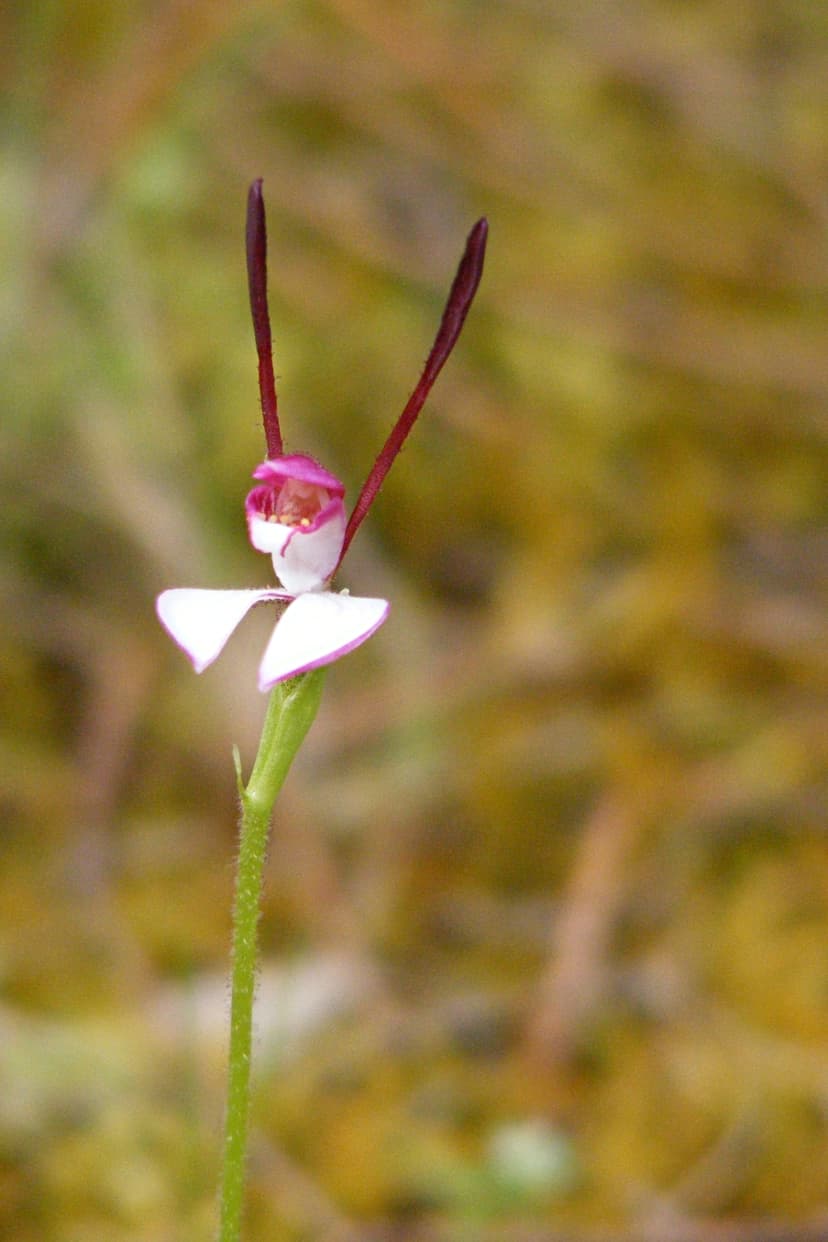
Leptoceras
Leptoceras menziesii, commonly known as the rabbit orchid, is the sole member of its genus and is native to southern Australia. This slender orchid is distinctive for flowering prolifically only after bushfires, and its flowers are characterized by prominent, ear-like petals.