
Gymnadenia
Gymnadenia·pleasant-smelling
Gymnadenia is a genus of 22 terrestrial orchid species belonging to the Orchidaceae family, known for their hardy nature and fragrant flowers. Native to damp meadows, fens, and alpine regions across Europe and Asia, these orchids are characterized by their long, lanceolate leaves and dense, cylindrical spikes of small, pleasant-smelling flowers that bloom in summer. The genus was expanded to include species formerly classified under Nigritella, and some species, like Gymnadenia conopsea, have been introduced to North America.
Key Facts
- ›Contains 22 terrestrial orchid species.
- ›Found in damp meadows, fens, marshes, and alpine regions of Europe and Asia.
- ›Deciduous orchids that survive winter via deep tubers.
- ›Flowers are small, fragrant, and arranged in dense cylindrical spikes.
- ›Flower colors range from pale purple to pink and white.
- ›The former genus Nigritella is now included within Gymnadenia.

Fragrant Orchid
Terrestrial
Summer
About Gymnadenia
Gymnadenia is a genus comprising 22 species of terrestrial orchids, belonging to the Orchidaceae family. These hardy plants are distinguished by their deciduous nature, surviving winter through a pair of deep tubers. They are native to a wide range of habitats across Europe and Asia, thriving in damp meadows, fens, marshes, and on chalky or limestone soils, frequently in alpine environments. The genus notably incorporates species formerly classified under the genus Nigritella.
Characteristics
The foliage of Gymnadenia consists of long, lanceolate green leaves that grow at the base of the stem, with smaller leaves present higher up. The flowering period occurs during the summer months. The inflorescence is a striking feature, presenting as a dense, cylindrical spike that can measure between 5 and 30 centimeters in length and may bear up to 150 small, fragrant flowers. These flowers exhibit a color palette ranging from pale purple to pink and white. Morphologically, they possess a distinctive lip with three lobes, horizontal marginal petals, and a long, slender spur. Scientific research has identified eugenol and isoeugenol as key floral volatile scent compounds in Gymnadenia species, with the gene responsible for their catalysis being the first to be functionally characterized in this genus.
Distribution and Habitat
Gymnadenia species have a broad geographic distribution, extending from Portugal across Europe to Kamchatka in Asia. Their natural range includes countries such as China, Japan, Mongolia, Siberia, Iran, Ukraine, Germany, Scandinavia, and Great Britain. The species Gymnadenia conopsea, commonly known as the fragrant orchid, has been introduced to the United States and has reportedly become naturalized in Connecticut.
Taxonomy and Hybrids
The genus has undergone taxonomic revisions, with species previously placed in Nigritella now being integrated into Gymnadenia. Hybrids between these groups were historically designated under the nothogeneric name ×Gymnigritella. A significant number of natural and artificial hybrids have been documented within the genus, reflecting the reproductive interactions among various Gymnadenia species.
Source: Wikipedia ↗
Frequently Asked Questions
What are the natural habitats of Gymnadenia orchids?
Gymnadenia orchids are typically found in damp meadow, fen, and marsh environments. They also grow on chalky or limestone substrates, often in alpine regions across Europe and Asia.
How do Gymnadenia orchids survive winter?
These hardy orchids are deciduous, meaning they lose their leaves seasonally. They survive the winter cold by relying on two deep-cut tubers that store nutrients and energy.
What do Gymnadenia flowers look like?
The flowers of Gymnadenia are small and pleasant-smelling, borne on a dense, cylindrical spike that can range from 5 to 30 cm in length. They can bear up to 150 individual flowers. The flowers themselves display a lip with three lobes, horizontal marginal petals, and a long, thin spur. Their color can vary from pale purple to pink and white.
Are Gymnadenia orchids fragrant?
Yes, Gymnadenia orchids are known for their pleasant-smelling flowers. Recent discoveries indicate that eugenol and isoeugenol, key floral volatile scent compounds, are produced through enzymatic processes catalyzed by a specific enzyme in these species.
What is the geographic distribution of Gymnadenia?
The genus Gymnadenia is widespread across Europe and Asia, with a range extending from Portugal to Kamchatka. This includes countries like China, Japan, Mongolia, Siberia, Iran, Ukraine, Germany, Scandinavia, and Great Britain. Gymnadenia conopsea has also been introduced and naturalized in Connecticut, USA.
Related Orchid species

Dactylorhiza
Dactylorhiza, commonly known as marsh orchids or spotted orchids, is a genus of hardy, tuberous geophytes belonging to the Orchidaceae family. These orchids are characterized by their distinctive finger-like tubers, lanceolate leaves often speckled with darker spots, and racemes of 25-50 flowers that bloom in shades of white, pink, and red. They are found across the subarctic and temperate Northern Hemisphere, thriving in basic, moist soils in habitats like wet meadows and bogs.
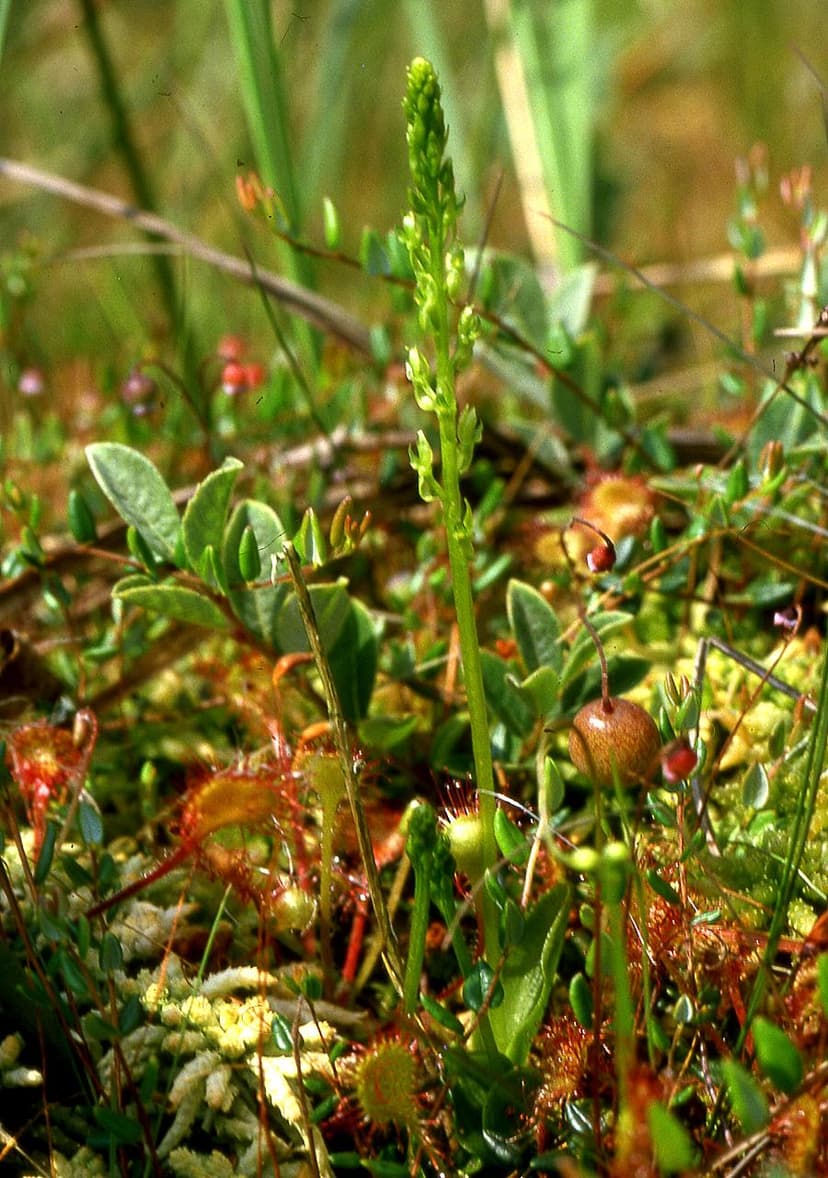
Hammarbya
Hammarbya paludosa, commonly known as the bog orchid, is a unique species in the Orchidaceae family, notable for being the only orchid to produce plantlets on its leaf tips. It is found across the Circumboreal Region, thriving in boggy and swampy environments. Its distinctive floral structure, with an upward-pointing lip, has made it a subject of study in orchid evolution.

Cypripedioideae
Cypripedioideae, commonly known as lady's slipper orchids, are a subfamily of perennial herbaceous plants characterized by their distinctive slipper-shaped flower pouches. These orchids are found across various regions of the Americas, Europe, Asia, and Africa, and are notable for their unique pollination mechanism that traps insects within the modified labellum.